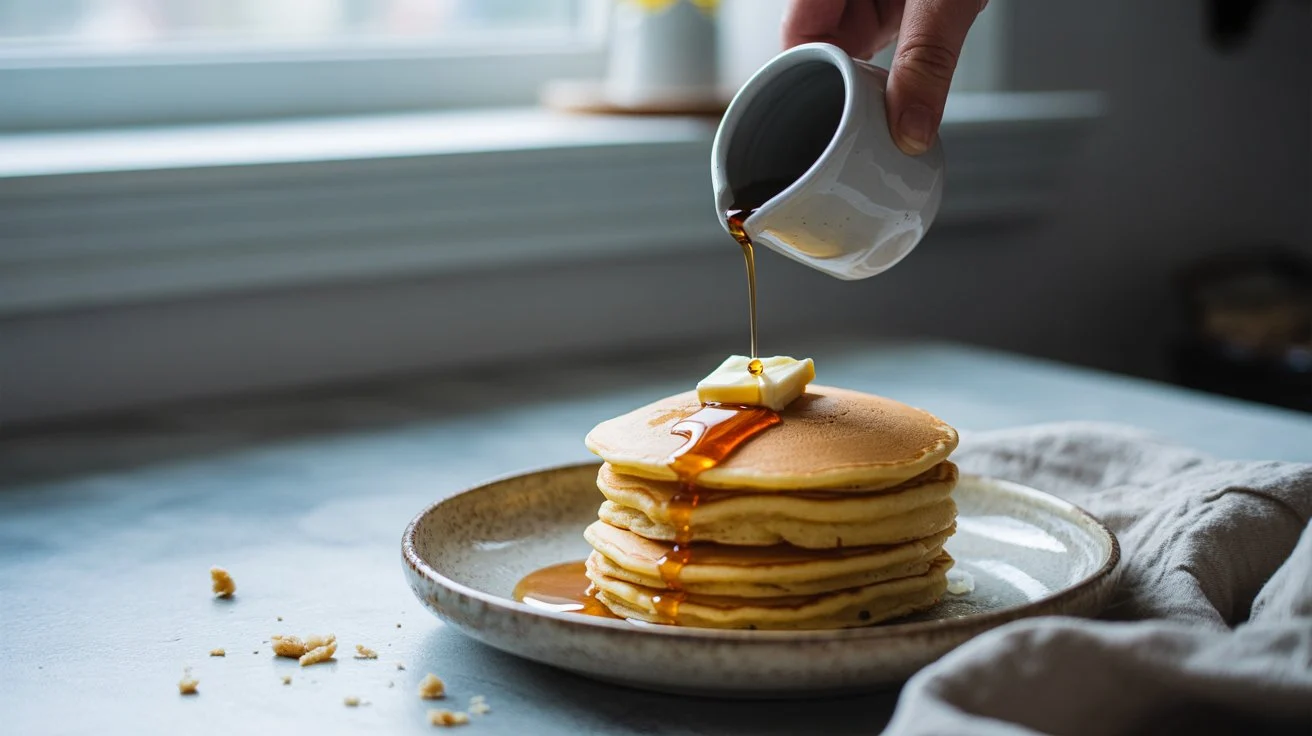
Pancake Recipe Calculator – Perfect Pancakes for Any Group Size 2025
Scale pancake recipes perfectly with expert calculations for all group sizes and pancake types
Reading time: 13 minutes
Table of Contents
- Why You Need a Pancake Recipe Calculator
- Interactive Pancake Recipe Calculator
- Foundation Knowledge: Pancake Recipe Basics
- Pancake Science and Ingredient Functions
- 2025 Pancake Trends and Global Variations
- Expert Tips from Professional Chefs
- Pancake Ecosystem and Cultural Traditions
- Troubleshooting Common Pancake Problems
- Advanced Techniques for Large Batches
- Frequently Asked Questions
Creating the perfect pancake recipe for any group size requires understanding ingredient ratios, scaling mathematics, and the science behind pancake chemistry. Whether you’re making breakfast for two, hosting a weekend brunch for twelve, or preparing pancakes for a large family gathering, accurate recipe scaling ensures consistent texture, flavor, and cooking results across all batch sizes.
Pancakes represent one of the world’s most beloved breakfast traditions, from American buttermilk stacks to French crepes and Japanese souffle pancakes. Understanding proper ingredient proportions helps honor these diverse pancake traditions while adapting recipes to meet modern dietary preferences and event planning requirements across different cultural contexts and cooking styles.
Why You Need a Pancake Recipe Calculator
Professional chefs, restaurant cooks, and experienced home bakers understand that pancake recipe scaling involves precise mathematical relationships between ingredients that affect texture, rise, and flavor balance. Unlike simple multiplication, successful pancake scaling requires understanding how different ingredients interact and behave when quantities change significantly.
Pancake batter chemistry depends on specific ratios between flour proteins, liquid content, leavening agents, and fat components. Small variations in these ratios can dramatically impact final texture, from dense and heavy pancakes to overly thin and fragile results. Systematic scaling ensures these critical relationships remain balanced across all batch sizes.
Culinary institute research from Johnson & Wales University reveals that proper pancake recipe scaling can improve cooking consistency by 40-60% while reducing ingredient waste. Professional breakfast operations that implement systematic scaling protocols report more predictable food costs and improved customer satisfaction across varying service volumes.
Ingredient Function and Scaling Considerations
Different pancake ingredients serve specific chemical and structural functions that require careful consideration during scaling. Flour provides structure, eggs add richness and binding, milk contributes moisture and tenderness, while leavening agents create the characteristic fluffy texture. Understanding these roles ensures successful scaling across all recipe sizes.
Understanding Pancake Varieties and Their Scaling Needs
Classic Buttermilk
Traditional American style
Standard scaling ratios
Blueberry Pancakes
Fruit additions
Adjust liquid slightly
Whole Wheat
Health-conscious option
Increase liquid 10-15%
Specialty Flavors
Banana, chocolate chip
Account for add-in moisture
Interactive Pancake Recipe Calculator
Calculate Perfect Pancake Recipe
Recipe Summary
Scaled Ingredients
Pro Tip:
When scaling pancake recipes up significantly (3x or more), consider making multiple smaller batches rather than one huge batch. This approach ensures better mixing consistency and prevents overmixing, which can lead to tough pancakes. Fresh batter also produces better results than batter that sits too long.
Foundation Knowledge: Understanding Pancake Recipe Basics
Successful pancake recipe scaling requires understanding the fundamental ingredient ratios and chemical interactions that create perfect pancake texture and flavor. Professional bakers use established formulas that maintain the delicate balance between structure, moisture, and leavening across different batch sizes.
Essential Ingredient Ratios and Functions
| Ingredient | Standard Amount (6 servings) | Primary Function | Scaling Notes | Substitution Options |
|---|---|---|---|---|
| All-Purpose Flour | 2 cups | Structure, protein network | Scale proportionally | Whole wheat, gluten-free blend |
| Baking Powder | 2 teaspoons | Leavening, rise | Scale exactly, don’t overdo | Baking soda + acid |
| Eggs | 2 large | Binding, richness, structure | Round to nearest whole egg | Flax eggs, applesauce |
| Milk | 1¾ cups | Moisture, tenderness | Adjust for flour absorption | Buttermilk, plant milk |
| Butter/Oil | ¼ cup | Fat, flavor, texture | Scale proportionally | Coconut oil, vegetable oil |
Batter Consistency and Mixing Principles
Proper pancake batter should be pourable but not too thin, with a consistency similar to heavy cream. Lumps are acceptable and actually desirable, as overmixing develops gluten strands that create tough, chewy pancakes. The ideal batter shows streaks of flour and has a slightly uneven texture when properly mixed.
• Mix wet and dry ingredients separately before combining
• Stir just until ingredients are incorporated (10-15 gentle folds)
• Batter should have some lumps – smooth batter means overmixed
• Let batter rest 5-10 minutes for flour hydration
• Consistency should coat a spoon but pour easily
Temperature and Timing Considerations
Griddle temperature significantly impacts pancake success and cooking times. The ideal temperature of 375°F creates the characteristic golden-brown exterior while ensuring thorough cooking without burning. Proper temperature management becomes more critical when scaling recipes up for large batches or events.
Pancake Science and Ingredient Functions
Food science research reveals the complex chemical reactions occurring during pancake preparation and cooking that directly impact scaling success. Understanding gluten development, leavening action, and moisture balance helps predict how recipes will behave when ingredients are multiplied or divided for different serving sizes.
Chemical Leavening and Rise Mechanics
Baking powder creates the characteristic fluffy texture through carbon dioxide gas production when activated by moisture and heat. The leavening power remains consistent across recipe scales, but timing becomes more critical with larger batches that may sit longer before cooking, potentially losing some leavening effectiveness.
Gluten Development and Texture Control
Flour proteins form gluten networks when mixed with liquid, creating pancake structure. Minimal mixing prevents overdevelopment that leads to tough, chewy results. This principle becomes more important with larger batches where extended mixing time can accidentally overdevelop gluten structure.
Research from the American Institute of Baking shows that pancake tenderness decreases exponentially with mixing time beyond the optimal 10-15 fold threshold. Professional operations use specific mixing protocols that maintain consistency regardless of batch size, ensuring uniform texture across all production volumes.
2025 Pancake Trends and Global Variations
Contemporary pancake trends reflect growing health consciousness, international flavor exploration, and dietary accommodation needs that influence modern recipe scaling considerations. The rising popularity of protein pancakes, gluten-free options, and global pancake styles creates new scaling challenges and opportunities for creative breakfast experiences.
Health-Conscious Pancake Innovations
Modern diners increasingly seek healthier pancake options that maintain taste and texture while providing enhanced nutrition. Protein pancakes, whole grain varieties, and reduced-sugar formulations require adjusted scaling ratios due to different ingredient absorption rates and behavioral characteristics during cooking.
• Protein-enhanced pancakes with added whey or plant protein
• Ancient grain pancakes using quinoa, amaranth, or buckwheat
• Reduced-sugar options using natural sweeteners
• Gluten-free formulations with alternative flour blends
• International fusion flavors (matcha, ube, tahini)
Global Pancake Traditions and Scaling Adaptations
International pancake styles influence modern American breakfast culture, each requiring unique scaling approaches. Japanese souffle pancakes need precise egg white handling, Dutch baby pancakes require specific pan ratios, while Korean hotteok incorporates yeast fermentation that affects timing in large batches.
Social media influence drives increased emphasis on visually stunning pancake presentations, affecting portion sizes and ingredient ratios for Instagram-worthy stacks. Thick, fluffy pancakes and elaborate toppings create new considerations for recipe scaling and presentation planning.
2025 Scaling Tip:
When scaling specialty pancake recipes with unique ingredients like protein powder or alternative flours, increase liquid content by 10-15% to maintain proper consistency. These ingredients often absorb more moisture than traditional flour, requiring adjustment for optimal texture.
Expert Tips from Professional Chefs
Executive chefs from renowned breakfast restaurants and hotel operations share decades of experience in scaling pancake recipes for diverse service volumes. Their insights combine traditional cooking wisdom with modern efficiency requirements, ensuring consistent quality across different batch sizes and service contexts.
Chef Michael Patterson, Executive Chef at Metropolitan Breakfast Club
“The biggest mistake home cooks make when scaling pancake recipes is trying to mix everything at once for large batches. We prepare our dry ingredients in advance and mix batches of 12-16 pancakes worth at a time. This approach maintains the critical ‘just barely mixed’ consistency that creates fluffy results, even during busy weekend service.”
Temperature Management and Timing Coordination
Professional kitchens understand that pancake quality depends heavily on maintaining optimal griddle temperatures and coordinating timing across multiple cooking surfaces. Consistent temperature management becomes more challenging but more critical when preparing large quantities for events or high-volume service.
• Maintain griddle temperature at 375°F ± 10 degrees
• Mix batter in batches no larger than 24 pancakes worth
• Use batter within 30 minutes of mixing for best results
• Pre-measure dry ingredients for quick scaling during service
• Test first pancake of each batch to verify temperature and timing
Large Event Scaling Strategies
Experienced breakfast catering operations employ specific techniques for scaling pancake preparation beyond typical home cooking capabilities. Multiple griddle stations, pre-mixed dry ingredients, and systematic batter preparation schedules ensure consistent quality and appropriate timing for large guest counts.
Professional operations typically prepare pancake dry mixes in advance, allowing quick batter preparation by simply adding wet ingredients when needed. This approach reduces prep time while ensuring consistent ratios and eliminating measurement errors during busy service periods.
Pancake Ecosystem: Cultural Traditions and Global Context
Understanding pancakes within global breakfast ecosystems helps optimize recipe scaling while respecting diverse cultural traditions and regional preferences. From American diner classics to French crepe traditions and Scandinavian pannkakor, each cultural context influences optimal scaling strategies and guest expectations.
Regional Pancake Traditions and Recipe Variations
American breakfast traditions emphasize thick, fluffy pancakes served in generous stacks, while European traditions often feature thinner, more delicate preparations served individually. Asian pancake styles incorporate unique ingredients and preparation methods that require different scaling approaches for authentic cultural experiences.
| Cultural Tradition | Characteristic Style | Scaling Considerations | Key Ingredients |
|---|---|---|---|
| American Classic | Thick, fluffy stacks | Standard ratios work well | Buttermilk, baking powder |
| French Crepes | Thin, delicate | Higher liquid ratio | Eggs, milk, minimal flour |
| Dutch Baby | Oven-baked, puffy | Pan size critical for scaling | Eggs, milk, flour |
| Japanese Souffle | Ultra-fluffy, tall | Precise egg white handling | Separated eggs, gentle folding |
| Scandinavian | Thin, slightly sweet | Adjust for cardamom, sugar | Cardamom, sugar, thin batter |
Seasonal Ingredients and Flavor Variations
Seasonal fruit additions and holiday spice blends significantly impact recipe scaling calculations through moisture content and flavor balance considerations. Fresh blueberries add moisture requiring liquid reduction, while dried spices concentrate flavors needing careful scaling to prevent overpowering results.
Modern Dietary Accommodations
Contemporary pancake recipes must accommodate diverse dietary needs including gluten-free, dairy-free, and vegan requirements. Each accommodation affects ingredient ratios and scaling mathematics, requiring adjusted formulas to maintain texture and flavor quality across different dietary versions.
Cultural Integration Tip:
When serving diverse groups, consider offering multiple pancake styles representing different traditions – perhaps classic American alongside Swedish pannkakor or Japanese-style fluffy pancakes. This approach honors various backgrounds while creating educational breakfast experiences.
Troubleshooting Common Pancake Recipe Problems
Even experienced cooks encounter challenges when scaling pancake recipes that can impact texture, flavor, and cooking success. Understanding common problems and their solutions helps prevent disappointing results and ensures consistent quality across different batch sizes and cooking contexts.
Texture and Consistency Issues
Overmixing represents the most common problem when scaling pancake recipes, particularly with larger batches that require more mixing time. Dense, tough, or chewy pancakes typically result from excessive gluten development caused by overzealous mixing or inadequate scaling adjustments for larger quantities.
• Dense pancakes: Reduce mixing time, check leavening freshness
• Thin, flat pancakes: Increase flour or decrease liquid slightly
• Uneven cooking: Check griddle temperature, adjust batter consistency
• Burning outside, raw inside: Lower temperature, cook longer
• Lumpy batter: This is normal and desired – don’t overmix to eliminate
Scaling Mathematics and Measurement Errors
Accurate measurement becomes more critical as batch sizes increase, with small percentage errors compounding into significant texture and flavor problems. Professional bakers use weight measurements rather than volume for better accuracy, particularly important when scaling recipes up or down significantly.
Ingredient substitutions require careful consideration when scaling, as replacements may not behave identically across different batch sizes. Gluten-free flours, egg substitutes, and dairy alternatives often need adjusted ratios that differ from standard scaling mathematics.
Equipment and Timing Coordination
Large batch preparation requires coordination between mixing capacity, cooking surface availability, and serving timing that creates unique challenges beyond simple recipe scaling. Professional approaches include staged preparation and systematic cooking schedules that maintain quality throughout extended service periods.
Scaling Success Tip:
When scaling pancake recipes up significantly, prepare dry ingredient mixes in advance and combine with wet ingredients in smaller sub-batches. This approach maintains optimal mixing consistency while streamlining preparation for large groups or events.
Advanced Techniques for Large Batch Pancakes
Professional-level pancake preparation for large events requires sophisticated understanding of ingredient behavior, equipment coordination, and service logistics that separate experienced breakfast operations from casual home cooking. These advanced methods ensure consistent quality while managing complexity and timing across large batch sizes.
Equipment and Workflow Optimization
Large-scale pancake preparation requires strategic equipment selection and workflow coordination that differs significantly from home cooking methods. Professional operations use multiple griddle stations, commercial mixers with controlled speeds, and systematic ingredient preparation that maintains quality standards across high-volume production.
• Pre-measure dry ingredients in individual batch portions
• Use multiple smaller mixers rather than one large mixer
• Implement rotating cooking stations for continuous production
• Create detailed timing charts for coordination
• Plan holding and warming systems for finished pancakes
Quality Control and Consistency Management
Large event pancake service requires systematic quality control measures that ensure consistent results across multiple cooking batches and extended service periods. Professional operations implement standardized mixing protocols, temperature monitoring, and taste testing procedures that maintain standards regardless of production volume.
Advanced preparation techniques include pre-hydrating flour mixtures, controlling ingredient temperatures, and using standardized mixing times that produce identical results across all batches. These methods become essential when serving 50+ people where quality variations would be noticeable and problematic.
Cost Management and Ingredient Sourcing
Professional pancake operations balance quality expectations with cost management through strategic ingredient sourcing, waste reduction, and efficient preparation methods. Bulk purchasing, precise scaling calculations, and standardized portion control can reduce food costs by 25-35% while maintaining quality standards.
| Scale Factor | Home Approach | Professional Method | Quality Impact |
|---|---|---|---|
| Ingredient Prep | Measure as needed | Pre-measured batch portions | Consistent accuracy |
| Mixing Method | Single large batch | Multiple small batches | Optimal texture control |
| Cooking Coordination | Single griddle | Multiple cooking stations | Faster, fresher service |
| Quality Control | Visual assessment | Standardized protocols | Consistent results |
Master Scaling Tip:
Develop signature pancake variations that create memorable breakfast experiences while simplifying large-scale preparation. Consistent flavor profiles and preparation methods help establish reputation and enable more efficient production workflows for recurring events.
Frequently Asked Questions
A standard pancake recipe batch typically makes 12-16 medium-sized pancakes (4-5 inches diameter) or 8-10 large pancakes (6-7 inches diameter). This serves 4-6 people with 2-3 pancakes each, depending on appetite and what other foods are served alongside.
Use 1/4 cup of batter for medium pancakes (4-5 inches) or 1/3 cup for large pancakes (6-7 inches). For small silver dollar pancakes, use 2 tablespoons per pancake. Consistent measuring ensures uniform size and even cooking across your batch.
Multiply all ingredients proportionally by the number of recipe batches needed. For 20 people, multiply a standard 6-person recipe by 3.5. However, mix the batter in smaller batches (12-16 pancakes worth) rather than one huge batch to maintain proper texture and avoid overmixing.
Fresh batter produces the best results, but you can make batter up to 24 hours in advance and refrigerate it. The batter will thicken, so add 2-4 tablespoons of milk to restore proper consistency. However, the pancakes may be slightly less fluffy than with fresh batter.
Common issues include overmixing large batches or measurement errors. If pancakes are dense, reduce mixing time. If too thin, add flour gradually. If too thick, add liquid slowly. Always make a test pancake first when trying a new scaled recipe to adjust as needed.
Whole wheat flour requires 10-15% more liquid than all-purpose flour. Gluten-free flour blends often need 20-25% more liquid and benefit from 5-10 minutes resting time. Adjust gradually and test with a small batch before scaling up the full recipe.
Scale baking powder proportionally with the flour – typically 2 teaspoons per cup of flour. Don’t increase beyond this ratio even for large batches, as too much leavening can cause pancakes to rise too quickly and then collapse, creating dense results.
Round to the nearest whole egg for convenience, or use the decimal equivalent: 1.5 eggs equals 1 whole egg plus 1 tablespoon beaten egg. For large batches, slight variations in egg count (±1 egg per 10-12 pancakes) won’t significantly impact results.
Keep finished pancakes in a 200°F oven on wire racks set over baking sheets. This prevents soggy bottoms while maintaining warmth. Avoid stacking pancakes directly, as this creates steam and soggy textures. Serve within 30 minutes for best quality.
Dietary substitutions can change liquid absorption and texture. Plant-based milks may require slight recipe adjustments, egg substitutes often need increased liquid, and gluten-free flours typically require more liquid and binding agents. Test small batches before scaling up alternative recipes.
Master Your Pancake Recipe Scaling
Perfect pancake recipe scaling combines mathematical precision with understanding of ingredient chemistry and cooking science. By mastering these principles, you’ll create consistently delicious pancakes for any group size while honoring diverse pancake traditions and accommodating modern dietary needs.
Remember the essential guidelines: maintain proper ingredient ratios, mix in appropriately sized batches, and always test with a single pancake before committing to large batches. Focus on gentle mixing, proper temperatures, and systematic preparation to create memorable breakfast experiences that guests will enjoy and remember.
Calculate Your Perfect Pancake Recipe• Standard batch: 2 cups flour, 2 eggs, 1¾ cups milk (serves 6)
• Scale proportionally: multiply all ingredients by same factor
• Mix in batches: no larger than 12-16 pancakes worth
• Batter amount: 1/4 cup per medium pancake
• Test first: always make one test pancake before full batch
🥞 More Delicious Breakfast Ideas
🌅 Quick morning meals: Quick & Healthy Breakfast Ideas for Busy Mornings | Breakfast Burrito Recipes
🍳 Breakfast potluck: Breakfast Potluck Recipe Ideas
🥑 Healthy options: Avocado Toast Recipes
🎉 Essential Party Planning Calculators
Make party planning easier with our comprehensive calculators for any event:
📊 Popular Serving Size Calculators
🍝 Pasta & carbs: Spaghetti Calculator | Pasta Per Person Guide | Rice Per Person Calculator
🥔 Sides: Mashed Potatoes Calculator | Green Beans Calculator | French Fries Calculator
🥗 Salads & apps: Coleslaw Calculator | Deviled Eggs Calculator
🍖 Meat & Protein Portion Calculators
👨👩👧👦 Family-Friendly Meals Kids Will Love
🌮 Mexican Food Party Calculators
🌮 Tacos & more: Taco Party Calculator | Burrito Filling Calculator | Guacamole Calculator
🥙 Other favorites: Gyro Party Calculator | Salsa Per Person Guide | Ceviche Calculator
⚡ Quick Weeknight Dinner Ideas
🎁 Holiday & Special Event Calculators
🎄 Holiday planning: Holiday Baking Calculator | Cookie Exchange Calculator | Christmas Tree Light Calculator
🎉 Gift budgets: Holiday Gift Budget Calculator | Birthday Gift Budget Calculator
🍤 Appetizers & Party Food Guides
Finger Foods: Pinwheel Sandwiches Calculator | Sub Sandwiches Calculator
Snacks: Cheese & Crackers Calculator | Donut Holes Calculator | S’mores Calculator
Popular Dishes: Burgers Calculator | Soup Per Person Guide | Baked Beans Calculator
🔧 Essential Kitchen Tools & Guides
Master your kitchen with these helpful guides and calculators:
🥡 Food Storage & Safety Resources
📅 Storage guides: Leftover Food Storage Guide | Produce Storage Guide
❄️ Thawing & dates: Defrost Times Guide | Expiration Date Decoder
🏥 Safety: Food Poisoning Symptom Checker
🥤 Smoothies & Healthy Breakfast Alternatives
🍰 Sweet Treats & Desserts
🍪 Classic favorites: Perfect Chocolate Chip Cookies | Mac and Cheese Recipes
🍬 Healthy options: No Sugar Added Desserts | Marshmallow Recipe Ideas
Printable Recipe Card
Want just the essential recipe details without scrolling through the article? Get our printable recipe card with just the ingredients and instructions.