How Much Lamb for a Crowd? Complete 2025 Guide
Calculate perfect lamb portions for any occasion with our expert calculator. Get serving sizes for leg of lamb, shoulder roasts, and all cuts based on USDA guidelines and professional culinary standards.
📋 Table of Contents
- Why Lamb Portion Planning Matters
- Interactive Lamb Portions Calculator
- Understanding Lamb Serving Sizes
- The Science Behind Lamb Portions
- 2025 Lamb Industry & Consumer Trends
- Expert Tips for Perfect Lamb Preparation
- Troubleshooting Common Portion Problems
- Advanced Planning & Preparation Strategies
- Frequently Asked Questions
- Start Planning Your Perfect Lamb Meal
Why Lamb Portion Planning Matters
Lamb is a premium protein requiring precise portion planning due to variable cooking shrinkage, bone waste, and its position as a specialty meat in American dining. Proper calculations ensure memorable meals while managing premium costs effectively.
According to American Lamb Board data, the standard serving size for lamb is 3 oz cooked weight, providing 23 grams of protein and only 160 calories, making it an efficient protein choice for special occasions.
Common Lamb Portion Mistakes
- Underestimating shoulder shrinkage: Lamb shoulder can lose 40-50% of weight during slow cooking
- Confusing leg vs shoulder needs: Different cuts require different portion calculations
- Ignoring bone weight: Bone-in cuts need significantly more raw weight per person
- Overlooking fat rendering: Fattier cuts lose more volume during cooking
🐑 Interactive Lamb Portions Calculator
Enter Your Details
Your Results
Understanding Lamb Serving Sizes: The Foundation
Accurate lamb portion planning requires understanding the significant differences between cuts, cooking methods, and their impact on final yield and serving sizes.
USDA and Industry Standard Serving Guidelines
| Lamb Cut | Raw Weight Per Person | Cooked Serving Size | Key Considerations |
|---|---|---|---|
| Leg of Lamb (Bone-In) | ¾ pound | 4-6 oz | 15% bone weight, premium cut |
| Leg of Lamb (Boneless) | ½ pound | 5-6 oz | Lean, minimal shrinkage |
| Lamb Shoulder (Bone-In) | ⅔-¾ pound | 4-5 oz | Higher fat, more shrinkage |
| Lamb Shoulder (Boneless) | ½-⅔ pound | 4-5 oz | Rich flavor, slow cooking ideal |
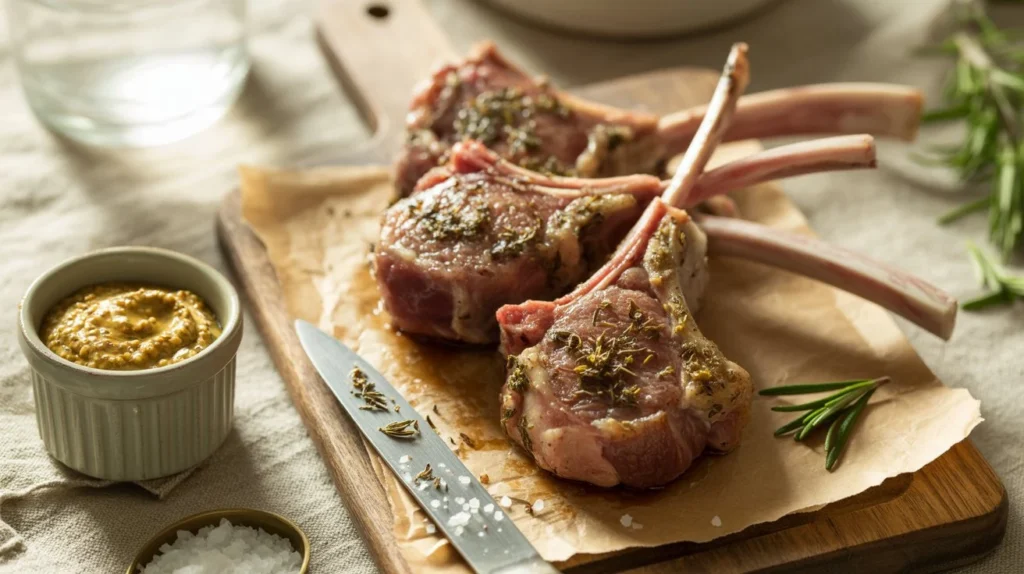
| Rack of Lamb | 3-4 chops | 4-6 oz | Premium presentation cut |
Quality Focus: According to culinary professionals, modern consumers prefer smaller portions of higher-quality lamb, with 4-6 oz servings becoming the standard for main courses rather than the larger portions of previous decades.
Cooking Shrinkage by Cut and Method
Understanding shrinkage rates is crucial for accurate portion planning, as different cuts lose varying amounts of weight during cooking:
Cut-Specific Considerations
Based on insights from professional cooking sources, each lamb cut has unique characteristics that affect portion planning:
- Leg of lamb: Lean with minimal marbling, best roasted to medium-rare for optimal yield
- Shoulder: Higher fat content requires slow cooking but provides richer flavor
- Rack: Premium cut with excellent presentation, minimal waste
- Chops: Individual serving portions, easy to control quantities
The Science Behind Optimal Lamb Portions
Understanding lamb’s nutritional density helps justify portion sizes and supports healthy meal planning within dietary guidelines.
Nutritional Profile of Lamb
According to American Lamb Board nutrition data, lamb provides exceptional nutritional value per serving, supporting its role as a premium protein choice.
- Protein: 23 grams (complete amino acid profile)
- Calories: 160 (lean cuts)
- Iron: 1.9mg (11% daily value)
- Zinc: 3.9mg (35% daily value)
- Vitamin B12: 2.7mcg (113% daily value)
- Selenium: 22.4mcg (41% daily value)
- Riboflavin: 0.2mg (15% daily value)
- Niacin: 6.6mg (41% daily value)
Lamb in Balanced Nutrition
Lamb’s nutrient density makes it particularly valuable for special occasion dining, providing substantial nutrition in moderate portion sizes.
USDA MyPlate Protein Integration
| Age Group | Daily Protein Needs | Lamb Serving | Percent of Daily Needs |
|---|---|---|---|
| Children 4-8 years | 4 oz-equiv | 2-3 oz | 50-75% |
| Children 9-13 years | 5 oz-equiv | 3-4 oz | 60-80% |
| Adults (Women) | 5 oz-equiv | 4-6 oz | 80-120% |
| Adults (Men) | 6.5 oz-equiv | 4-6 oz | 60-90% |
Health Considerations for Lamb Portions
Lamb’s nutritional profile supports moderate consumption as part of a balanced diet, with its high protein content providing satiety that can help with portion control.
2025 Lamb Industry & Consumer Trends
The American lamb industry is experiencing growth for the first time in years, driven by quality-focused consumers and expanding ethnic market demand.
Industry Recovery: According to American Lamb Board reports, 2024 marked the first year-over-year increase in lamb production in two decades, with per capita consumption rising to 1.3 pounds annually.
Current Market Dynamics
Emerging Consumer Trends
1. Premium Quality Focus
Home cooks are choosing higher-grade lamb cuts for special occasions, preferring restaurant-quality experiences at home with proper portion control.
2. Ethnic Market Growth
According to industry data, ethnic communities, particularly in the Northeast, continue driving lamb demand with traditional cooking methods and celebration meals.
3. Direct-to-Consumer Sales
Local farm sales and online ordering are growing, allowing consumers to purchase specific cuts and quantities for precise portion planning.
Price and Value Considerations
Rising lamb prices have made portion accuracy more important, with successful home cooks focusing on maximizing flavor and presentation to create memorable experiences with appropriate serving sizes.
Expert Tips for Perfect Lamb Preparation
Professional chefs and culinary experts share proven strategies for maximizing both flavor and value when planning lamb portions.
Professional Portion and Cooking Strategies
Cut-Specific Cooking Guidelines
| Cut | Best Method | Internal Temp | Expected Yield |
|---|---|---|---|
| Leg of Lamb | Roasted high heat | 130-135°F (med-rare) | 75-80% |
| Lamb Shoulder | Slow braised/roasted | 190-205°F (fall-apart) | 50-60% |
| Rack of Lamb | Seared then roasted | 125-130°F (rare-med rare) | 80-85% |
| Lamb Chops | Grilled or pan-seared | 130-135°F (med-rare) | 75-80% |
Maximizing Flavor and Presentation
Traditional Flavor Pairings
- Mediterranean: Rosemary, garlic, lemon, and olive oil enhance natural flavors
- Middle Eastern: Mint, yogurt marinades, and warm spices complement lamb’s richness
- American Classic: Fresh herbs and red wine create familiar, appealing flavors
- Modern Fusion: Asian-inspired marinades and spice rubs for unique presentations
Professional Presentation Techniques
Temperature and Timing Mastery
Essential Equipment
- Instant-read thermometer: Critical for achieving perfect doneness
- Sharp carving knife: Clean cuts maximize portion presentation
- Meat rest platform: Allows proper resting without overcooking
- Kitchen scale: Ensures accurate portion measurements
Troubleshooting Common Lamb Portion Problems
Even experienced cooks face challenges with lamb portion planning. Here are professional solutions to frequent issues.
Problem: Running Short on Portions
Prevention Strategies
- Build in 10-15% buffer: Always purchase slightly more than calculated
- Plan complementary proteins: Have backup appetizers or sides ready
- Know your guests: Adjust for known hearty eaters in the group
- Practice portion control: Use kitchen scales during prep to verify calculations
Problem: Excessive Shrinkage
Lamb that shrinks more than expected usually indicates cooking method or temperature issues.
Shrinkage Minimization Techniques
| Issue | Cause | Solution | Impact |
|---|---|---|---|
| Leg overcooking | Too high temperature | Use 325°F max for roasting | 5-10% better yield |
| Shoulder too dry | Insufficient cooking liquid | Add wine/broth for braising | Better texture, less waste |
| Uneven cooking | Cold meat at start | Room temp 1-2 hours before cooking | More consistent results |
| Tough texture | Insufficient resting | Rest 15-20 minutes minimum | Improved juiciness |
Problem: Cost Management
Premium lamb prices require strategic planning to manage costs while ensuring guest satisfaction.
Budget-Friendly Strategies
- Choose efficient cuts: Leg of lamb offers better yield than shoulder for large groups
- Maximize sides: Generous vegetable and starch portions extend meat servings
- Strategic leftovers: Plan for next-day meals to maximize value
- Seasonal purchasing: Buy during peak seasons for better pricing
Problem: Guest Dissatisfaction Despite Adequate Portions
Enhancement Techniques
- Flavor layering: Use marinades, rubs, and finishing salts for complex tastes
- Sauce pairings: Mint chimichurri, red wine reduction, or tzatziki
- Temperature contrast: Serve warm lamb with cool accompaniments
- Textural variety: Combine tender meat with crispy roasted vegetables
Advanced Planning & Preparation Strategies
Master-level lamb preparation involves sophisticated systems ensuring consistent quality, optimal costs, and exceptional dining experiences for crowds.
The Multi-Cut Strategy
Professional caterers often combine different lamb cuts to balance costs, cooking times, and guest preferences.
Strategic Cut Combinations
Professional Scaling Techniques
Large-scale lamb preparation requires different approaches than home cooking, focusing on consistency and efficiency.
Crowd-Serving Optimization
| Group Size | Recommended Approach | Cut Selection | Cooking Method |
|---|---|---|---|
| 8-12 people | Single roast | Leg of lamb (6-8 lbs) | Traditional roasting |
| 15-25 people | Multiple smaller roasts | 2-3 leg portions | Staggered cooking |
| 25-50 people | Mixed cut strategy | Legs + shoulders | Different methods |
| 50+ people | Professional service | Boneless cuts | Batch cooking |
Technology Integration for Precision
Modern lamb preparation leverages technology for consistent results and accurate portion control.
Essential Professional Tools
- Wireless probe thermometers: Monitor multiple cuts simultaneously
- Digital portion scales: Ensure consistent serving sizes
- Sous vide equipment: Precise temperature control for premium cuts
- Food cost calculators: Track costs per portion accurately
Service Style Adaptations
Different service methods require adjusted calculations and presentation strategies.
Service Method Calculations
- Plated service: Precise 4-6 oz portions, minimal waste
- Family style: Add 15% buffer for generous sharing
- Buffet service: Account for varying portion sizes, add 20% extra
- Carving station: Interactive service, requires skilled presentation
Leftover Strategy Planning
Strategic planning for lamb leftovers maximizes value and reduces waste while providing next-day meal options.
Secondary Use Applications
- Mediterranean wraps: Sliced lamb with hummus and vegetables
- Lamb curry: Transform roasted lamb into spiced stew
- Shepherd’s pie: Ground leftover lamb for traditional casserole
- Soup and stock: Use bones and trimmings for rich broths
Frequently Asked Questions
Start Planning Your Perfect Lamb Meal Today
With proper portion planning, you can create memorable lamb dining experiences that satisfy every guest while managing premium costs effectively. Use our calculator above to eliminate guesswork from your next lamb feast.
Remember the key principles: Account for 20-30% cooking shrinkage for leg cuts and up to 50% for shoulder, plan ¾ pound per person for bone-in cuts and ½ pound for boneless, and always include a buffer for special occasions. Whether preparing Easter leg of lamb or a casual shoulder roast, proper portioning ensures success.
Use the Calculator Again