
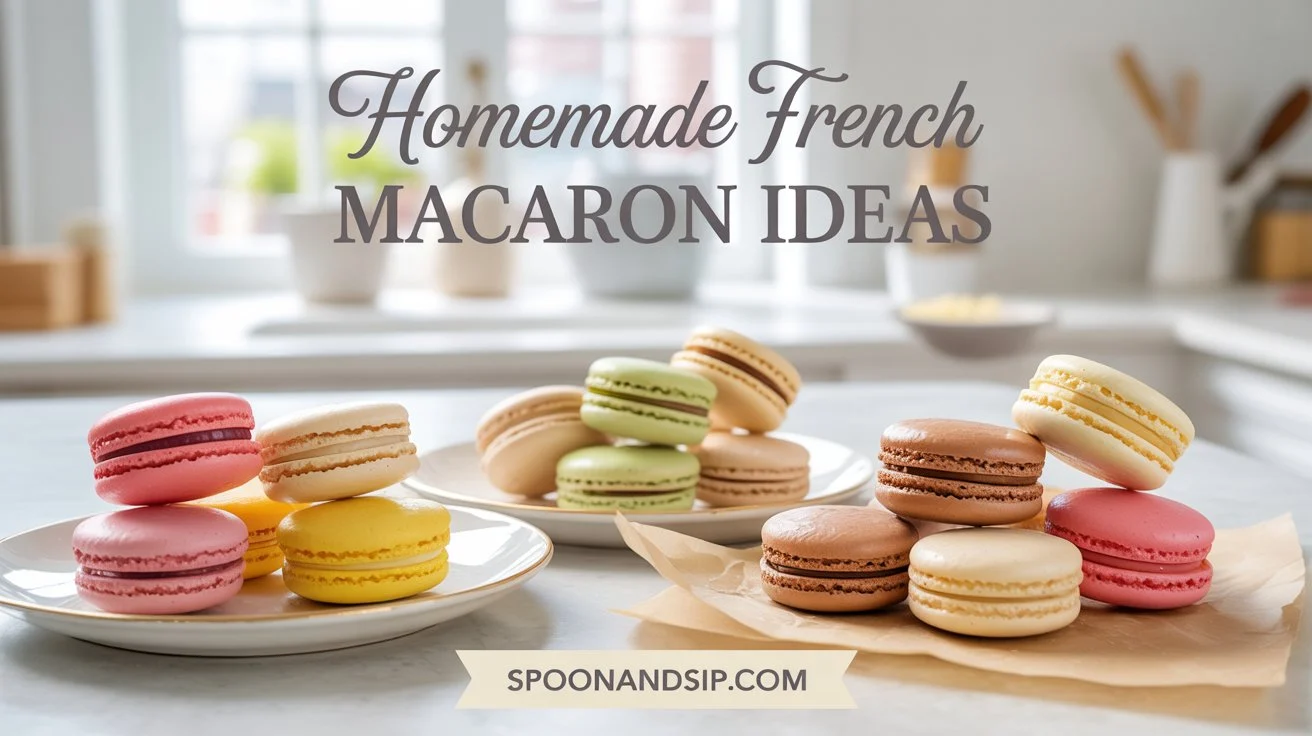
There’s something magical about French macarons—those delicate, colorful sandwich cookies with crispy shells, chewy centers, and endless flavor possibilities. They may have a reputation for being finicky, but with the right techniques and creative ideas, you can master these Parisian treats at home.
In 2026, macarons continue to reign as the ultimate elegant dessert, perfect for celebrations, gifts, or simply treating yourself. Whether you’re a beginner baker or looking to expand your macaron repertoire, these 8 amazing flavor ideas will inspire your next baking adventure.
Why French Macarons Are Worth the Challenge
Before we dive into flavors, let’s talk about why macarons have captured hearts worldwide:
- Versatile Canvas: The basic shell recipe can be flavored, colored, and filled in infinite ways
- Elegant Presentation: They look professional and impressive with minimal decorating
- Make-Ahead Friendly: Actually taste better after 24-48 hours in the fridge
- Dietary Adaptable: Naturally gluten-free and can be made dairy-free
- Perfect Gift: Stack them in a clear box for an Instagram-worthy present
Now, let’s explore 8 incredible flavor combinations that will make your macarons unforgettable!
1. Salted Caramel Macarons
The reigning champion of macaron flavors, salted caramel combines sweet, buttery caramel with a hint of sea salt for perfect balance.
Shell Color: Tan, beige, or light caramel
Filling: Salted caramel buttercream or ganache
Difficulty: Intermediate
🍫 The Ultimate No-Bake Dessert Ebook 🍓
30 mouthwatering no-bake recipes you can whip up in minutes — creamy cheesecakes, fruity parfaits, chocolatey bars, and more!
- ⚡Quick & easy — no oven required
- 📖30 recipes + bonus treat
- 🍓Chocolate, fruit, nutty & refreshing flavors
- ✨Beautifully designed, instant download
Why It Works: The sweet-salty contrast is addictive, and the caramel color is naturally gorgeous. Making homemade caramel elevates these from good to extraordinary.
Pro Tips:
- Use fleur de sel or Maldon sea salt for best results
- Add a small caramel center (like a dulce de leche dot) for extra flavor
- Let the caramel cool completely before mixing into buttercream
Get the Recipe:
- Anna Banana Salted Caramel Macarons
- Baran Bakery Salted Caramel Macarons
- Pies and Tacos Salted Caramel Recipe
🧁 Macaron Flavor Finder & Calculator
Find your perfect flavor and scale your batch!
—
—
Your Macaron Recipe
—
💡 Pro tip: Let filled macarons mature in the fridge 24-48 hours before serving — they taste even better!
2. Raspberry White Chocolate Macarons
Pretty in pink and bursting with fruity flavor, these macarons are perfect for Valentine’s Day, baby showers, or any celebration.
Shell Color: Soft pink (use pink gel food coloring)
Filling: White chocolate raspberry ganache
Difficulty: Beginner-Friendly
Why It Works: The tartness of raspberry cuts through the richness of white chocolate perfectly. Plus, the pink color is naturally cheerful and feminine.
Flavor Variations:
- Use freeze-dried raspberry powder in the shells for extra flavor
- Add fresh raspberry jam as a center layer
- Substitute strawberry for a sweeter version
Pro Tips:
- Reduce raspberry puree by half to concentrate flavor and prevent moisture issues
- Strain raspberry seeds from filling for smooth texture
- A tiny drop of rose extract complements raspberry beautifully
Get the Recipe:
- Sweet and Savory by Shinee Raspberry Macarons
- Simply Recipes Raspberry French Macarons
- Confetti and Bliss Raspberry Macarons Tutorial
3. Pistachio Macarons
A classic French patisserie flavor, pistachio macarons are nutty, slightly sweet, and absolutely irresistible in their signature green hue.
Shell Color: Light green (pistachio paste adds natural color)
Filling: Pistachio buttercream or white chocolate pistachio ganache
Difficulty: Intermediate
Why It Works: Real pistachio paste (not extract!) gives authentic flavor and natural color. These taste like the macarons you’d buy at a Parisian bakery.
Key Ingredients:
- Pistachio paste (available online or at specialty stores)
- Finely ground pistachios for texture
- Almond flour base (tradition)
Pro Tips:
- Use natural pistachio paste, not artificial flavoring
- Toast and grind your own pistachios for freshest flavor
- Keep the color subtle—bright green looks artificial
Get the Recipe:
- Sweet and Savory Pistachio Macarons
- House of Nash Eats Pistachio Recipe
- Ahead of Thyme Pistachio Macarons
4. Dark Chocolate Ganache Macarons
For chocolate lovers, these rich, decadent macarons feature cocoa powder in the shells and silky ganache filling.
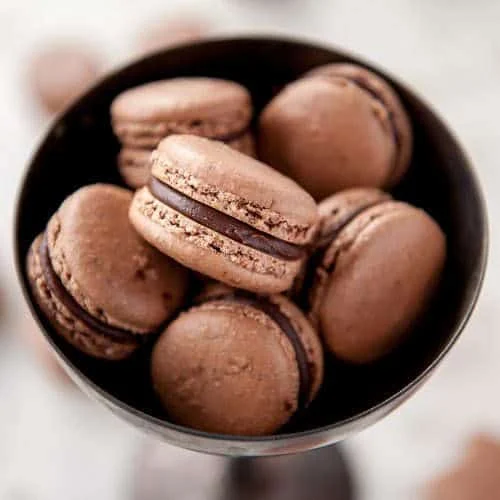
Shell Color: Brown or deep chocolate
Filling: Dark chocolate ganache (60-70% cacao)
Difficulty: Beginner-Friendly
Why It Works: Chocolate is familiar, crowd-pleasing, and hard to mess up. The ganache filling is simple—just chocolate and cream—making this perfect for beginners.
Chocolate Options:
- Dark Chocolate: Rich, not too sweet, sophisticated
- Milk Chocolate: Sweeter, creamier, kid-friendly
- White Chocolate: Technically not chocolate but delicious!
Pro Tips:
- Sift cocoa powder with almond flour to prevent lumps
- Don’t overbake—chocolate shells are harder to judge than vanilla
- Use high-quality chocolate for ganache (Valrhona, Guittard, or Ghirardelli)
Get the Recipe:
- Sugar Geek Show Chocolate Macaron Recipe
- Chelsweets Chocolate Macarons
- Simply Recipes Chocolate French Macarons
5. Lemon Meringue Macarons
Bright, tangy, and refreshing, lemon macarons capture the essence of lemon meringue pie in cookie form.
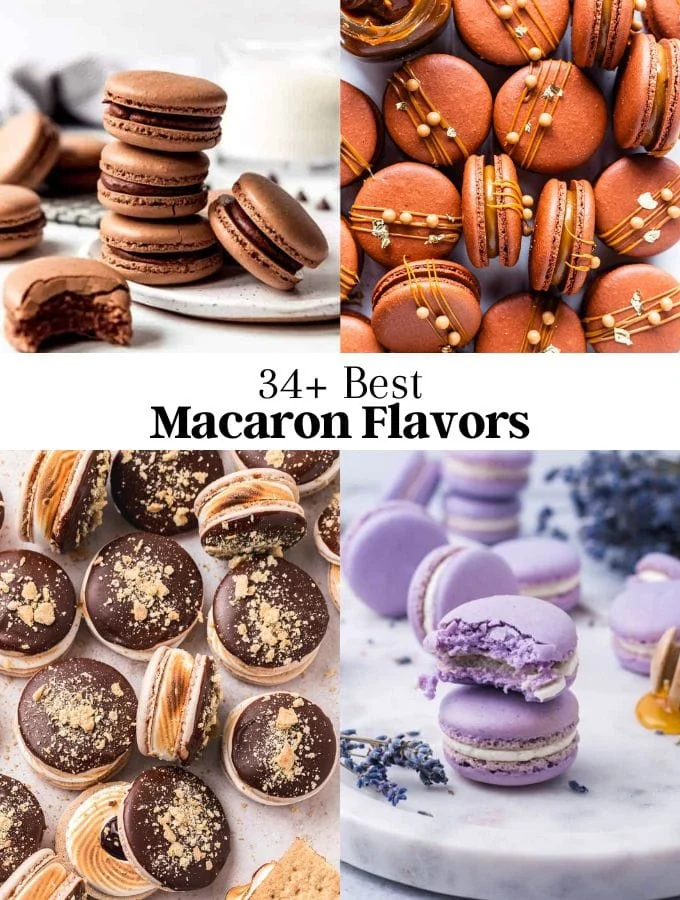
Shell Color: Pale yellow
Filling: Lemon curd or lemon buttercream
Difficulty: Intermediate
Why It Works: The tartness of lemon provides a refreshing contrast to the sweet shells. Perfect for spring and summer celebrations.
Filling Options:
- Lemon Curd: Intensely tart, authentic pie flavor
- Lemon Buttercream: Lighter, more subtle lemon
- Lemon Cream Cheese: Tangy with creamy richness
Pro Tips:
- Add lemon zest to shells for extra flavor (minimal liquid)
- Use fresh lemon juice in curd, never bottled
- Pipe a ring of buttercream, then fill center with curd to prevent leaking
Variations:
- Lime macarons (use lime curd and green shells)
- Orange macarons with Grand Marnier buttercream
- Meyer lemon for sweeter, more floral flavor
6. Cookies and Cream Macarons
Fun, nostalgic, and crowd-pleasing, these macarons taste like Oreos reimagined as French pastry.
Shell Color: White or speckled with cookie crumbs
Filling: Cookies and cream buttercream
Difficulty: Beginner-Friendly
Why It Works: Everyone loves cookies and cream! This flavor is especially popular with kids and teens, making it perfect for birthday parties.
How to Make It:
- Crush Oreos (or similar cookies) finely
- Mix cookie crumbs into buttercream
- Sprinkle more crumbs between shells for texture
- Optional: Add cookie pieces to macaron shells
Pro Tips:
- Remove Oreo filling before crushing (too much fat can affect texture)
- Don’t add too many crumbs to shells—they can prevent smooth tops
- This flavor pairs well with vanilla or chocolate shells
7. Coffee Caramel (Macchiato) Macarons
For coffee lovers, these sophisticated macarons combine espresso and caramel for a cafe-inspired treat.
Shell Color: Light coffee brown
Filling: Coffee caramel buttercream
Difficulty: Advanced
Why It Works: The bitter notes of espresso balance the sweetness perfectly. This is a grown-up flavor that coffee enthusiasts will adore.
Key Ingredients:
- Instant espresso powder in shells
- Brewed espresso reduced for filling
- Caramel sauce
- Coffee buttercream base
Pro Tips:
- Use instant espresso powder, not regular instant coffee (stronger flavor)
- Reduce brewed espresso to concentrate flavor without adding moisture
- A tiny pinch of salt enhances both coffee and caramel
Variations:
- Mocha macarons (add chocolate ganache)
- Vanilla latte macarons (vanilla buttercream with espresso)
- Hazelnut cappuccino (add hazelnut paste)
8. Lavender Honey Macarons
Elegant, floral, and subtly sweet, lavender honey macarons are perfect for spring weddings or afternoon tea.
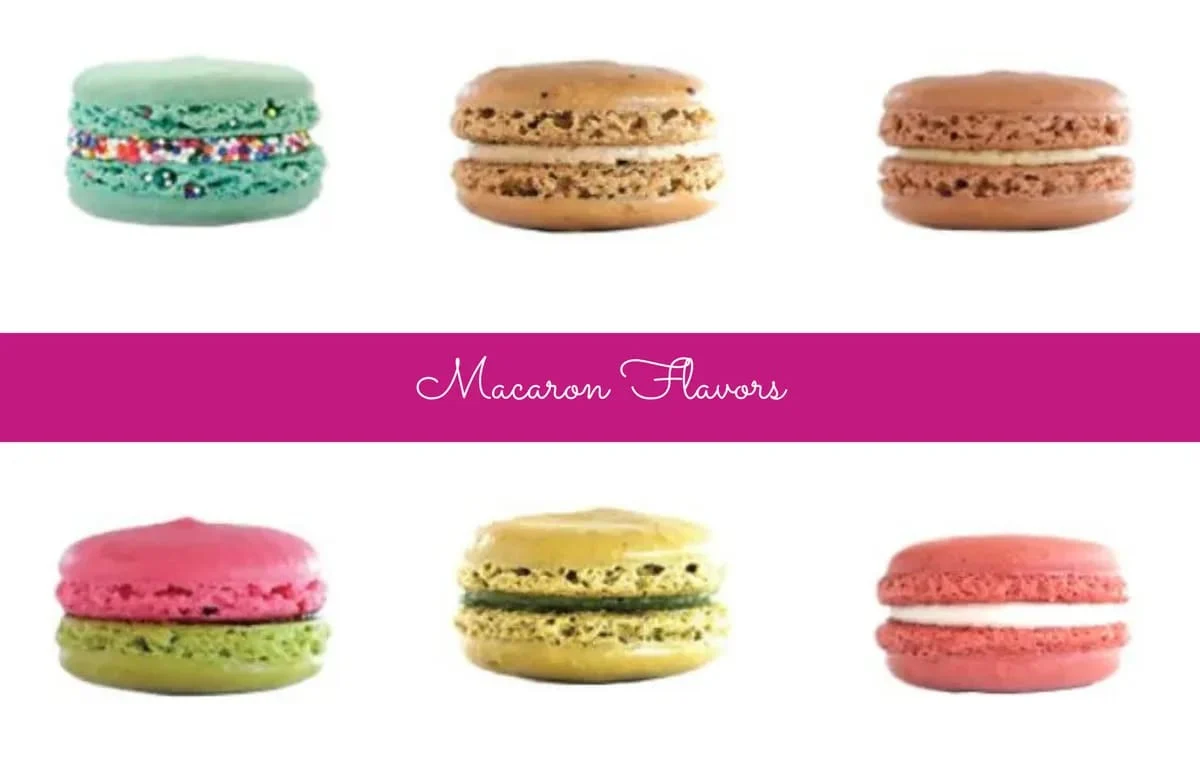
Shell Color: Pale purple or lavender
Filling: Honey buttercream with lavender
Difficulty: Intermediate
Why It Works: When done right (with culinary lavender, not too much!), this flavor is sophisticated and unexpected. The honey adds natural sweetness that complements the floral notes.
Critical Tips:
- Use CULINARY lavender only (not craft store or garden lavender)
- Start with very little—lavender can easily taste soapy if overdone
- Infuse cream or butter with lavender, then strain
Pairing Suggestions:
- Serve with Earl Grey tea
- Pair with fresh berries
- Perfect for bridal showers or garden parties
Caution: Taste test your lavender strength before committing to a whole batch. Better to start subtle and add more than overdo it!
Essential Tips for Perfect Macarons Every Time
The Big Three: Technique Fundamentals
1. Proper Macaronage (Folding Technique) The most critical step! Fold your meringue and almond flour mixture until it flows like lava—thick but continuous. Test by lifting your spatula; the batter should flow off in a thick ribbon and settle back into itself within 10-15 seconds.
2. Drying Time Let piped macarons sit at room temperature for 30-60 minutes until you can gently touch the surface without batter sticking to your finger. This creates the signature “skin” that helps form feet.
3. Oven Temperature Most macarons bake at 300-325°F. Use an oven thermometer—even a 10-degree difference can ruin a batch. Consider the “double-pan” method (stacking two baking sheets) to protect bottoms from burning.
Troubleshooting Common Macaron Problems
Problem: No Feet (or Small Feet)
Causes:
- Didn’t dry shells long enough before baking
- Oven temperature too low
- Over-mixed or under-mixed batter
Solutions:
- Always dry until surface is no longer tacky
- Use oven thermometer to verify temperature
- Practice macaronage technique
Problem: Cracked Tops
Causes:
- Oven too hot
- Not enough drying time
- Air bubbles not tapped out
Solutions:
- Lower oven temperature by 10-15°F
- Dry shells longer (especially on humid days)
- Firmly tap pans on counter 5-10 times after piping
Problem: Hollow Shells
Causes:
- Over-beaten meringue (too stiff)
- Oven temperature too high
- Under-baked
Solutions:
- Beat meringue to stiff peaks but not dry
- Check oven temperature
- Bake until shells don’t wiggle when gently touched
Problem: Lopsided or Uneven
Causes:
- Uneven oven heat
- Inconsistent piping
- Baking sheet warped
Solutions:
- Rotate pan halfway through baking
- Use a template under parchment
- Invest in quality, flat baking sheets
Complete Troubleshooting Guide:
- Sally’s Baking Addiction French Macarons Guide
- Bigger Bolder Baking Macaron Guide + 7 Common Mistakes
- YouTube: Top 15 French Macaron Problems Fixed
Essential Equipment for Macaron Success
Must-Haves:
- Kitchen scale (measure in grams for accuracy)
- Stand or hand mixer (for meringue)
- Silicone baking mats or parchment paper
- Piping bags and round tips (size 10-12)
- Oven thermometer
- Fine mesh sieve (for almond flour)
Nice-to-Haves:
- Macaron baking mat with circles printed
- Multiple baking sheets (for efficiency)
- Offset spatula (for filling)
- Food processor (for grinding almonds)
Storage and Make-Ahead Tips
Unfilled Shells:
- Room temperature: 3-4 days in airtight container
- Freezer: Up to 3 months (thaw before filling)
Filled Macarons:
- Refrigerator: 5-7 days in airtight container
- Freezer: Up to 1 month
Pro Secret: Macarons actually taste BETTER after 24-48 hours in the fridge! The filling softens the shells slightly and allows flavors to meld. Remove from fridge 20-30 minutes before serving.
More Flavor Inspiration
Want to experiment beyond these 8? Here are trending flavors for 2026:
- Cookie Butter (Biscoff) – Spiced, caramelized flavor
- Earl Grey – Elegant tea-infused shells
- Birthday Cake – Vanilla with sprinkles and frosting filling
- Matcha – Japanese green tea with white chocolate
- Peanut Butter – American classic in French form
- Rose – Delicate, floral, romantic
- S’mores – Chocolate shells, marshmallow filling, graham cracker
- Red Velvet – Cocoa shells with cream cheese frosting
Seasonal Ideas:
- Spring: Strawberry, lemon, lavender, pistachio
- Summer: Coconut, mango, peach, blueberry
- Fall: Pumpkin spice, apple cider, maple, cinnamon
- Winter: Peppermint, gingerbread, eggnog, hot chocolate
Frequently Asked Questions About French Macarons
The “feet” (ruffled edges at the base) are a hallmark of proper macarons. No feet usually means:
- Not dried long enough — Shells need 30-60 minutes until surface is no longer tacky
- Oven too cool — Use an oven thermometer; even 10°F off matters
- Batter over-mixed — Runny batter spreads flat instead of rising
- Batter under-mixed — Too thick batter doesn’t form feet properly
- Humidity — High humidity prevents proper skin formation
The fix: Always dry shells until you can touch them without batter sticking. They should feel dry and matte, not shiny or tacky.
Cracked tops are one of the most common macaron problems:
- Oven too hot — Lower temperature by 10-15°F
- Not enough drying time — Especially problematic on humid days
- Air bubbles — Tap pans firmly 5-10 times after piping to release bubbles
- Over-mixed batter — Too thin, spreads too fast, cracks from steam
- Uneven heat — Hot spots in oven cause uneven rising
Pro tip: Pop any visible air bubbles with a toothpick before drying. Rotate pans halfway through baking.
Macaronage (folding) is THE most critical step! Here’s how to know it’s right:
- The lava test: Batter should flow like thick lava — continuous but not runny
- The ribbon test: Lift spatula; batter falls in a thick ribbon
- The settle test: Dropped batter should settle back into itself in 10-15 seconds
- The figure-8 test: You should be able to draw a figure-8 without the batter breaking
Under-mixed: Batter is too thick, won’t flow, peaks stay pointed
Over-mixed: Batter is too thin, runny, spreads too flat
Count your folds: Most recipes need 40-60 folds. Stop and check often!
Hollow shells (gap between top and chewy interior) are frustrating but fixable:
- Over-beaten meringue — Meringue too stiff creates large air pockets that collapse
- Oven too hot — Shells rise too fast, then collapse
- Under-baked — Interior hasn’t set, sinks when cooling
- Over-mixed batter — Too much air knocked out, weak structure
Solutions:
- Beat meringue to stiff peaks but not dry and grainy
- Lower oven by 10-15°F and bake longer
- Test: gently wiggle a shell — if it moves on the base, bake longer
Temperature is crucial and varies by oven:
- Standard range: 300-325°F (150-163°C)
- Convection ovens: Reduce by 25°F (use 275-300°F)
- Baking time: Usually 12-18 minutes depending on size
Critical tips:
- Use an oven thermometer — Most ovens are off by 10-25°F
- Double-pan method: Stack two baking sheets to protect bottoms from burning
- Rotate halfway: Turn pan 180° at the midpoint for even baking
- Know your oven: Every oven is different; adjust based on results
Test for doneness: Gently touch a shell — it shouldn’t wiggle on its base. If it does, bake 2 more minutes.
Unfilled shells:
- Room temperature: 3-4 days in airtight container
- Freezer: Up to 3 months (thaw before filling)
Filled macarons:
- Refrigerator: 5-7 days in airtight container
- Freezer: Up to 1 month
Pro secret: Macarons actually taste BETTER after 24-48 hours in the fridge! The filling softens the shells slightly and allows flavors to meld. This is called “maturing” the macarons.
Serving tip: Remove from fridge 20-30 minutes before serving for best texture.
Start simple to master technique before adding complexity:
Best beginner flavors:
- Chocolate: Ganache filling is just chocolate + cream. Cocoa in shells is forgiving.
- Vanilla: Plain shells let you focus on technique. Simple buttercream filling.
- Cookies and Cream: Fun, forgiving, crowd-pleasing.
- Raspberry: Pink color is cheerful; white chocolate ganache is easy.
Flavors to tackle later:
- Salted caramel (requires making caramel)
- Pistachio (needs specialty ingredients)
- Coffee (moisture from espresso is tricky)
- Lavender (easy to overdo and taste soapy)
YES! A kitchen scale is essential for macarons. Here’s why:
- Precision matters: Macarons require exact ratios of almond flour, sugar, and egg whites
- Cup measurements vary: 1 cup of almond flour can vary by 30+ grams
- Egg whites vary: “3 egg whites” could be 90g or 120g depending on egg size
- Consistency: Weighing ensures same results every time
Other essential equipment:
- Stand or hand mixer (for meringue)
- Fine mesh sieve (for almond flour)
- Piping bags and round tips
- Oven thermometer
- Silicone mats or parchment paper
Try our Cooking Conversion Calculator for other baking projects!
Sticking macarons are usually under-baked:
- Under-baked: The most common cause — bake 2-3 minutes longer
- Not cooled enough: Let shells cool completely before removing
- Wrong mat: Some silicone mats work better than others
- Oven too cool: Bottoms didn’t set properly
Solutions:
- Test by gently wiggling a shell — no movement means done
- Cool completely on the pan (10-15 minutes minimum)
- Try parchment paper if silicone mats aren’t working
- For stubborn sticking: put pan in freezer for 5 minutes, then peel
Yes, but with modifications:
Nut-free alternatives:
- Sunflower seed flour: Most similar texture (may turn green from baking soda — add cream of tartar to prevent)
- Pumpkin seed flour: Works but has stronger flavor
- Oat flour: Different texture, not traditional but works
- Other nut flours: Hazelnut, pistachio, or cashew flour work if nuts are okay
Tips for substitutes:
- Process very finely and sift well
- May need to adjust moisture/drying time
- Expect slightly different texture than traditional
Check our Guilt-Free Swaps Guide for more substitution ideas!
Final Thoughts: You Can Do This!
French macarons have a reputation for being difficult, but here’s the truth: they’re finicky, not impossible. Yes, you might fail your first batch (or three). But once you understand the technique—the feel of properly folded batter, the right drying time, your oven’s quirks—you’ll be amazed at how consistent your results become.
The key is patience, practice, and not giving up after the first cracked batch. Every pastry chef who makes perfect macarons today once made terrible ones. The difference? They kept trying.
Start Simple: Begin with a classic flavor like chocolate or vanilla to master the technique before moving to more complex flavors. Once you can consistently make smooth, footed macarons, the world of flavor possibilities opens up!