Summer is the season of abundance—when farmers’ markets overflow with juicy stone fruits, plump berries, and sun-ripened sweetness. And what better way to celebrate this seasonal bounty than with a homemade fruit pie? But let’s be honest: not all fruit pies are created equal. Some are too sweet, others too runny, and many just don’t do justice to the beautiful fruit inside.
That’s why we’ve curated this collection of seven summer fruit pies that actually deliver on their promise. These aren’t your mediocre potluck pies—these are show-stoppers with perfectly balanced fillings, flaky crusts, and flavors that truly shine. Whether you’re a seasoned baker or just getting started, these pies will make you the hero of every summer gathering.
Ready to bake your way through summer? Let’s dive in!
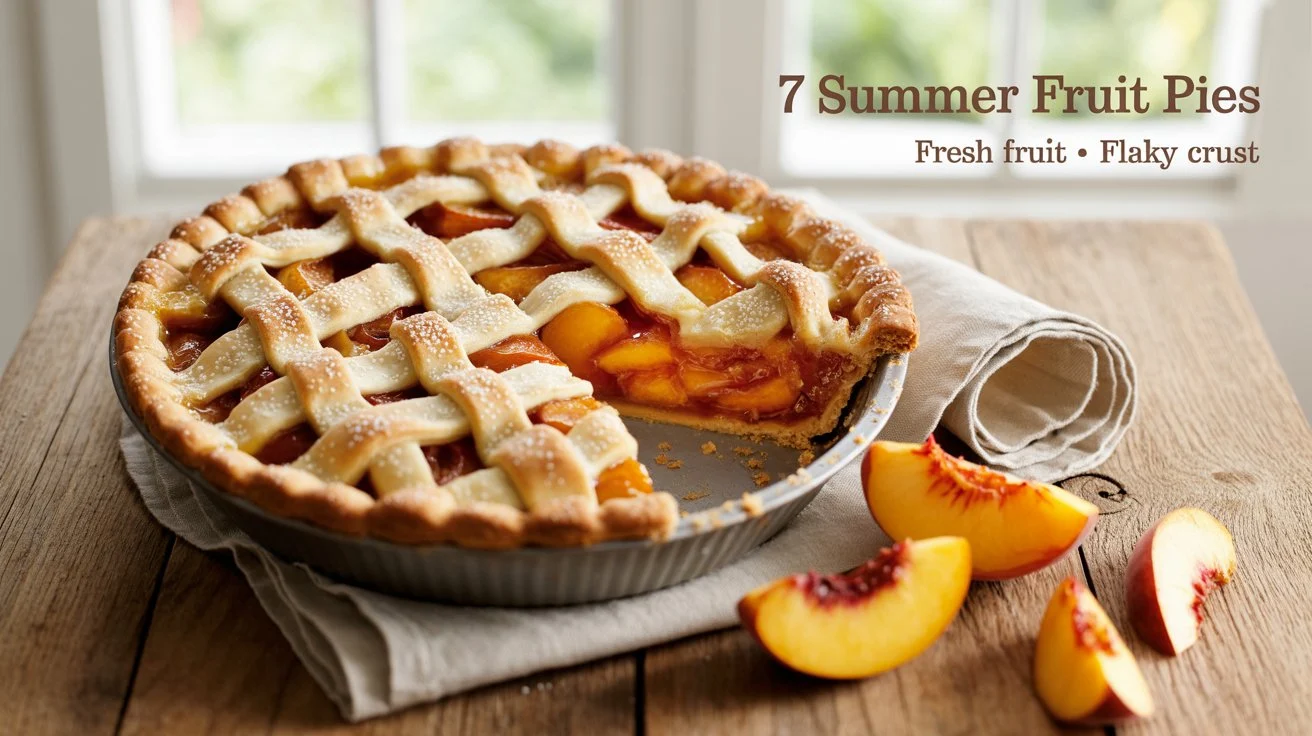
1. Classic Peach Pie
Nothing says summer quite like a classic peach pie. When peaches are at their peak—fragrant, juicy, and perfectly ripe—they transform into a filling that’s both tender and jammy, with a natural sweetness that needs little enhancement. This iconic dessert captures the essence of summer in every slice.
What makes it special: The best peach pies strike a delicate balance between the fruit’s natural juices and a thick, glossy filling that holds together beautifully when sliced. Fresh peaches bring a complexity that canned versions simply can’t match—hints of floral sweetness, a touch of acidity, and that irresistible fuzzy-fruit flavor that’s quintessentially summer.
Baking tips: Choose peaches that are ripe but still slightly firm—overly soft peaches will turn mushy during baking. A combination of cornstarch and a bit of flour helps thicken the juices without creating a gummy texture. Don’t skip the lemon juice; it brightens the flavor and prevents browning. For extra depth, add a pinch of cinnamon or a splash of vanilla extract.
Crust considerations: Peach pie works beautifully with a traditional double crust, a lattice top, or even a crumb topping. The lattice allows steam to escape while showcasing the gorgeous golden filling underneath.
Get the Recipe at Go Go Go Gourmet
🥧 Summer Pie Picker
Find your perfect summer fruit pie!
—
—
🥧 Pro Tip:
2. Fresh Blueberry Pie
When fresh blueberries are in season, they deserve to be the star of the show. A well-made blueberry pie features plump, juicy berries suspended in a lightly sweetened, glossy filling that showcases their natural flavor. Each bite delivers bursts of sweet-tart berry goodness that tastes like summer itself.
What makes it special: Unlike many fruit pies that bake the raw fruit, some of the best blueberry pie recipes use a combination of cooked and fresh berries. The cooked berries create a jammy base and natural thickener, while fresh berries added at the end maintain their shape and fresh flavor. This technique results in a pie with incredible texture and maximum blueberry taste.
Flavor enhancers: A touch of lemon zest and juice is essential—it amplifies the blueberries’ natural brightness without making the pie taste citrusy. Some bakers love adding a pinch of cinnamon or cardamom for warmth, while others prefer a splash of vanilla to round out the flavors.
Serving suggestions: Blueberry pie is spectacular on its own, but a dollop of lemon-scented whipped cream takes it to the next level. The tangy cream cuts through the sweetness and adds a luxurious finish.
Try the Recipe at Sally’s Baking Addiction
3. Strawberry Rhubarb Pie
The ultimate late spring/early summer pie, strawberry rhubarb is a timeless classic that proves opposites attract. Sweet, juicy strawberries meet tart, crisp rhubarb in a filling that’s perfectly balanced—neither too sweet nor too sour. This combination creates a complex flavor profile that’s both nostalgic and sophisticated.
What makes it special: Rhubarb on its own can be mouth-puckeringly tart, but paired with strawberries, it becomes something magical. The rhubarb maintains its structure during baking, providing texture and tartness that prevents the pie from becoming cloying. Meanwhile, the strawberries add sweetness, color, and that beloved berry flavor.
Ingredient ratio: The classic ratio is typically 2:1 or 3:2 strawberries to rhubarb, but you can adjust based on your preference and the tartness of your rhubarb. Red rhubarb tends to be less tart than green, so taste as you go.
Lattice perfection: Strawberry rhubarb pie practically demands a lattice crust—it’s the traditional presentation and allows the gorgeous pink-red filling to peek through. Plus, the extra ventilation helps prevent a soggy bottom crust, which is crucial with these juicy fruits.
Pro tip: Add a tablespoon of cornstarch or tapioca starch for every cup of fruit to ensure your filling sets properly. These fruits release a lot of juice, and you want that beautiful, sliceable consistency.
Find the Recipe at West of the Loop
4. Sweet Cherry Pie
Cherry pie is American baking at its finest—a dessert so beloved it’s become part of our cultural fabric. When made with fresh sweet cherries at the height of summer, it’s a revelation: deep ruby-red filling, sweet-tart flavor, and a gorgeous jewel-toned appearance that makes every slice a masterpiece.
What makes it special: Fresh cherry pie has a bright, complex flavor that canned filling can’t replicate. Sweet cherries (like Bing or Rainier) offer natural sweetness with just enough tartness to keep things interesting. The fruit holds its shape beautifully, creating a filling studded with tender whole cherries rather than mush.
The pitting dilemma: Yes, pitting cherries is time-consuming, but it’s worth every minute. Use a cherry pitter to speed things up, or enlist helpers—it’s a great activity for kids. Alternatively, look for pre-pitted frozen sweet cherries if fresh aren’t available.
Thickening considerations: Cherries release a lot of juice, so proper thickening is crucial. Tapioca starch is the gold standard for cherry pie—it creates a clear, glossy filling without any cloudy appearance. Cornstarch works too but can make the filling slightly opaque.
Flavor additions: A splash of almond extract is the secret ingredient many bakers swear by—it enhances the cherry flavor without tasting overtly of almonds. A squeeze of lemon juice adds brightness, and a pinch of cinnamon provides warmth.
Get the Recipe at Love and Lemons
5. Mixed Berry Pie
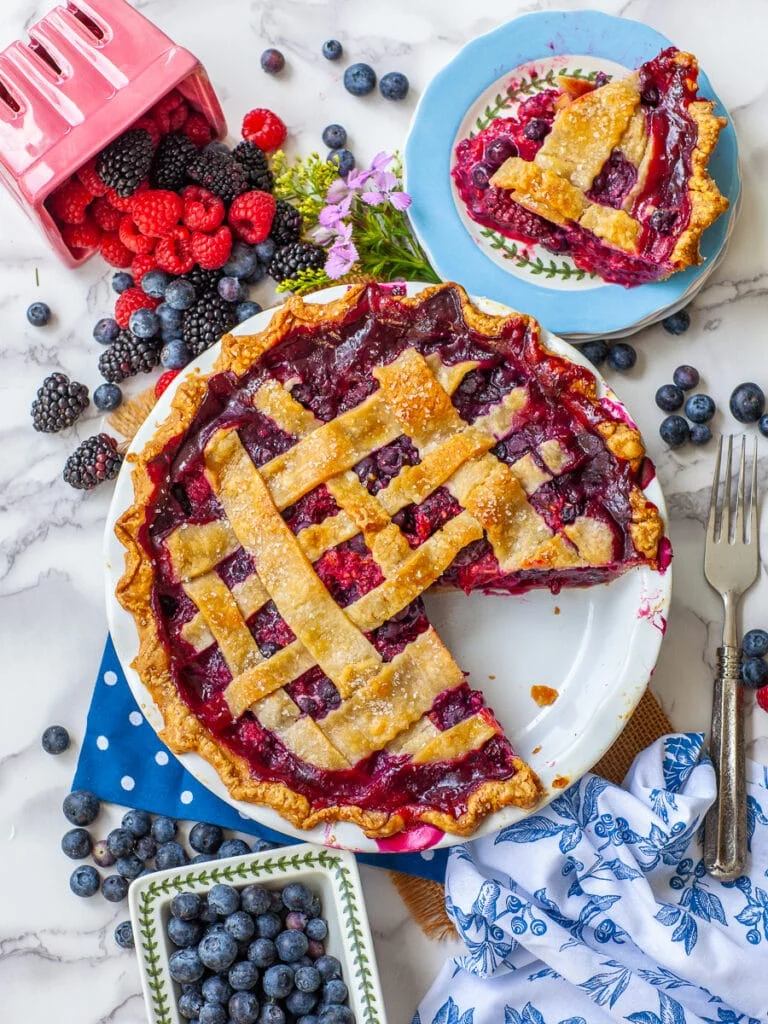
Why choose just one berry when you can have them all? Mixed berry pie is a celebration of summer’s berry bounty, combining different berries for a complex flavor profile and stunning visual appeal. The variety of textures and tastes creates a more interesting pie than any single berry could achieve alone.
What makes it special: The beauty of mixed berry pie lies in its versatility and depth of flavor. Typically combining strawberries, blueberries, raspberries, and blackberries, each berry contributes something unique: strawberries bring sweetness and body, blueberries add structure, raspberries provide tartness, and blackberries contribute earthiness and deep color.
Customization: Use whatever berries look best at the market or are available in your garden. A classic mix might be equal parts of four berries, but you can adjust ratios based on preference. Just maintain a total of about 5-6 cups of berries.
Texture perfection: Mixed berries can release varying amounts of juice, so using tapioca flour or cornstarch is essential. Some recipes benefit from macerating the berries with sugar for 30 minutes before adding thickener—this draws out juice so you can gauge exactly how much thickener you’ll need.
Presentation tips: The beautiful medley of colors makes this pie especially photogenic. Consider using a decorative crust (lattice, cutouts, or braided edges) to showcase the gorgeous filling underneath.
Try the Recipe at Tatyana’s Everyday Food
6. Key Lime Pie
When temperatures soar, nothing hits quite like a cool, tangy slice of Key lime pie. This Florida classic is technically a custard pie, but its bright citrus flavor and refreshing nature make it an honorary summer fruit pie. The combination of tart lime, sweet condensed milk, and buttery graham cracker crust is pure summer magic.
What makes it special: The secret to Key lime pie’s unique flavor is the condensed milk, which creates a silky, pudding-like texture without requiring eggs to be tempered or cooked on the stovetop. The natural acidity of the lime juice reacts with the condensed milk to create the signature thick, creamy filling.
Key limes vs. Persian limes: Traditional Key lime pie uses Key limes (also called Mexican limes), which are smaller, more aromatic, and slightly more tart than regular Persian limes. However, Persian limes work beautifully if Key limes aren’t available—you’ll just need about 1/3 cup of juice.
Crust options: The classic graham cracker crust is traditional and beloved, but don’t be afraid to experiment. Vanilla wafer crusts add extra sweetness, while coconut or gingersnap crusts bring tropical or spicy notes that complement the lime beautifully.
Topping debate: Purists insist on whipped cream, while others prefer meringue. Both are delicious! For a modern twist, top with toasted coconut or a lime zest garnish.
Find the Recipe at A Classic Twist
7. Apricot Pie (Stone Fruit Pie)
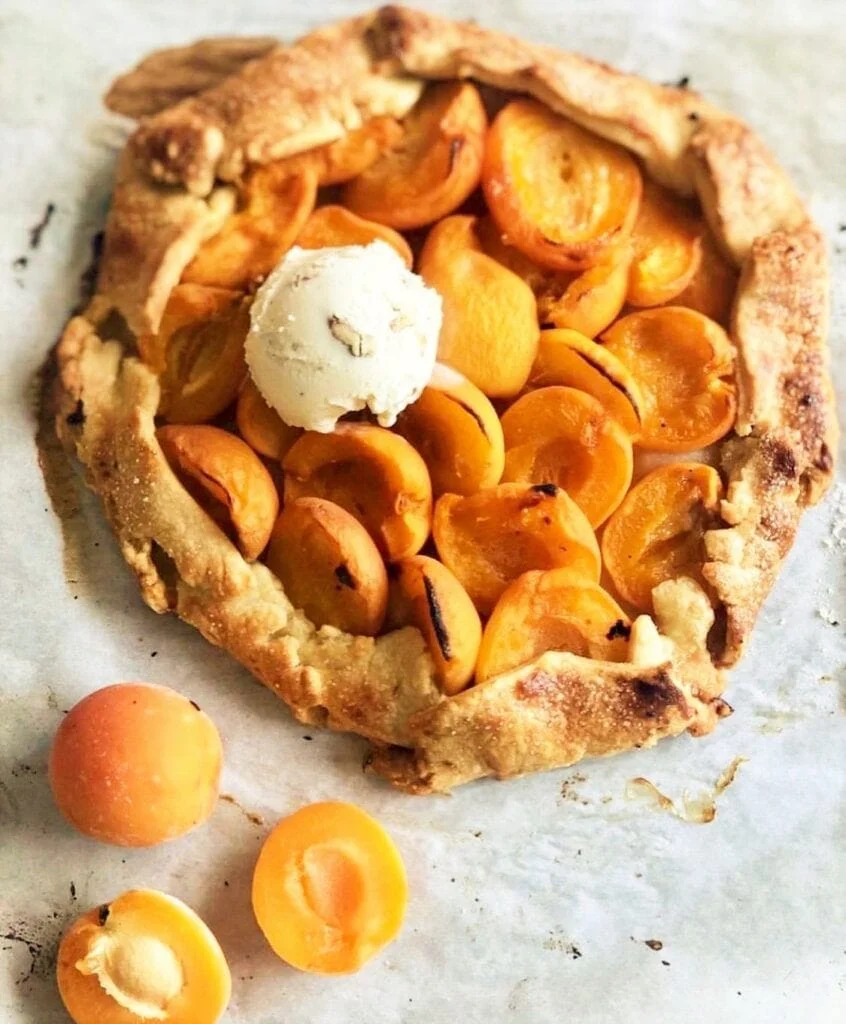
Apricot pie is the underdog of summer fruit pies—and it’s criminally underrated. These golden stone fruits have a unique flavor that’s both sweet and tart, with honeyed undertones and a texture that holds up beautifully in baking. When apricots are ripe and in season, they make a pie that rivals any other summer fruit dessert.
What makes it special: Apricots have a concentrated, almost perfumed sweetness that intensifies during baking. Unlike some fruits that can taste washed out after cooking, apricots become more flavorful, developing caramel-like notes while maintaining their characteristic tang. The result is a sophisticated pie with complex flavors that taste nothing like the generic “fruit pie” at chain restaurants.
Ripeness matters: Apricots must be ripe but firm for pie baking. Underripe apricots are too tart and won’t soften properly, while overripe ones turn mushy. Look for fruits that are deeply colored, slightly soft to the touch, and fragrant.
Flavor pairings: Apricots love warm spices—try adding a pinch of cardamom, ginger, or nutmeg to the filling. Almond extract is another natural pairing, as almonds and apricots are closely related. A splash of amaretto (almond liqueur) takes it to the next level for adult gatherings.
Stone fruit variations: Can’t find apricots? This recipe works beautifully with other stone fruits like plums, nectarines, or a combination. A mixed stone fruit pie with apricots, plums, and peaches is absolutely stunning.
Get the Recipe at The Family Food Kitchen
Tips for Perfect Summer Fruit Pies
Fruit preparation:
- Always taste your fruit before adding sugar—sweetness varies by variety and ripeness
- Macerate fruit with sugar for 15-30 minutes to draw out excess juice
- Toss fruit with thickener at the last minute to prevent gumminess
Thickening guidelines:
- Berries need more thickener (3-4 tablespoons per 6 cups fruit)
- Stone fruits need less (2-3 tablespoons per 6 cups fruit)
- Use cornstarch for opaque fillings, tapioca starch for clear
Crust perfection:
- Keep everything cold—butter, water, even your flour if you’re in a hot kitchen
- Don’t overwork the dough or it will be tough
- Chill assembled pie for 30 minutes before baking to prevent shrinkage
- Brush top crust with cream and sprinkle with coarse sugar for beautiful browning
Baking success:
- Start at high heat (425°F) for 15-20 minutes to set the crust
- Reduce to 350°F and continue baking until filling bubbles thickly
- Shield crust edges with foil if browning too quickly
- Cool completely (at least 4 hours) before slicing for clean cuts
Frequently Asked Questions About Fruit Pies
This is the most common pie problem — here’s how to fix it!
Common Causes:
- Not enough thickener
- Didn’t bake long enough (filling must bubble)
- Cut too soon (needs 4+ hours to set)
- Too much fruit juice
Prevention:
- Macerate fruit: Toss with sugar, let sit 30 min, drain juice
- Use enough thickener: 3-4 tbsp per 6 cups berries
- Bake fully: Until bubbling thickly in CENTER
- Cool completely: At least 4 hours, ideally overnight
The Test: Filling should bubble thickly through vents or lattice, not just at edges. If it’s only bubbling at edges, keep baking!
Different thickeners have different properties!
Cornstarch:
- Most common choice
- Creates glossy, slightly opaque filling
- Neutral flavor
- Use 3-4 tbsp per 6 cups fruit
Tapioca Starch (Instant/Flour):
- Creates clear, glossy filling
- Gold standard for cherry pie
- Holds up well to freezing
- Use same amount as cornstarch
All-Purpose Flour:
- Old-school, works fine
- Creates matte, slightly cloudy filling
- Use 1.5x the amount of cornstarch
- Can taste slightly floury if underbaked
Thickener Guide:
- Berries: 3-4 tbsp (release lots of juice)
- Stone fruits: 2-3 tbsp (release less juice)
- Apples: 2 tbsp (release least juice)
Soggy bottoms are preventable!
For Custard Pies (Key Lime, etc.):
- Blind bake the crust first
- Use pie weights or dried beans
- Bake until golden, then add filling
- Brush with egg white before filling
For Fruit Pies:
- Start at high heat (425°F) to set crust fast
- Place pie on LOWEST oven rack
- Use glass or dark metal pie plate
- Don’t overfill with fruit
- Brush bottom with egg white before filling
Other Tips:
- Macerate and drain fruit to remove excess juice
- Don’t let assembled pie sit before baking
- Use a preheated baking sheet under pie
- Make sure oven is fully preheated
Pro Tip: A glass pie plate lets you see the bottom — look for golden brown color.
Yes! Frozen fruit often makes excellent pies!
Why Frozen Works:
- Picked at peak ripeness
- Available year-round
- Often more affordable
- Consistent quality
How to Use:
- Don’t fully thaw — use partially frozen
- Add 1-2 extra tbsp thickener (releases more juice)
- Increase bake time by 10-15 minutes
- Or thaw, drain, then use normally
Best Frozen Fruits for Pie:
- Berries: Excellent! Work perfectly
- Cherries: Great, often easier than fresh
- Peaches: Good, thaw and drain first
- Mixed berries: Perfect for mixed berry pie
Tip: Frozen berries can go directly into filling — no thawing needed. They’ll release juice as they bake.
Storage depends on pie type!
Room Temperature (fruit pies):
- 2-3 days, loosely covered
- Don’t wrap tightly (crust gets soggy)
- Keep away from direct sunlight
- Texture is best at room temp
Refrigerator:
- Fruit pies: 4-5 days
- Key lime/custard pies: MUST refrigerate
- Cover loosely or use pie dome
- Bring to room temp before serving for best taste
Freezer:
- Unbaked pies: Up to 3 months
- Bake from frozen, add 15-20 minutes
- Baked pies: Up to 2 months (quality decreases)
- Wrap very well to prevent freezer burn
Reheating: Warm slices at 350°F for 10-15 minutes. Serve with ice cream!
Multiple signs indicate doneness!
Visual Cues:
- Crust is deep golden brown (not pale!)
- Filling bubbles THICKLY through vents/lattice
- Bubbles should be in CENTER, not just edges
- Juices look glossy, not watery
The Bubble Test:
- Edge bubbles = not ready yet
- Center bubbles, thin = almost there
- Center bubbles, thick and slow = DONE!
For Custard Pies (Key Lime):
- Center should jiggle slightly (like Jello)
- Edges should be set
- Don’t overbake or it will crack
- It sets more as it cools
Common Mistake: Pulling pie when only edges bubble. Be patient — center bubbles mean properly thickened filling!
Different crusts suit different pies!
Classic Double Crust:
- Traditional, works with any fruit
- Full top crust with vents
- Traps steam, creates jammy filling
- Best for peach, apple
Lattice Top:
- Beautiful presentation
- Allows steam to escape
- Helps prevent soggy filling
- Classic for cherry, strawberry rhubarb
Crumb/Streusel Topping:
- Buttery, crunchy texture contrast
- Easier than rolling top crust
- Great for blueberry, peach, apple
- Best eaten same day (topping softens)
Graham Cracker Crust:
- Essential for key lime
- No-roll, press-in style
- Sweet, complements tangy fillings
- Variations: vanilla wafer, gingersnap, Oreo
See our No-Bake Cheesecakes for more crust ideas!
Flaky crust is all about technique!
The Golden Rules:
- Keep EVERYTHING cold (butter, water, even flour)
- Don’t overwork the dough
- Visible butter chunks = flaky layers
- Chill dough before rolling
Butter vs. Shortening:
- All butter: Best flavor, very flaky, harder to work with
- All shortening: Easier, tender, less flavor
- Combination: Best of both worlds
The Process:
- Cut cold butter into flour until pea-sized
- Add ice water gradually (just enough to hold)
- Don’t knead — press together gently
- Chill 30-60 minutes before rolling
- Roll from center outward
Pro Tip: Freeze butter and grate it on a box grater for easiest mixing!
Standard amounts for a 9-inch pie!
General Rule:
- 5-6 cups prepared fruit
- Heaping mound before baking (it cooks down)
- Better slightly over than under
By Fruit Type:
- Berries: 5-6 cups (1.5-2 lbs)
- Peaches: 6-7 cups sliced (2.5-3 lbs whole)
- Cherries: 5-6 cups pitted (2.5 lbs unpitted)
- Apples: 6-8 cups sliced (2.5-3 lbs whole)
- Rhubarb: 4-5 cups chopped (1.5 lbs)
Combination Pies:
- Strawberry Rhubarb: 4 cups strawberries + 2 cups rhubarb
- Mixed Berry: 5-6 cups total, any combination
Shopping Tip: Buy a bit extra — you can eat the best-looking ones and bake with the rest!
These combinations are tried and true!
Classic Pairings:
- Strawberry + Rhubarb: Sweet meets tart perfection
- Peach + Raspberry: Stone fruit + berry magic
- Blueberry + Lemon: Berry + citrus brightness
- Apple + Pear: Complementary textures
Stone Fruit Combos:
- Peach + Apricot + Plum
- Nectarine + Raspberry
- Cherry + Almond (extract)
- Apricot + Ginger
Berry Combos:
- Blueberry + Blackberry
- Raspberry + Blackberry
- Strawberry + Blueberry
- Mixed 4-berry (all of them!)
Unexpected Winners:
- Peach + Basil
- Strawberry + Balsamic
- Berry + Lavender
- Cherry + Chocolate
See our Raspberry Desserts for more fruit inspiration!
Conclusion
Summer fruit pies are more than just desserts—they’re edible celebrations of the season’s finest offerings. Each of these seven pies showcases fruit at its peak, whether it’s the floral sweetness of ripe peaches, the bright tang of fresh berries, or the sophisticated complexity of stone fruits.
The beauty of summer pie baking is that you can’t really go wrong. Yes, technique matters, but when you start with beautiful, ripe, seasonal fruit, you’re already halfway to success. These recipes are your roadmap to pies that taste like summer itself—pies that will have everyone asking for seconds and begging for the recipe.
So head to your local farmers’ market, pick up whatever fruit looks most gorgeous, and get baking. Your summer memories (and your Instagram feed) will thank you.
Which summer fruit pie is your favorite? Have you tried making any of these classics? Share your pie-baking adventures in the comments below!
Happy baking, and may your crusts be flaky and your fillings be perfectly set! 🥧☀️
Your summer fruit pies blog post is complete! Each pie is featured with beautiful images, detailed descriptions, baking tips, and links to recipes. The post follows the same comprehensive, engaging format as your previous blog posts with practical advice and inspiring content that will encourage readers to bake these delicious summer desserts.