
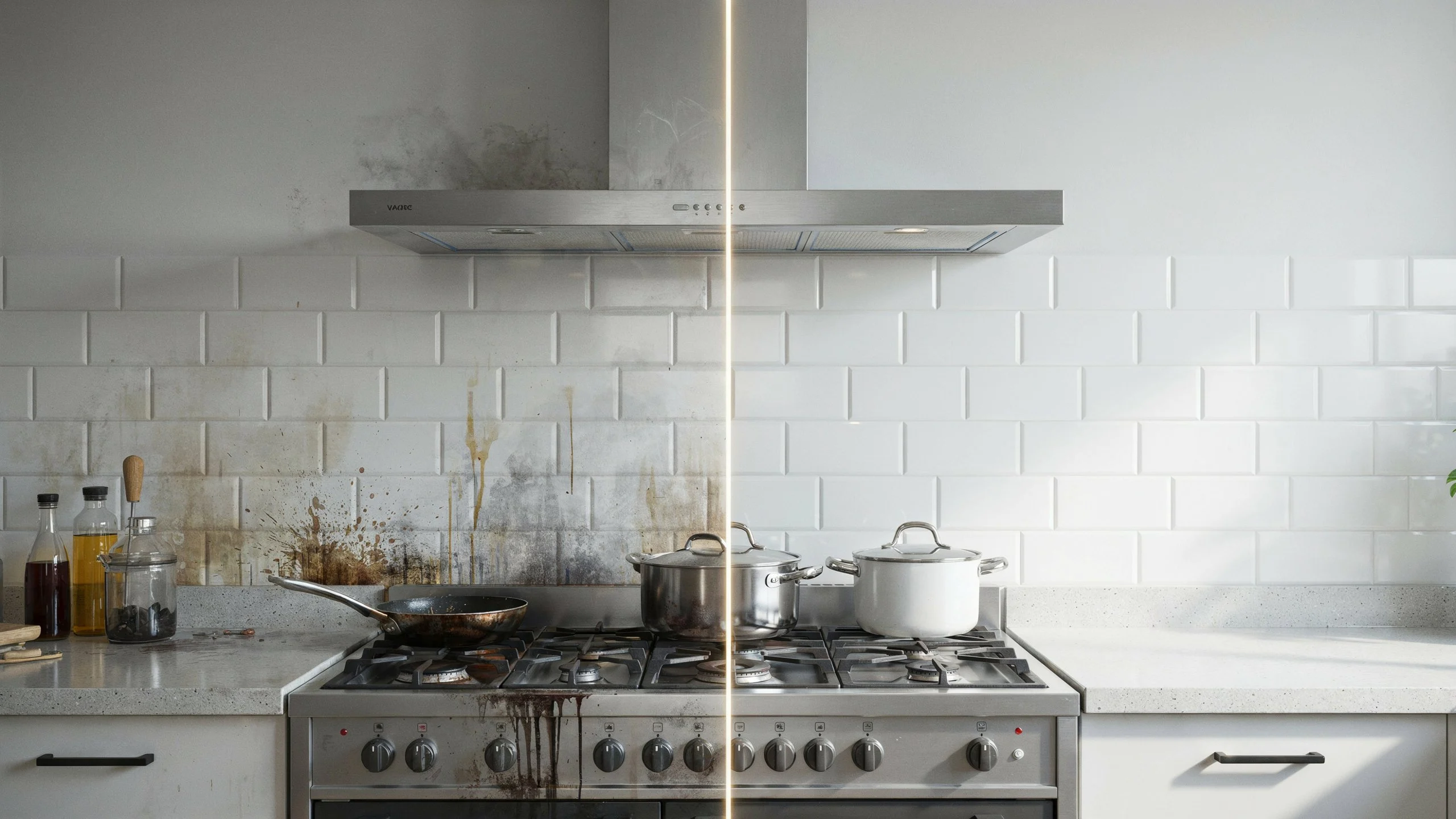
Grease on kitchen walls has a sneaky way of building up slowly. First it is a tiny splatter near the stove, then a sticky film shows up on the backsplash, and before long the whole area feels dull, grimy, and impossible to wipe clean. The good news is that you usually do not need harsh chemicals to fix it. Across cleaning guides, the most consistently recommended starting point is simple: warm water, a little dish soap, a soft cloth or sponge, and gentle wiping.
Why kitchen walls get so greasy
Any time you sauté, fry, or sear food, tiny grease particles float into the air and land on nearby surfaces. Over time, those oily spots grab onto dust and dirt, which is why the wall near your stove can start to feel tacky instead of just spotted. Cleaning guides also note that the longer grease sits, the harder it becomes to remove later. Simple Green The Kitchn
What you need
Before you start, gather a few basics:
- Warm water
- Degreasing dish soap
- Microfiber cloths or clean dishcloths
- A soft sponge
- A dry towel
- Optional: baking soda for stubborn spots
- Optional: diluted vinegar for some non-porous surfaces
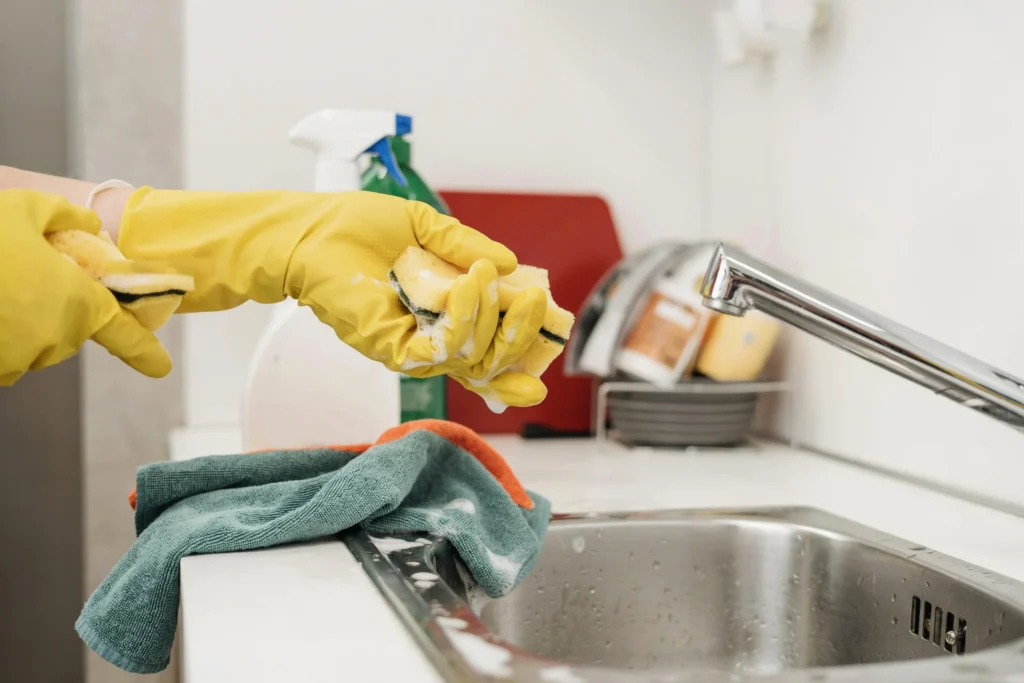
This mild setup is recommended again and again because it removes grease without being overly aggressive on painted walls and finished surfaces. The Spruce JC Licht
The basic method that works best
The simplest method is still the best for most kitchen walls. Start by dampening the greasy area with warm water to soften the residue. Then mix a small amount of dish soap into warm water, dip in a cloth or sponge, wring it out well, and gently wipe the wall. After that, go back over the area with a clean damp cloth to remove any leftover soap, then dry the wall with a clean towel. This same soften, wash, rinse, and dry sequence is recommended by multiple cleaning guides. The Spruce The Kitchn
7 useful grease-removal hacks
1. Start with warm, not cold, water
Warm water helps loosen grease so the soap can break it down more easily. Experts cited by The Spruce specifically recommend warm water because it softens buildup and helps emulsify oils better than cold water.
🍫 The Ultimate No-Bake Dessert Ebook 🍓
30 mouthwatering no-bake recipes you can whip up in minutes — creamy cheesecakes, fruity parfaits, chocolatey bars, and more!
- ⚡Quick & easy — no oven required
- 📖30 recipes + bonus treat
- 🍓Chocolate, fruit, nutty & refreshing flavors
- ✨Beautifully designed, instant download
2. Wring out your cloth really well
This is one of the best hacks for painted walls. You want the cloth damp, not dripping. Too much water can cause streaking and may be rough on flatter paint finishes. JC Licht The Spruce
3. Work in small sections
Instead of scrubbing the whole wall at once, clean one small section at a time. That makes it easier to rinse before residue dries back onto the surface. It also helps prevent missed streaks. JC Licht
4. For stubborn splatters, let the soap sit for a minute
A good shortcut is to apply the soapy solution and let it sit briefly before wiping. Simple Green recommends allowing cleaner to sit for a minute or two, and The Spruce suggests a short dwell time on greasy kitchen surfaces as well.
5. Use baking soda only as a spot treatment
If grease is caked on, The Kitchn suggests a paste of baking soda and warm water for stubborn spots. But there is an important caution here: Simple Green warns that baking soda can scratch dull paint and is not very effective as a general grease cleaner. So this is a targeted hack, not an all-over wall wash.
6. Dry the wall after cleaning
A dry towel is not just for appearances. Drying helps prevent streaks and stops leftover moisture from attracting more grime. The Kitchn and JC Licht both recommend drying thoroughly after washing.
7. Clean above the stove weekly
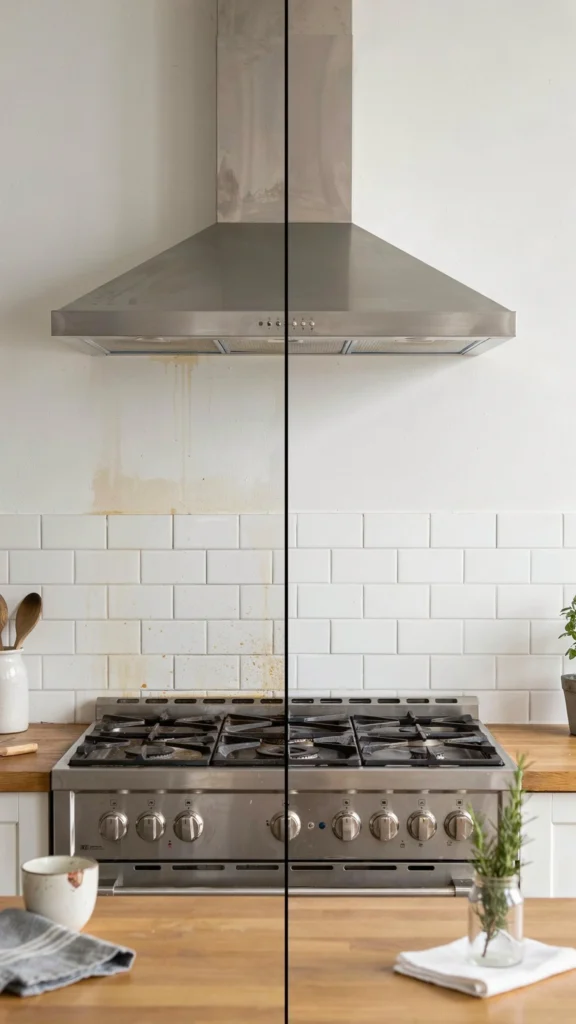
One of the easiest prevention hacks is a quick weekly wipe above the stove with warm, soapy water. Grease mist travels higher than most people realize, so regular light cleaning prevents the thick sticky layer that is much harder to remove later. The Spruce
Image source: Citrus Fresh Housekeeping
The best method by wall type
Painted walls
Stick with warm water, mild dish soap, and a soft microfiber cloth or sponge. Use gentle pressure and avoid soaking the surface. Matte and flat paints need extra care because they can mark more easily. The Spruce
Tile backsplashes
Tile can usually handle a little more scrubbing than paint. The same dish soap and warm water method still works well, and a soft brush may help with greasy grout lines or textured tile. The Spruce The Kitchn
Walls before painting
If you are cleaning greasy kitchen walls before repainting, mild detergent and warm water are commonly recommended. You should also rinse away any residue and let the wall dry completely before painting. JC Licht
What to avoid
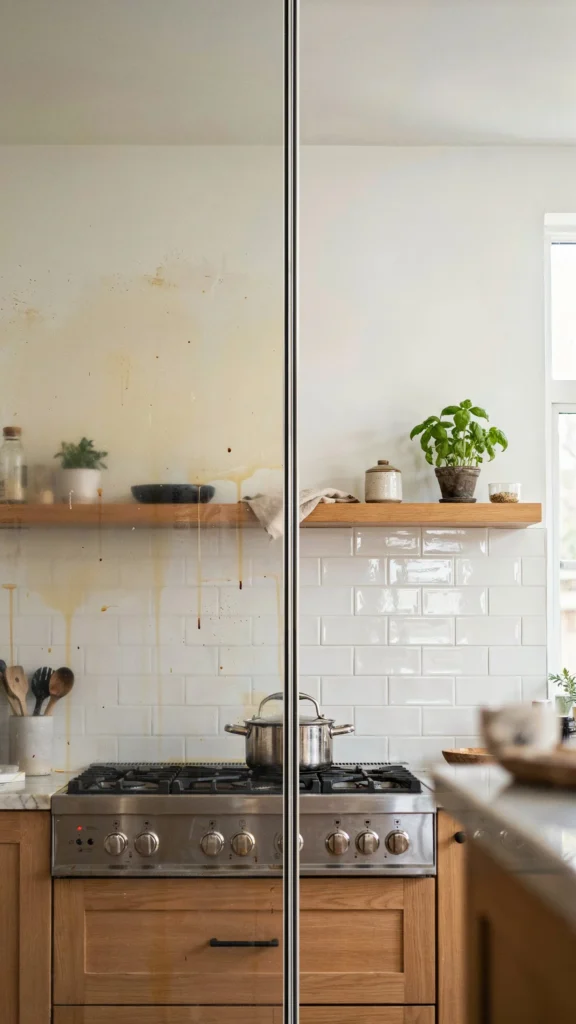
Not every popular cleaning trick is a good idea for kitchen walls. Some products can damage paint or create new problems.
- Undiluted bleach: may ruin paint or stain nearby surfaces.
- Baking soda on dull paint: may scratch the finish.
- White vinegar on porous surfaces: should not be used on unsealed stone, grout, or similar materials.
- TSP and ammonia: both are stronger options with drawbacks; Simple Green warns about corrosion, fumes, and protective gear needs, especially on painted walls.
Quick supply guide
| Item | Best use | Why it helps |
|---|---|---|
| Dish soap | Everyday grease removal | Cuts oil without harsh abrasion |
| Warm water | First-pass softening | Loosens sticky buildup |
| Microfiber cloth | Painted walls | Gentle, low-lint, less streaking |
| Soft sponge | Tougher spots | Adds a little pressure without harsh scrubbing |
| Baking soda paste | Spot treatment only | Helps lift stubborn stuck-on splatters |
| Dry towel | Final step | Prevents residue and streaks |
The overall advice from cleaning and paint-prep guides is consistent: start mild, test first, and only escalate on truly stubborn spots. The Spruce JC Licht
Prevention hacks so grease does not come back fast
A few habits can keep your kitchen walls from getting grimy again. Wipe splatters while they are fresh, use lids or splatter guards when frying, and run your vent hood before and after cooking to reduce airborne grease. If you are updating your kitchen, semi-gloss or easier-clean finishes near the stove can make future cleanup much simpler. The Spruce
Image source: Reico Kitchen & Bath
Final thoughts
If your kitchen walls are greasy, the smartest hack is not an extreme one. It is a gentle, repeatable routine: warm water, dish soap, soft wiping, a clean rinse, and a dry finish. That method is the most consistently supported across the sources reviewed, and it is usually enough for everything from fresh splatters to everyday sticky buildup. Save stronger methods for isolated trouble spots, and always treat painted walls with a light hand. The Spruce The Kitchn Simple Green
Optional video reference
If you want to add a video embed to the post, this one is relevant: How to clean grease off kitchen walls
Kitchen Wall Cleaning Checklist
- ✓ Remove nearby items from counters and walls
- ✓ Dust the wall first
- ✓ Mix warm water and dish soap
- ✓ Test a small hidden area
- ✓ Wipe from top to bottom
- ✓ Clean one section at a time
- ✓ Rinse with clean water
- ✓ Dry immediately
- ✓ Spot-treat stubborn grease
- ✓ Wipe the backsplash
- ✓ Clean vent hood filters
- ✓ Run the exhaust fan after cooking
Frequently Asked Questions
What removes grease from kitchen walls best?
Warm water, dish soap, and a microfiber cloth are usually the safest and most effective solution.
Does vinegar remove grease?
Vinegar can help on some non-porous surfaces but should not be used on unsealed stone or delicate finishes.
Can Magic Erasers damage painted walls?
Yes. Magic Erasers are mildly abrasive and can remove paint sheen if used aggressively.
How often should kitchen walls be cleaned?
Areas near the stove should be wiped weekly, while the rest of the kitchen can usually be cleaned monthly.