How Much Taco Meat Per Person? Complete Calculator & Taco Party Guide 2025
Table of Contents
Why Taco Meat Planning Matters
Planning the perfect amount of taco meat for your gathering can transform a stressful taco night into a seamless celebration. Whether you are hosting Taco Tuesday, planning a birthday fiesta, organizing a game day party, or feeding your family for the week, calculating accurate taco meat portions ensures everyone leaves satisfied without breaking your budget or wasting food. Tacos have become one of America’s favorite meals, with the average American consuming over 4.5 billion tacos annually according to industry research.
The Mexican food market in the United States has grown into a multi-billion dollar industry, with tacos leading the charge as the most popular menu item. Home taco nights have increased by over 40 percent in recent years, driven by convenience, affordability, and universal appeal across all age groups. Understanding proper meat portions prevents the dual disasters of running out mid-party or dealing with excessive leftovers.
The Real Impact of Poor Planning
Running out of taco meat during your party creates awkward moments and disappointed guests. Emergency grocery runs disrupt your hosting flow and stress levels. Conversely, massive leftover meat means wasted money and potential food spoilage. According to the USDA, American households waste nearly 40 percent of their food supply, with improperly planned events contributing significantly. Smart planning saves money, reduces waste, and ensures hosting success.
If you are planning a complete taco spread, coordinate your meat portions with our comprehensive taco party calculator and salsa portions guide for complete menu planning.
Free Taco Meat Calculator
Calculate Your Perfect Taco Meat Portions
Get instant, accurate calculations for any size taco party. Simply enter your details below.
🍫 The Ultimate No-Bake Dessert Ebook 🍓
30 mouthwatering no-bake recipes you can whip up in minutes — creamy cheesecakes, fruity parfaits, chocolatey bars, and more!
- ⚡Quick & easy — no oven required
- 📖30 recipes + bonus treat
- 🍓Chocolate, fruit, nutty & refreshing flavors
- ✨Beautifully designed, instant download
Your Results
💡 Pro Taco Tip
Understanding Taco Meat Portions: The Foundation
The Golden Rule of Taco Meat Planning
The fundamental principle for taco meat planning centers on 4-6 ounces of cooked meat per person for a main course. Since most meats lose 20-25 percent of their weight during cooking, you need approximately 5-8 ounces of raw meat per person. This calculation ensures adequate portions while accounting for cooking loss through moisture evaporation and fat rendering. Understanding this conversion prevents the common mistake of underestimating your raw meat needs.
Cooked meat per person
Tacos per adult
Meat per taco
Weight loss during cooking
Meat Type Comparison for Tacos
Different meat types require different planning approaches and cooking methods. Each protein offers unique advantages for taco preparation, and understanding these differences helps you make informed menu decisions based on preferences, dietary needs, and budget considerations.
| Meat Type | Raw per Person | Cooked Yield | Best For | Avg Cost/lb |
|---|---|---|---|---|
| Ground Beef (80/20) | 6-8 oz | 75% yield | Traditional tacos, budget-friendly | $4.99-$6.99 |
| Ground Turkey | 6-8 oz | 78% yield | Lean option, health-conscious guests | $3.99-$5.99 |
| Chicken Breast | 5-7 oz | 70% yield | Versatile, mild flavor | $3.49-$5.99 |
| Chicken Thighs | 6-8 oz | 75% yield | Juicy, flavorful, forgiving | $2.99-$4.99 |
| Pork Shoulder | 8-10 oz | 65% yield | Carnitas, pulled pork tacos | $2.99-$4.49 |
| Carne Asada | 6-8 oz | 80% yield | Premium tacos, special occasions | $8.99-$12.99 |
| Fish (Tilapia/Mahi) | 5-6 oz | 85% yield | Light, fresh, coastal style | $6.99-$10.99 |
For specific taco recipes and techniques, explore our collection including shrimp tacos, chicken fajitas, and kid-friendly taco ideas.
Taco Count Per Pound of Meat
Understanding how many tacos each pound of raw meat produces helps with accurate planning. One pound of raw ground beef (80/20) yields approximately 12 ounces cooked, enough for 6-8 tacos when using 1.5-2 ounces of meat per taco. Leaner meats like ground turkey or chicken breast provide slightly higher yields due to less fat rendering. Fattier cuts like pork shoulder yield less due to significant fat loss during slow cooking.
The Science Behind Perfect Taco Meat
Understanding Fat Content and Flavor
The fat content in taco meat dramatically affects both flavor and cooking yield. Ground beef labeled 80/20 contains 20 percent fat, which renders during cooking and carries flavor compounds throughout the meat. This fat content creates the characteristic savory taste and satisfying mouthfeel in traditional beef tacos. Leaner meats like 93/7 ground beef or ground turkey produce less flavorful results without added fats or seasonings.
According to food science research from Penn State Extension, fat serves as a vehicle for fat-soluble flavor compounds in spices like cumin, chili powder, and paprika. When you brown seasoned ground beef, the Maillard reaction creates hundreds of flavor molecules that dissolve in the rendered fat, coating each grain of meat with concentrated taste.
The Maillard Reaction in Browning Meat
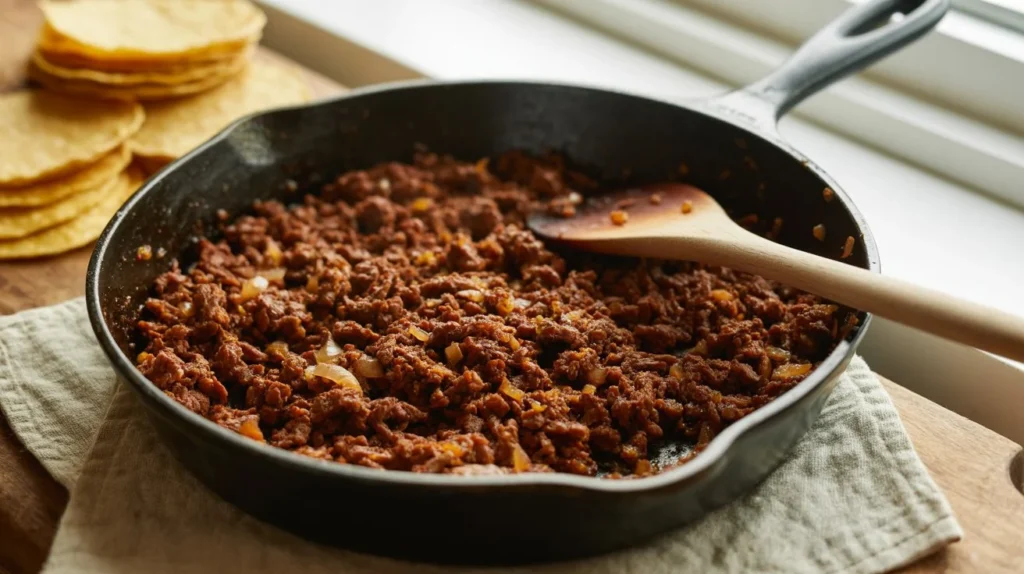
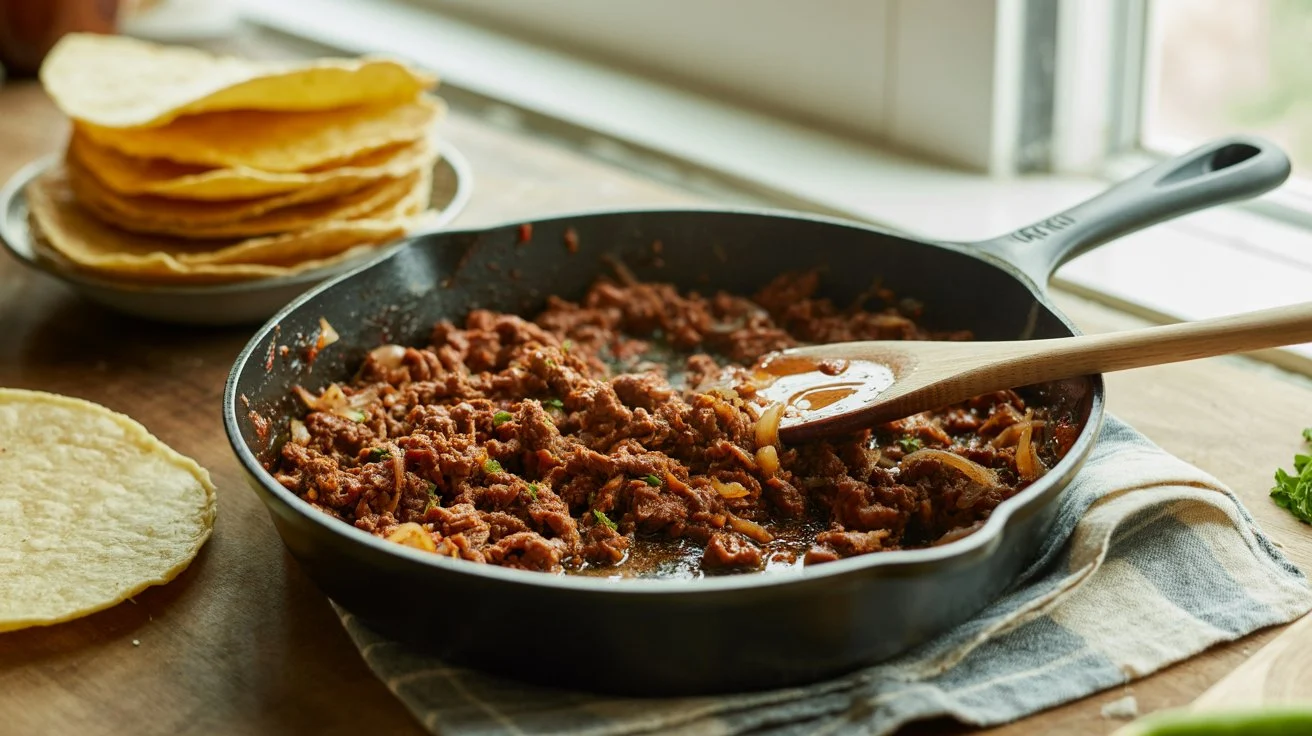
Properly browning taco meat involves more than just cooking it through. The Maillard reaction, occurring when proteins and sugars interact at temperatures above 300 degrees Fahrenheit, creates the complex flavors that define great taco meat. Breaking ground meat into small pieces and avoiding overcrowding the pan allows moisture to evaporate quickly, enabling proper browning rather than steaming. This technique produces deeply flavored meat instead of gray, boiled-tasting results.
Perfect Browning Technique
- Use high heat and avoid overcrowding the pan
- Break meat into small, uniform pieces
- Let meat sear undisturbed for 2-3 minutes before stirring
- Drain excess fat only after browning completes
- Add seasonings after browning for best flavor
Moisture Retention in Lean Meats
Lean proteins like chicken breast and fish require different cooking approaches to prevent dryness. Chicken breast taco meat benefits from brief marination in lime juice, oil, and spices before cooking. The acid in citrus tenderizes proteins while oil provides moisture during cooking. Fish tacos work best with quick, high-heat cooking methods that sear exterior while keeping interior moist and flaky.
Slow Cooking and Collagen Breakdown
Tough cuts like pork shoulder contain substantial collagen that transforms into gelatin during long, slow cooking. This process, requiring temperatures between 160-180 degrees Fahrenheit for several hours, creates tender, shreddable meat perfect for carnitas. The collagen breakdown also produces rich, unctuous texture that keeps meat moist even when fully cooked. This principle explains why slow-cooked meats taste better than quick-cooked alternatives for certain taco styles.
Ensure food safety by reviewing our meat temperature guide and food safety temperature guide.
2025 Taco TrendsTRENDING 2025
Birria Tacos Dominate
Birria tacos, featuring slow-cooked, deeply seasoned beef or goat in rich consommé, exploded in popularity and show no signs of slowing in 2025. Originally from Jalisco, Mexico, birria tacos have become mainstream across America. The trend includes dipping tacos in consommé before griddling for crispy, cheese-crusted edges. Home cooks recreate restaurant versions using slow cookers and Instant Pots, making this once-specialty item accessible for taco nights.
Plant-Based Meat Alternatives Improve
Plant-based taco meat options have evolved dramatically, with improved texture and flavor convincing even skeptical carnivores. Beyond Meat, Impossible Foods, and other brands specifically formulate ground products for Mexican applications. Many taco bars now offer plant-based options alongside traditional proteins, catering to vegetarian, vegan, and flexitarian guests. The environmental sustainability angle resonates strongly with younger consumers driving this trend.
Regional Mexican Styles Go Mainstream
Authentic regional Mexican taco styles gain traction beyond Mexican restaurants into home kitchens. Al pastor (spit-roasted pork with pineapple), cochinita pibil (Yucatan-style slow-roasted pork), and pescado Zarandeado (grilled fish) appear frequently on home taco menus. Social media exposes Americans to authentic preparations, inspiring home cooks to attempt traditional techniques and flavor profiles.
Fusion Taco Creativity
Fusion tacos blending Mexican foundations with global flavors continue trending upward. Korean BBQ tacos, Thai-spiced chicken tacos, Indian-inspired tikka masala tacos, and Mediterranean lamb tacos represent creative experimentation. This trend reflects growing comfort with cross-cultural cooking and willingness to break traditional taco rules for exciting new flavor combinations.
💡 2025 Budget Strategy
Ground meat prices fluctuate significantly. Watch for sales and buy in bulk, freezing portions for future taco nights. Family packs save 20-30 percent per pound compared to smaller packages. Chicken thighs offer exceptional value and flavor, often priced 30-40 percent less than chicken breasts while delivering juicier results perfect for tacos.
Stay inspired with international flavors from our Korean chicken, Indian tandoori, and Middle Eastern shawarma recipes.
Expert Cooking & Planning Tips
Seasoning for Maximum Flavor
Professional taco meat requires proper seasoning ratios and timing. The standard taco seasoning blend includes chili powder, cumin, paprika, garlic powder, onion powder, oregano, salt, and pepper. Use approximately 2-3 tablespoons of seasoning per pound of meat. Add seasonings after browning meat and draining excess fat, then add a small amount of liquid (water, broth, or tomato sauce) to help spices bloom and coat meat evenly. Simmer for 5-10 minutes to develop deep flavor.
Homemade Taco Seasoning Recipe
Skip store-bought packets with this superior blend:
- 2 tablespoons chili powder
- 1 tablespoon ground cumin
- 1 teaspoon paprika
- 1 teaspoon garlic powder
- 1 teaspoon onion powder
- 1 teaspoon dried oregano
- 1/2 teaspoon salt
- 1/2 teaspoon black pepper
- Optional: 1/4 teaspoon cayenne for heat
This makes enough for 1 pound of meat. Scale up and store in an airtight container.
Make-Ahead Strategies
Taco meat tastes even better when made ahead, allowing flavors to meld overnight. Cook meat completely, cool quickly, and refrigerate in airtight containers. Taco meat stays fresh refrigerated for 3-4 days or frozen for up to 3 months. Reheat gently on the stovetop with a splash of water or broth to restore moisture. This make-ahead approach saves time and stress on party day while improving flavor.
Proper Draining Technique
Drain excess fat from ground beef after browning but before adding seasonings. Excessive fat makes tacos greasy and causes shells to become soggy. Use a slotted spoon to transfer meat to a bowl, leaving fat in the pan. Alternatively, tilt the pan and use paper towels to absorb fat. Never drain fat down your sink drain, as it solidifies in pipes causing clogs. Dispose of cooled fat in the trash instead.
Keeping Meat Warm for Service
For taco bars and large gatherings, keep meat warm in a slow cooker set to low or warm setting. Add a small amount of liquid (broth or water) to prevent drying. Alternatively, use chafing dishes with fuel canisters for buffet-style service. Taco meat safely holds warm for up to 2 hours. Stir occasionally to maintain even temperature throughout.
Complete your taco spread with recipes from our collection including chicken taco soup, guacamole calculator, and salsa portions guide.
The Taco Party Ecosystem
Coordinating Your Complete Taco Bar
Taco meat rarely stands alone at gatherings. A complete taco bar includes shells or tortillas, proteins, toppings, salsas, and sides. Coordinating all components creates balanced, memorable meals. Traditional taco bar accompaniments include shredded lettuce, diced tomatoes, cheese, sour cream, guacamole, salsa, jalapeños, cilantro, lime wedges, and onions. Plan side dishes like Mexican rice, refried beans, chips, and queso to round out the menu.
Use our comprehensive taco party calculator to coordinate all components including shells, toppings, and sides for complete party planning.
Topping and Condiment Planning
Proper topping portions enhance tacos without overwhelming budgets. Plan approximately 2 ounces of cheese per person, 1/4 cup sour cream per person, and 2-3 ounces of guacamole per person. Vegetable toppings like lettuce and tomatoes require about 1 cup combined per person. These portions account for varied preferences and self-serving tendencies at taco bars.
Essential Taco Bar Components
Calculate portions for complete taco bar planning:
- Salsa portions per person
- Guacamole calculator
- Cheese portions guide
- Hard shells: 2-3 per person
- Soft tortillas: 3-4 per person
Side Dish Considerations
Mexican rice and refried beans serve as traditional taco accompaniments, significantly affecting meat consumption. Heavy sides reduce taco intake by filling guests quickly. Plan 1/2 to 3/4 cup of rice per person and 1/3 to 1/2 cup of beans per person. Lighter sides like Mexican street corn salad or fresh pico de gallo encourage more taco eating without excessive fullness.
Beverage Pairing and Planning
Beverage selection completes the taco experience. Traditional options include Mexican beer, margaritas, agua frescas, and horchata. Plan for 2-3 beverages per person for parties lasting 2-3 hours. Non-alcoholic options like limeade, Mexican Coke, and fruit-infused waters accommodate all guests. Cold beverages balance spicy taco heat effectively.
For complete party planning, explore our guides on tailgate parties and baby shower food planning.
Common Problems & Solutions
Problem: Greasy, Fatty Taco Meat
Excessive grease results from not draining fat after browning or using overly fatty meat. The solution requires proper draining technique after meat browns completely. Use an 80/20 fat ratio for ground beef, which balances flavor and reasonable fat content. Ground meat leaner than 90/10 produces dry tacos lacking flavor. After draining, blot meat with paper towels if still excessively greasy.
Problem: Bland, Underseasoned Meat
Bland taco meat stems from insufficient seasoning or poor timing. Add seasonings after browning and draining meat, using generous amounts (2-3 tablespoons per pound). Include salt in your seasoning blend, as it amplifies other flavors dramatically. Add liquid after seasonings to help spices bloom and distribute evenly. Taste and adjust seasoning before serving, adding more salt, cumin, or chili powder as needed.
Problem: Dry, Crumbly Meat
Dry meat results from overcooking or using extremely lean ground meat. Prevent dryness by adding liquid (water, broth, or tomato sauce) after seasoning, then simmering briefly. This creates a slightly saucy consistency that keeps meat moist. Avoid cooking meat beyond 160 degrees Fahrenheit internal temperature. Consider adding a small amount of butter or oil to lean meats for moisture and richness.
Problem: Gray, Steamed-Looking Meat
Gray meat indicates improper browning due to overcrowding the pan or insufficient heat. Cook ground meat in batches if necessary, allowing moisture to evaporate and Maillard reaction to occur. Use high heat and break meat into small pieces. Let meat sit undisturbed for 2-3 minutes before stirring, developing fond (brown bits) that creates deep flavor. Properly browned meat shows golden-brown color with crispy edges.
Problem: Running Out of Meat
Insufficient meat creates disappointed guests and hosting stress. Always cook 10-15 percent more meat than calculations suggest as a safety buffer. Keep track during service and prepare backup options (beans, extra rice) if running low. Consider offering multiple protein options to extend servings. Raw meat stores easily, so buying extra provides insurance without significant risk.
Transform leftover taco meat into new meals with our enchilada soup, tortilla soup, and Mexican dinner ideas.
Advanced Taco Techniques
Building Layers of Flavor
Professional taco makers build flavor through layering techniques. Start by toasting whole spices (cumin seeds, coriander) in a dry pan before grinding for superior aroma. Bloom ground spices in hot oil before adding meat, releasing essential oils and intensifying flavor. Add aromatics like minced garlic and onions after browning meat for another flavor dimension. Finish with fresh elements like cilantro and lime juice just before serving for brightness.
Pressure Cooker Carnitas
Achieve restaurant-quality carnitas at home using a pressure cooker. Season pork shoulder generously, add orange juice, lime juice, and garlic, then pressure cook for 45-60 minutes. Release pressure naturally, then shred meat and broil on a sheet pan to crisp edges while keeping interior tender and juicy. This method reduces cooking time from 6-8 hours to under 2 hours while producing exceptional results.
Carne Asada Perfection
Authentic carne asada requires proper marination and high-heat grilling. Marinate thin-sliced skirt or flank steak in lime juice, orange juice, garlic, cilantro, and cumin for 2-4 hours. Grill over very high heat (500+ degrees Fahrenheit) for 2-3 minutes per side, developing char without overcooking interior. Rest meat for 5 minutes, then slice thinly against the grain. This technique produces tender, flavorful beef tacos.
Spice Blending Mastery
Create custom spice blends tailored to specific proteins and preferences. Beef benefits from heavier cumin and chili powder. Chicken pairs beautifully with oregano and lime zest. Pork loves achiote and orange. Fish tacos shine with lighter seasoning featuring cilantro and lime. Experiment with ratios and ingredients like chipotle, ancho chile, or Mexican oregano to develop signature blends.
Tortilla Warming Techniques
Properly warmed tortillas elevate tacos dramatically. For corn tortillas, toast directly over gas flame or in a dry skillet until lightly charred and pliable. Wrap warm tortillas in clean kitchen towels to steam slightly and stay warm. For flour tortillas, heat briefly in a dry skillet or microwave wrapped in damp paper towels. Never serve cold tortillas, which crack and lack flavor.
Explore more Mexican-inspired dishes with our Mexican dinner recipes and Tex-Mex dinner collection.
Frequently Asked Questions
Plan for 4-6 ounces of cooked taco meat per person for a main course. This translates to approximately 5-8 ounces of raw meat per person after accounting for cooking loss. Adjust based on appetite levels, number of side dishes, and whether tacos are the only protein. For taco bars with multiple protein options, reduce each meat portion by 25-30 percent. Always add a 10-15 percent buffer to your calculations.
One pound of raw ground meat yields approximately 12 ounces cooked (75 percent yield for 80/20 ground beef), enough for 6-8 tacos depending on how generously you fill them. Standard taco portions use 1.5-2 ounces of meat per taco. Leaner meats like ground turkey or chicken provide slightly higher yields, while fattier cuts like pork shoulder yield less due to more fat rendering during cooking.
Ground beef with an 80/20 fat ratio is most traditional and flavorful for classic tacos. Ground turkey offers a leaner alternative with mild flavor. Chicken thighs provide juicy, forgiving results perfect for shredded chicken tacos. Pork shoulder works excellently for carnitas and slow-cooked preparations. Carne asada (grilled steak) creates premium tacos for special occasions. Fish like mahi-mahi or tilapia produces lighter, coastal-style tacos. Choose based on guest preferences, dietary needs, and budget.
For 20 people, plan for 6-8 pounds of raw meat as a main course. This yields approximately 4.5-6 pounds cooked, providing 4-6 ounces per person with moderate sides. If serving substantial sides like rice and beans, you can reduce to 5-6 pounds raw. For hearty eaters or minimal sides, increase to 8-10 pounds. Always round up when purchasing and add a 15-20 percent buffer for safety.
Yes! Taco meat tastes even better when made ahead as flavors meld overnight. Cook meat completely, cool it quickly by spreading in a shallow container, then refrigerate in airtight containers. Cooked taco meat stays fresh refrigerated for 3-4 days or frozen for up to 3 months. Reheat gently on the stovetop with a splash of water or broth to restore moisture. This advance preparation saves significant time and stress on party day.
Plan for 3-4 tacos per adult as a main course, 2-3 tacos when serving substantial sides, and 4-5 for teenagers or hearty eaters. Children typically eat 1-2 tacos depending on age. For taco bar appetizers or parties with multiple food options, reduce to 2-3 tacos per person. Hard shell tacos generally accommodate less meat than soft tortilla tacos, affecting overall consumption. Monitor during service and adjust offerings if needed.
Ready to Plan Your Perfect Taco Party?
Use our calculator above to get instant, accurate taco meat calculations. Save time, reduce waste, and impress your guests with perfectly planned portions for every taco night and celebration.
Explore more taco and Mexican food planning: Complete Taco Party Calculator | Salsa Portions Guide | Guacamole Calculator
Conclusion: Master Your Taco Meat Planning
Planning perfect taco meat portions transforms stressful taco nights into seamless celebrations. Armed with accurate calculations from our calculator, proven cooking techniques, and comprehensive planning strategies, you can confidently host any gathering knowing your guests will be satisfied and impressed. Remember the core principles: estimate 5-8 ounces of raw meat per person, adjust for children and side dishes, use proper browning and seasoning techniques, and build in a reasonable buffer.
Tacos represent more than just a meal. They symbolize fun, flexibility, and communal dining where everyone customizes their perfect bite. Properly planned and expertly prepared taco meat creates memorable experiences that guests discuss long after the party ends. The investment in quality ingredients, thoughtful planning, and careful execution pays dividends in guest satisfaction and hosting confidence.
Start planning your next taco celebration with confidence using our calculator and the techniques outlined in this comprehensive guide. Your guests will appreciate the perfectly seasoned, generously portioned taco meat, and you will enjoy the satisfaction of flawless hosting. Happy taco making!
Related Taco & Mexican Food Resources
Continue perfecting your taco planning with these helpful guides: