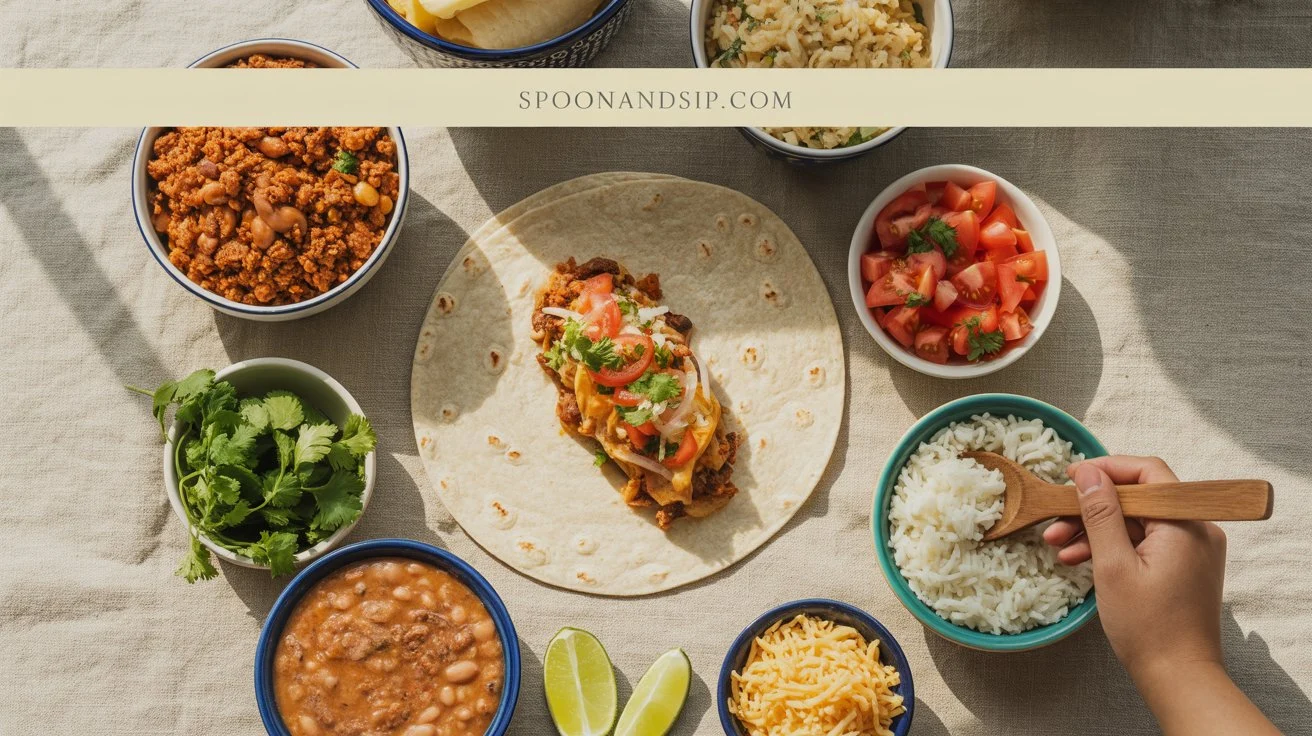
How Much Burrito Filling Per Person? Ultimate Calculator Guide 2025
Reading Time: 10 minutes | Complete party planning and burrito bar guide
Planning the perfect burrito bar or Mexican feast requires mastering one of the most complex portion calculations in party planning. Unlike single-protein meals, burritos involve multiple components with wildly different consumption patterns, costs, and preparation requirements. Whether you’re organizing a casual family taco night, a large office party, or an elegant Mexican-themed celebration, getting the filling quantities right can make the difference between a memorable feast and a logistical nightmare with either disappointed guests or massive food waste.
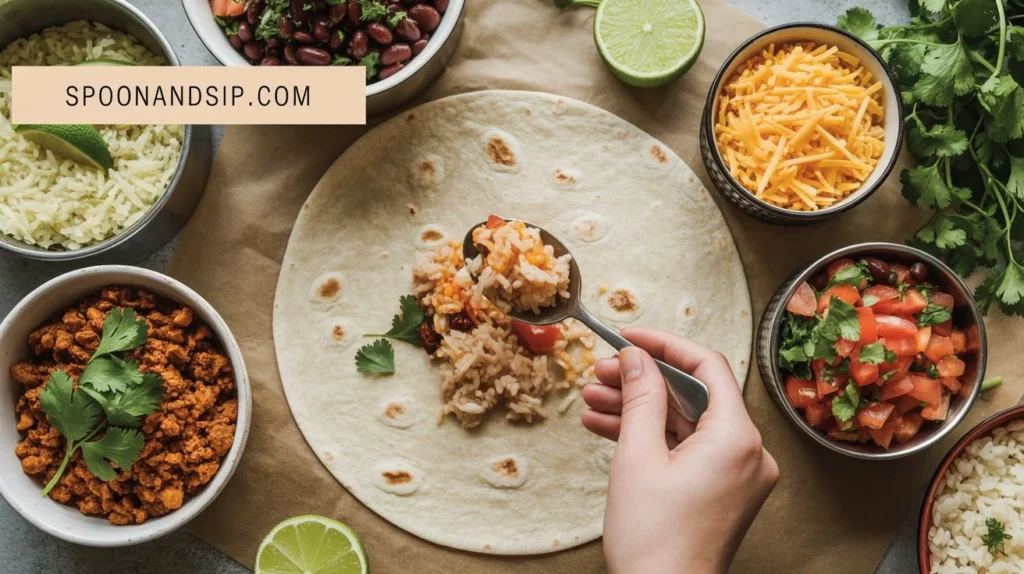
Quick Answer: For a burrito bar, plan 6-8 ounces total filling per person: 3-4 oz protein, 2-3 oz rice and beans combined, plus 1-2 oz cheese and vegetables. Always prepare 10-15% extra for popular items like protein and cheese, and consider 1.5-2 burritos per person for hearty eaters.
Burrito filling planning presents unique challenges that separate it from other party foods. Guest preferences vary dramatically for Mexican food, dietary restrictions require multiple protein options, component costs range from economical beans to expensive proteins, and the customizable nature means consumption patterns are highly unpredictable compared to plated meals.
Why You Need a Burrito Filling Calculator
Burrito planning involves more complexity than virtually any other party food. Multiple components require individual calculations, dietary preferences dramatically affect consumption patterns, cost optimization requires balancing expensive proteins with economical fillers, and the self-serve nature creates unpredictable usage patterns that can make or break your event budget.
of burrito bar hosts underestimate protein needs
average cost per person for complete burrito bar
different components in a full burrito bar setup
Professional catering companies understand that burrito consumption patterns differ dramatically from other foods due to customization psychology and the interactive eating experience. According to National Restaurant Association research, Mexican food ranks as America’s second most popular cuisine, with burrito-style meals showing 34% higher customer satisfaction when properly portioned compared to under-supplied setups.
Catering Industry Secret
Experienced Mexican caterers plan portions based on the “abundance psychology” principle guests take 40-60% more filling when they perceive plenty is available. Strategic over-preparation of visible items like cheese and vegetables creates satisfaction while managing protein costs.
Our calculator accounts for event type, guest demographics, dietary requirements, protein preferences, and cost optimization to provide restaurant-quality portion recommendations. This comprehensive approach has helped party planners save an average of $50-150 per burrito bar while ensuring guest satisfaction and minimizing waste across all filling categories.
Understanding burrito planning connects to broader Mexican party planning. Consider pairing with our taco party calculator for complete Mexican feasts or our guacamole calculator for essential accompaniments.
Free Burrito Filling Calculator
Calculate Perfect Burrito Filling Portions
Your Burrito Bar Planning Results
Foundation Knowledge: Burrito Components & Portions
Understanding burrito component proportions is essential for successful party planning and cost management. Each filling category serves different functions nutritional, textural, and economic requiring balanced planning for optimal guest satisfaction and budget efficiency.
| Component | Portion Per Person | Cost Per Pound | Function | Priority Level |
|---|---|---|---|---|
| Protein (Meat/Beans) | 3-4 oz | $8-16/lb | Main attraction | Critical |
| Rice | 2-3 oz | $2-4/lb | Base/filler | Essential |
| Beans | 2-3 oz | $3-5/lb | Protein/fiber | Essential |
| Cheese | 1-2 oz | $6-10/lb | Richness/binding | High |
| Vegetables | 1-2 oz | $4-8/lb | Freshness/crunch | High |
| Sauces/Salsas | 1-2 oz | $5-12/lb | Flavor/moisture | Medium |
According to USDA nutrition guidelines, well-planned Mexican meals can provide excellent nutritional balance when portions include adequate protein, complex carbohydrates from beans and rice, and fresh vegetables. The key is managing portion sizes to prevent caloric excess while ensuring satisfaction.
Professional Burrito Bar Recommendation
The ideal burrito bar offers 2-3 protein options, seasoned rice and beans, 3-4 fresh toppings, multiple cheese options, and 2-3 sauce varieties. This combination provides customization without overwhelming choice paralysis while managing costs through strategic high-value, low-cost component ratios.
Protein selection significantly affects both cost and appeal. Beef marketing research shows ground beef remains the most popular burrito protein, followed by shredded chicken and pork carnitas. Vegetarian options using seasoned beans or plant-based proteins have grown 67% in popularity since 2023.
Component quality affects consumption patterns significantly. Premium ingredients like fresh guacamole, artisanal salsas, and grass-fed proteins increase per-person consumption by 20-30% as guests perceive higher value and take larger portions.
Dietary accommodation has become essential for successful burrito bars. Providing clearly labeled vegetarian, vegan, and gluten-free options ensures inclusivity while often reducing overall costs, as plant-based proteins typically cost 40-60% less than meat options.
Industry Data & Cost Analysis
The Mexican food and burrito industry has experienced significant growth in 2025, with home entertaining trends, ingredient accessibility, and cultural food appreciation driving market dynamics that affect ingredient availability, pricing strategies, and consumer expectations for authentic experiences.
2025 Mexican Food Industry Insights
Home Mexican cooking has increased 78% since 2023, driven by ingredient accessibility and social media recipe sharing. Burrito bar parties have become 156% more popular as hosts seek interactive, customizable dining experiences that accommodate diverse dietary preferences while managing costs effectively.
According to Technomic’s 2025 Mexican food trends report, authentic flavor profiles and premium ingredient sourcing have become priority factors for consumers, with 82% willing to pay premiums for higher-quality proteins and fresh, locally-sourced produce in their Mexican meal experiences.
average cost per person for basic burrito bar
increase in home burrito bar popularity since 2023
average burritos consumed per person at parties
Regional pricing variations significantly impact burrito bar budgeting. Southwest markets typically offer 20-35% lower prices for authentic Mexican ingredients compared to Northeast markets, while specialty items like premium cheeses and artisanal salsas maintain consistent national pricing due to broader distribution networks.
Cost-Optimization Strategy
Purchase staple ingredients like rice, beans, and basic seasonings in bulk during promotional periods, typically saving 25-40% compared to individual purchases. Combine one premium protein (like carnitas) with one economical option (seasoned ground beef) to satisfy diverse preferences while managing overall costs.
Restaurant industry trends show Mexican fast-casual concepts have grown 89% since 2023, making home burrito bars an attractive alternative for budget-conscious entertaining. Professional food service operations report that proper portion planning and ingredient sourcing can reduce per-serving costs by 40-55% compared to restaurant dining while maintaining quality and satisfaction.
For comprehensive Mexican party planning, combine burrito bars with other Mexican favorites using our taco party calculator for variety or our Mexican dinner recipes for menu expansion ideas.
2025 Burrito and Mexican Food Trends
Contemporary burrito culture has evolved beyond traditional Mexican-American interpretations, embracing global fusion influences, health-conscious modifications, and premium ingredient sourcing while maintaining the customizable, interactive dining experience that makes burrito bars perfect for diverse groups and dietary preferences.
Plant-Based Protein Innovation
Alternative proteins have gained mainstream acceptance in Mexican cuisine, with seasoned lentils, jackfruit carnitas, and mushroom-based barbacoa providing authentic flavors and textures. These options appeal to health-conscious consumers while often reducing ingredient costs by 30-50% compared to meat proteins.
Global Fusion Applications
Korean-Mexican, Mediterranean-Mexican, and Indian-Mexican fusion burritos have gained popularity among adventurous home cooks. Ingredients like kimchi, hummus, and curry-spiced proteins create unique experiences while maintaining familiar burrito construction and serving methods.
Premium Ingredient Focus
Artisanal tortillas, grass-fed proteins, and locally-sourced vegetables have become standard for upscale burrito bars. These premium ingredients increase costs by 40-60% but create memorable experiences that justify special occasion pricing and social media sharing appeal.
Trending Burrito Bar Innovations
- Korean BBQ beef with kimchi and sriracha crema
- Mediterranean chicken with hummus and cucumber
- Indian-spiced lentils with cilantro chutney
- Breakfast burrito bars with eggs and chorizo
Health-Conscious Customization
Burrito bowl presentations, cauliflower rice options, and vegetable-based wraps cater to low-carb and health-focused diners. These alternatives maintain the interactive burrito bar experience while accommodating diverse dietary goals and restrictions.
Interactive Technology Integration
QR codes linking to ingredient sourcing information, nutritional calculators, and customization tutorials have become common for serious home entertainers. Digital tools help guests make informed choices while adding modern sophistication to traditional Mexican dining.
Sustainability and Local Sourcing
Environmental consciousness drives ingredient selection, with 74% of hosts prioritizing locally-sourced produce and sustainably-raised proteins. These choices often increase costs but create talking points and align with guest values.
Expert Planning & Setup Tips
Professional caterers and experienced party planners have developed proven strategies for burrito bar success that maximize guest satisfaction while managing costs, logistics, and dietary accommodation. These insider techniques ensure smooth service and memorable experiences for groups of any size.
Strategic Setup and Flow Management
Position stations in logical order: tortillas and bases first, then rice, beans, proteins, cheese, vegetables, and sauces last. This flow prevents bottlenecks while allowing guests to make informed decisions about portions as they see available options.
Professional Service Secret
Place the most expensive ingredients (proteins, premium cheeses) in the middle of the serving line rather than at the beginning. Guests who load up on rice and beans first take smaller protein portions, significantly reducing per-person costs while maintaining satisfaction.
Temperature and Food Safety Management
Hot ingredients must maintain 140°F or higher throughout service. Use chafing dishes, slow cookers, or warming trays for proteins, rice, and beans. Cold ingredients should stay below 40°F place serving bowls on ice or replace frequently during extended service.
Portion Control and Cost Management
Provide appropriately-sized serving utensils to encourage proper portions. Large spoons lead to over-serving, while small utensils frustrate guests. Train any serving helpers on proper portion sizes to maintain budget control without appearing stingy.
Visual Appeal and Abundance Psychology
Keep serving containers at least half-full throughout the event to maintain abundance perception. Pre-prepare backup portions and refill strategically. Empty containers signal scarcity and cause guest anxiety about availability.
Dietary Accommodation Strategy
Label all ingredients clearly, especially common allergens like dairy, gluten, and nuts. Provide separate serving utensils for each item to prevent cross-contamination. Consider dedicated vegetarian/vegan stations for serious dietary restrictions.
Timing and Preparation Coordination
Prepare non-perishable items (salsas, seasoned rice) up to 24 hours ahead. Cook proteins day-of for optimal flavor and safety. Set up stations 30-60 minutes before service, adding perishable items last.
For comprehensive party planning, explore our food safety temperature guide for proper protocols or our kid-friendly Mexican recipes for family-inclusive planning.
The Burrito Bar Ecosystem
Creating exceptional burrito bar experiences requires understanding the complete ecosystem of ingredients, equipment, presentation elements, and service coordination that transforms simple components into interactive, memorable dining experiences that satisfy diverse groups while managing complexity and costs.
Essential Equipment and Serving Infrastructure
Professional burrito bar setup requires chafing dishes or slow cookers for hot items, ice-filled containers for cold ingredients, appropriate serving utensils for each component, paper goods sized for burrito construction, and adequate space for guest flow and customization.
Component Synergy and Flavor Balance
Successful burrito bars balance flavors, textures, and temperatures across all components. Mild base ingredients (rice, beans) provide foundation for bold flavors (spiced proteins, salsas), while fresh elements (lettuce, tomatoes) add textural contrast and cooling effects.
Professional Component Balance
- 60% filling base (rice, beans, proteins)
- 25% flavor enhancers (cheese, sauces, vegetables)
- 15% fresh garnishes (lettuce, tomatoes, onions)
- Multiple spice levels to accommodate all preferences
Beverage Integration and Pairing
Mexican beverages complement burrito bar experiences perfectly. Agua frescas, Mexican sodas, and beer selections enhance authenticity while providing palate cleansing between customized creations. Non-alcoholic options should include both sweet and tart choices.
Ambiance and Cultural Context
Successful burrito bars embrace Mexican cultural elements through music, decorations, and presentation style while maintaining focus on food quality and guest experience. Authentic touches create immersion without overwhelming the practical aspects of self-service dining.
Waste Management and Sustainability
Burrito bars generate significant packaging waste and leftover ingredients. Plan disposal systems, consider compostable serving materials, and develop strategies for repurposing quality leftovers into subsequent meals like burrito bowls or quesadillas.
Scalability and Group Size Management
Burrito bar logistics change dramatically with group size. Small groups (under 20) can use single stations, while larger groups require multiple serving lines or staggered service times to prevent bottlenecks and maintain food quality throughout service.
For complete Mexican party planning, explore our taco party calculator for additional Mexican options or our Tex-Mex dinner ideas for menu expansion inspiration.
Troubleshooting Common Problems
Even experienced party planners encounter challenges when executing burrito bar events. Professional caterers have developed solutions for the most frequent issues that arise during planning, setup, and service phases of Mexican-themed gatherings.
Ingredient Shortages During Service
If popular items run low, strategically stretch remaining portions by mixing with similar ingredients. Combine remaining proteins, extend rice with additional seasonings, or create “signature” combinations that use available ingredients creatively rather than apologizing for shortages.
Temperature Control Failures
If heating equipment fails, quickly transfer hot foods to slow cookers or use warming trays. For cold items losing temperature, add ice to serving containers or relocate to air-conditioned areas. Always prioritize food safety over service convenience.
Emergency Backup Strategy
Keep emergency ingredients on hand: canned beans for quick preparation, pre-cooked rice that reheats quickly, and shelf-stable salsas. These backup options can extend service or replace failed components without significantly compromising quality or guest satisfaction.
Guest Flow and Bottleneck Issues
If serving lines become congested, implement guided service or create multiple stations for popular items. Designate helpers to assist with difficult-to-serve items like proteins or explain options to hesitant guests.
Dietary Restriction Emergencies
If guests arrive with unexpected dietary needs, quickly identify safe options from available ingredients. Most burrito components can be modified or served separately to accommodate common restrictions like gluten-free or vegetarian requirements.
Budget Overruns and Cost Control
If ingredient costs exceed budget, substitute expensive proteins with seasoned beans or rice-based options. Focus on enhancing flavor through seasonings and sauces rather than expensive ingredients. Guests often prefer well-seasoned economical options over bland premium ingredients.
Food Safety Concerns
If food safety questions arise, err on the side of caution and remove questionable items immediately. Have backup options available and focus on items you can confirm are safe rather than risking guest health.
Preparation Timing Disasters
If preparation falls behind schedule, prioritize essential components (proteins, rice, beans) over nice-to-have items (elaborate salsas, garnishes). Guests prefer simple, well-prepared basics over incomplete elaborate spreads.
When troubleshooting involves menu modifications, our Mexican dinner alternatives provide excellent backup options, or explore our quick dinner solutions for rapid meal pivots.
Advanced Party Planning Techniques
Professional-level burrito bar execution employs sophisticated planning techniques that maximize efficiency, ensure consistent quality, and create memorable experiences. These advanced methods distinguish exceptional Mexican entertaining from basic home attempts.
Batch Cooking and Preparation Sequencing
Advanced preparation involves strategic timing of component cooking to optimize flavor development and service coordination. Proteins benefit from slow cooking or braising methods that can be completed day-ahead, while rice and beans should be prepared same-day for optimal texture and food safety.
Flavor Profile Development and Layering
Professional Mexican cooking involves building complex flavors through layered seasoning applications. Toast whole spices before grinding, bloom dried chiles in oil, and develop fond through proper browning techniques to create restaurant-quality depth in home preparations.
Advanced Flavor Techniques
- Compound flavored butters for rice enhancement
- Multi-stage seasoning for protein development
- Fresh herb oil finishing for vegetable preparations
- Acid balance optimization for salsa complexity
Service Flow Optimization
Advanced service involves psychological and logistical considerations for optimal guest experience. Strategic ingredient placement, portion control through utensil selection, and abundance perception management create satisfaction while maintaining cost control.
Quality Control and Consistency
Implement systematic quality checks including temperature monitoring, seasoning consistency verification, and visual presentation standards. Professional operations use standardized recipes and preparation protocols to ensure consistent results across all components.
Dietary Accommodation Excellence
Advanced planning anticipates dietary needs through strategic ingredient selection and preparation methods. Use naturally gluten-free seasonings, prepare vegan-friendly bases, and create allergen-free zones to accommodate restrictions without compromising flavor or presentation.
Cost Engineering and Profit Optimization
Professional cost management involves strategic ingredient selection that maximizes perceived value while controlling actual costs. Expensive ingredients used as accents rather than bases, seasonal ingredient timing, and bulk purchasing strategies optimize budgets without sacrificing quality.
Presentation and Experience Design
Advanced presentation involves coordinating visual elements, service flow, and interactive components to create memorable experiences. Authentic cultural elements, educational components, and Instagram-worthy presentations enhance guest satisfaction and social sharing.
For advanced culinary development, explore our secret ingredients guide for flavor enhancement or study our Tex-Mex recipes for authentic technique inspiration.
Frequently Asked Questions
For a burrito bar, plan 6-8 oz total filling per person: 3-4 oz protein, 2-3 oz rice and beans combined, plus 1-2 oz cheese and vegetables. This allows for variety and generous portions. Always prepare 10-15% extra for popular items like protein and cheese. Consider 1.5-2 burritos per person for hearty eaters.
Seasoned ground beef and shredded chicken offer the best value, typically costing $8-12 per pound prepared. Beans provide excellent vegetarian protein at $2-4 per pound prepared. Carnitas and barbacoa cost more ($12-16/lb) but offer premium appeal for special occasions. Mix economical and premium options for best value.
Set up stations in logical order: tortillas first, then rice, beans, proteins, cheese, vegetables, and sauces last. Use chafing dishes or slow cookers for hot items. Plan 1.5-2 burritos per person and provide both regular and large tortillas. Keep hot items above 140°F and cold items below 40°F.
For most parties, 2-3 protein options work best: one economical (ground beef or chicken), one premium (carnitas or barbacoa), and beans for vegetarians. More than 4 proteins create choice paralysis and significantly increase costs and preparation complexity.
Budget $6-12 per person depending on protein choices and accompaniments. Basic setups (ground beef, rice, beans, basic toppings) cost $6-8 per person. Premium setups (multiple proteins, artisanal ingredients) cost $10-15 per person. Always add 10% for unexpected guests or appetites.
Essential accompaniments include: shredded cheese, diced tomatoes, lettuce, sour cream, salsa, and hot sauce. Popular additions: guacamole, jalapeños, onions, cilantro, and lime wedges. Provide chips and additional salsa for snacking while guests wait in line.
Label all ingredients clearly, especially allergens. Provide separate serving utensils for each item. Include vegetarian proteins (seasoned beans), dairy-free options, and gluten-free alternatives. Consider a dedicated vegetarian/vegan station to prevent cross-contamination.
Yes, most components can be prepared 1-2 days ahead. Proteins, rice, beans, and salsas actually improve in flavor overnight. Prepare fresh items like guacamole and chopped vegetables day-of for best quality. Reheat proteins safely to 165°F before serving.
Plan Your Perfect Burrito Bar Today
Ready to create an unforgettable Mexican feast that accommodates every guest while staying within budget? Use our calculator above to determine exact quantities and costs, then explore our complete collection of Mexican party planning tools for flawless execution.
Calculate Your Burrito Bar NeedsJoin thousands of successful party planners who trust our calculators for stress-free Mexican entertaining. From intimate family dinners to large celebrations, we help you create memorable experiences that satisfy every guest and budget.