
Image source: Dura Supreme
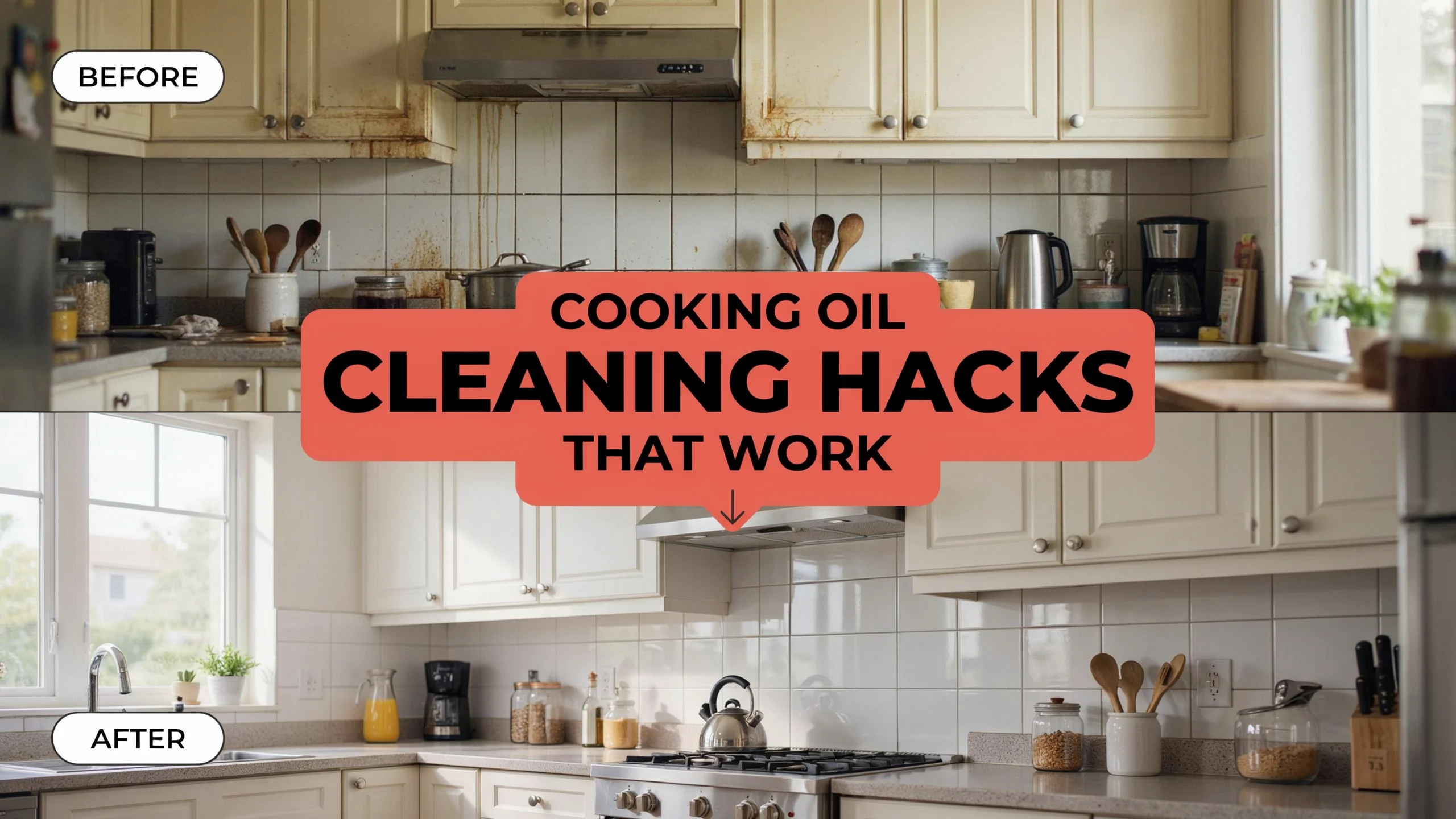
Cooking oil buildup is one of the most common reasons kitchens start to feel grimy even when they look tidy. Oil vapor from frying and sautéing can settle onto cabinets, backsplashes, counters, appliances, and even floors, creating a sticky film that traps dust and food particles. The safest first step is usually a soft cloth, warm water, and a small amount of mild dish soap rather than harsh chemicals or abrasive pads Dura Supreme Rust-Oleum.
Why Cooking Oil Buildup Happens
When oil heats up, tiny droplets become airborne and land on nearby surfaces. Over time, that thin layer mixes with dust, smoke, and kitchen residue, turning into a tacky coating that gets harder to wipe away. This is especially common on cabinet doors, handles, stovetops, microwaves, and the wall area around the range Rust-Oleum.
What You’ll Need
Use these basics before reaching for anything aggressive:
- Warm water
- Mild dish soap
- Microfiber cloths
- Soft sponge
- Soft-bristle brush
- Dry lint-free towel
- Baking soda for stubborn spots
- A kitchen-safe degreaser for heavy buildup
For finished cabinetry, manufacturers recommend soft lint-free cloths, mild soap if needed, and drying promptly after cleaning Dura Supreme.
How to Remove Cooking Oil Buildup Step by Step
1. Start Dry
Dust the area first. If you wipe greasy surfaces while they are dusty, you turn loose debris into a smeary paste. Use a dry microfiber cloth on cabinet faces, appliance tops, and trim before applying any moisture.
🍫 The Ultimate No-Bake Dessert Ebook 🍓
30 mouthwatering no-bake recipes you can whip up in minutes — creamy cheesecakes, fruity parfaits, chocolatey bars, and more!
- ⚡Quick & easy — no oven required
- 📖30 recipes + bonus treat
- 🍓Chocolate, fruit, nutty & refreshing flavors
- ✨Beautifully designed, instant download
2. Use Warm Water and Mild Dish Soap First
For many kitchen surfaces, the best starting method is simple: lightly dampen a soft cloth with warm water and a drop or two of mild dish soap, then wipe gently. Dura Supreme specifically recommends applying the soap solution to the cloth, wringing it out well, and avoiding excessive moisture on cabinetry Dura Supreme.
3. Wipe in Sections
Work one small area at a time instead of soaking a whole wall of cabinets. This keeps grease from being smeared around and makes it easier to dry the surface before streaks form.
4. Dry Immediately
After cleaning, buff the area with a second dry, soft cloth. Prompt drying matters, especially on wood or finished cabinet surfaces, because standing moisture can weaken seams and damage finishes over time Dura Supreme.
5. Use Baking Soda for Stubborn Spots
On laminate or tougher non-delicate areas, a small amount of baking soda can help break up stuck-on greasy patches. Hauslane recommends using baking soda for stubborn grease on laminate cabinets, with gentle scrubbing and a thorough wipe-down afterward Hauslane.
6. Bring in a Degreaser for Heavy Buildup
If warm soapy water is not enough, a kitchen degreaser may be the faster fix. Rust-Oleum notes that kitchen degreasers are designed to cut grease and residue on stovetops, countertops, microwaves, and cabinet doors Rust-Oleum.
Best Methods by Surface
Cabinets
For painted or stained cabinetry, start with a damp soft cloth and mild dish soap, then dry right away. Avoid abrasive sponges, steel wool, bleach, ammonia, and acidic cleaners that may dull or harm the finish Dura Supreme.
Laminate Cabinets
A mild dish soap solution usually works well. For stubborn grease, Hauslane suggests a small amount of baking soda and gentle scrubbing, followed by rinsing residue off and drying thoroughly Hauslane.
Stovetops, Microwaves, and Backsplashes
These surfaces often need more grease-cutting power than cabinets. A kitchen degreaser is often the better option for oily splatter zones around cooking equipment Rust-Oleum.
Handles and Knobs
Grease collects fast on high-touch hardware. Wipe them separately with a lightly damp cloth and dry them well so residue does not build up around edges.
Image source: BKC Kitchen and Bath
Homemade Cleaner vs Degreaser: Which Is Better?
A mild dish soap solution is usually best for routine buildup and regular maintenance. A dedicated degreaser is better when you are dealing with old, sticky oil film near the stove or on surfaces that have not been cleaned for a while. For delicate cabinet finishes, start with the gentlest method first and only move to stronger options after spot-testing Dura Supreme Rust-Oleum.
Important Caution About Vinegar
Some cleaning guides suggest diluted vinegar for stubborn grease on certain cabinet materials, while cabinet manufacturers may warn against acidic cleaners on finished cabinetry. Because of that conflict, the safest general advice is to start with warm water and mild dish soap, then test any stronger or acidic method on a hidden spot first Hauslane Dura Supreme.
Mistakes to Avoid
- Spraying cleaner directly onto cabinetry
- Using abrasive pads or steel wool
- Letting moisture sit on wood finishes
- Using bleach, ammonia, or harsh acidic cleaners on delicate finishes
- Skipping the drying step
- Waiting too long between cleanings
Dura Supreme specifically advises against abrasive tools, harsh chemicals, and applying solution directly to cabinetry because liquid can drip into seams and damage the finish Dura Supreme.
How to Prevent Cooking Oil Buildup
The easiest way to remove oil buildup is to stop heavy buildup from forming in the first place. Wipe surfaces regularly, clean splatters soon after cooking, and use your range hood consistently. Hauslane highlights range hood use as a practical way to reduce grease settling on cabinets Hauslane.
Helpful Reference Links
- Dura Supreme Cabinet Care + Cleaning Guide
- Rust-Oleum Kitchen Cleaning Tips
- Hauslane Guide to Cleaning Greasy Kitchen Cabinets
FAQ
What removes cooking oil buildup the fastest?
For light to moderate grease, warm water and mild dish soap often work well. For heavier sticky residue, a kitchen degreaser is usually faster and more effective on stovetops, cabinets, and surrounding kitchen surfaces Rust-Oleum.
Can I use baking soda on greasy cabinets?
Yes, but mainly for stubborn spots and only with gentle scrubbing. Hauslane recommends baking soda for tougher grease on laminate cabinets Hauslane.
What should I not use on finished cabinets?
Avoid abrasive pads, steel wool, bleach, ammonia, and harsh acidic cleaners. These can scratch, dull, or damage the finish Dura Supreme.
How often should I clean kitchen grease?
Light wipe-downs after cooking help the most. High-splash zones near the range should be cleaned more often so the oil film does not harden into buildup.