
🍪 Cookie Dough for a Crowd Calculator
Professional Batch Calculator – Perfect Cookies Every Time
Cookie Calculator
Calculate the perfect amount of cookie dough and ingredients for your group size and occasion.
Pro Baking Tips for Large Cookie Batches
- Consistent Sizing: Use a cookie scoop for uniform cookies and even baking times
- Temperature Matters: Chill dough for 30 minutes if it becomes too soft during shaping
- Oven Rotation: Rotate baking sheets halfway through for even browning
- Batch Timing: Allow 2-3 minutes between batches for oven temperature recovery
- Storage Planning: Cool completely before storing in airtight containers
- Quality Control: Bake a test batch first to perfect timing and size
Complete Guide to Cookie Dough for Large Groups
Scaling cookie recipes for large groups requires more than simply multiplying ingredients. Whether you’re baking for a school fundraiser, office party, or family reunion, understanding the nuances of large-batch cookie production ensures consistent, delicious results that will impress any crowd.
Professional bakers have developed specific techniques for managing large cookie operations, from ingredient preparation to final storage. These methods help maintain the texture, flavor, and appearance that make homemade cookies special, even when producing hundreds at a time.
Understanding Cookie Dough Scaling
Unlike bread doughs, cookie doughs scale relatively well, but several factors require attention when multiplying recipes. Fat distribution becomes critical in large batches – butter must be properly creamed with sugars to create the right texture foundation for dozens or hundreds of cookies.
When working with large quantities, professional bakers recommend mixing in smaller sub-batches rather than attempting to cream pounds of butter at once. Most home stand mixers struggle with more than triple-batch quantities, and proper creaming requires adequate bowl space for air incorporation.
🍫 The Ultimate No-Bake Dessert Ebook 🍓
30 mouthwatering no-bake recipes you can whip up in minutes — creamy cheesecakes, fruity parfaits, chocolatey bars, and more!
- ⚡Quick & easy — no oven required
- 📖30 recipes + bonus treat
- 🍓Chocolate, fruit, nutty & refreshing flavors
- ✨Beautifully designed, instant download
Ingredient temperature uniformity becomes crucial at scale. While small batches might forgive slightly cold eggs or overly soft butter, large batches require all ingredients to be at optimal temperatures (68-72°F for butter, room temperature for eggs) for consistent mixing and final texture.
Cookie Yield and Portioning Strategies
Accurate yield calculations prevent both shortages and waste when baking for crowds. Standard cookie portions vary significantly by type – chocolate chip cookies typically use 1.5-2 tablespoons of dough each, while delicate sugar cookies may use only 1 tablespoon per cookie.
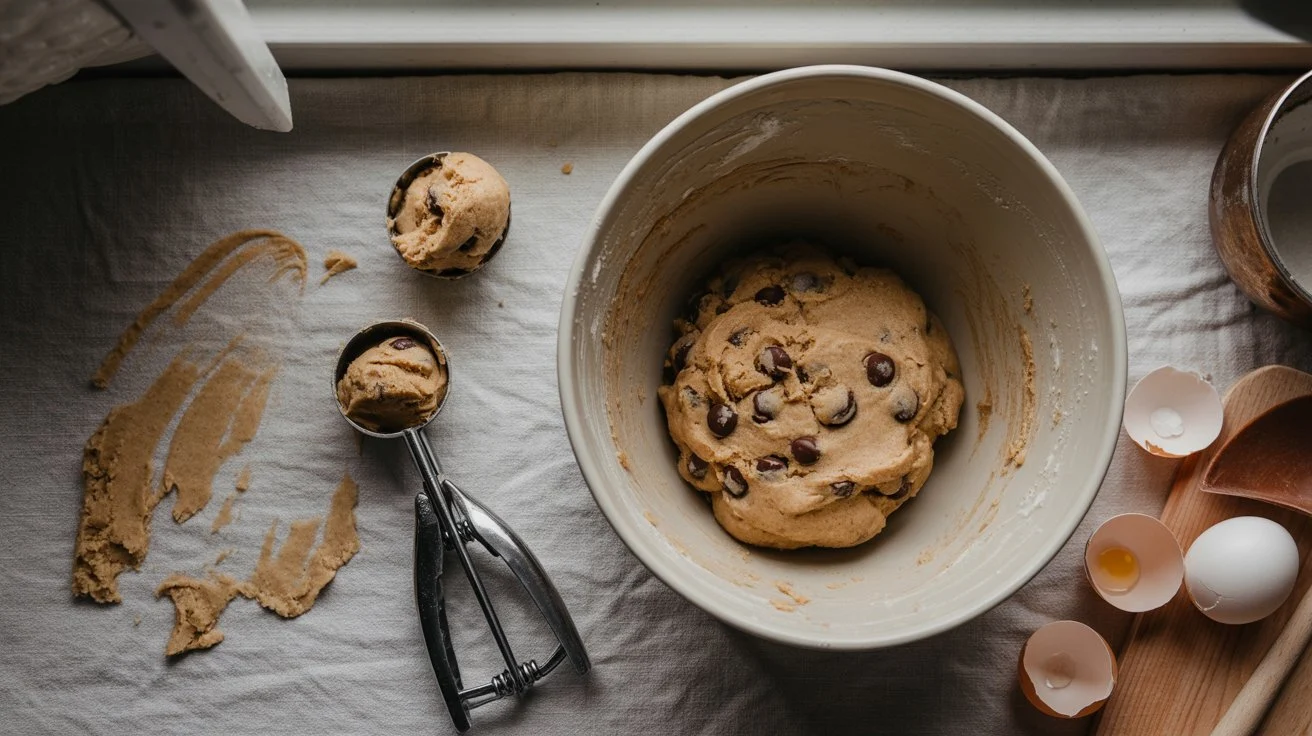
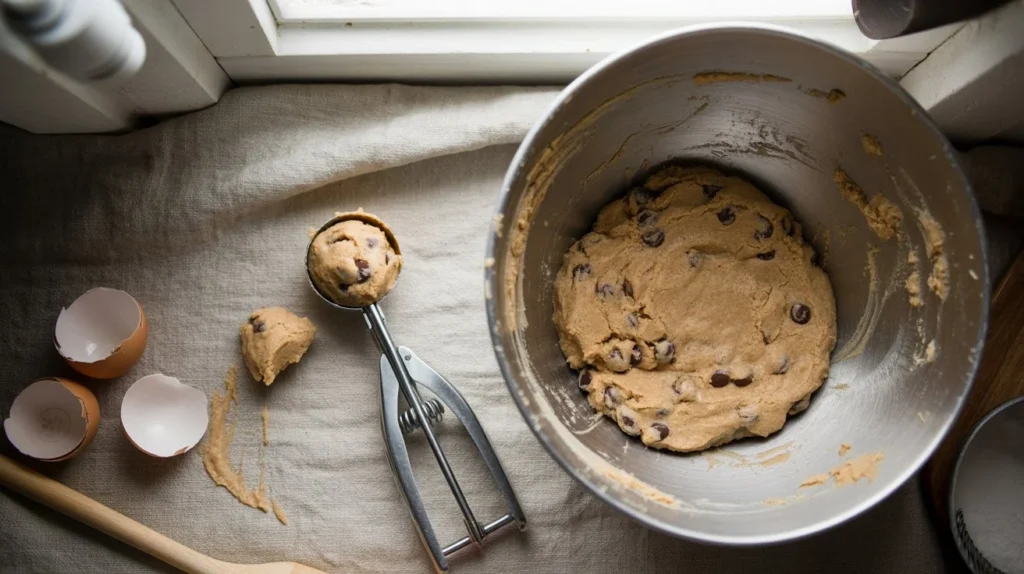
Professional bakeries use cookie scoops for portion control, which ensures uniform size and consistent baking times across large batches. A #40 scoop (1.6 tablespoons) works well for most cookie types, while a #60 scoop (1 tablespoon) suits smaller, more delicate varieties.
Yield planning should account for sampling and breakage – professional bakers typically add 10-15% extra to their calculations to ensure adequate quantities. This buffer also allows for quality control testing and inevitable mishaps during large-batch production.
Make-Ahead and Storage Solutions
Strategic make-ahead planning transforms large cookie projects from overwhelming day-long marathons into manageable, staged processes. Cookie dough can be prepared and stored at several stages, each offering different advantages for timing and final quality.
Refrigerated dough storage works well for most cookie types and actually improves flavor development through a process called “hydration rest.” Wrapped tightly and stored at 35-38°F, most cookie doughs maintain quality for 3-5 days, allowing bakers to spread preparation across multiple sessions.
For longer storage, freezing shaped cookie dough portions provides maximum flexibility. Professional operations often pre-scoop entire batches onto parchment-lined sheet pans, freeze until solid, then transfer to storage bags. This method allows for baking small quantities as needed while maintaining fresh-baked quality.
Baked cookie storage requires different strategies depending on cookie type and intended use. Crisp cookies like gingersnaps maintain quality in airtight containers for weeks, while soft cookies like chocolate chip benefit from storage with a slice of bread to maintain moisture levels.
Equipment and Workspace Optimization
Efficient large-batch cookie production requires strategic workspace organization and appropriate equipment scaling. Professional bakers recommend having at least 4-6 half-sheet pans available for continuous production, allowing some pans to cool while others bake.
When standard home ovens limit production, convection settings can improve efficiency by allowing multiple racks to bake simultaneously. However, convection baking typically requires temperature reduction of 25°F and careful monitoring to prevent over-browning.
Ingredient staging becomes critical for large batches. Professional setups include pre-measured ingredients in individual containers, room-temperature butter staging areas, and designated cooling spaces that don’t interfere with ongoing production.
For very large quantities, consider renting or borrowing commercial-grade equipment such as floor mixers or convection ovens from local culinary schools or catering companies. The efficiency gains often justify the modest rental costs for significant events.
Quality Control and Troubleshooting
Maintaining consistency across large batches requires systematic quality control throughout the production process. Professional bakers test-bake 2-3 cookies from each dough batch to verify timing, spread, and final texture before committing to full production.
Common large-batch issues include uneven baking due to oven hot spots and texture variations from ingredient temperature changes during extended mixing sessions. Rotating sheet pans and monitoring dough temperature help maintain consistency throughout production.
Documentation becomes valuable for future events – record actual yields, timing, and any adjustments made during production. This information proves invaluable for planning subsequent large-batch projects and prevents repeating mistakes.
Printable Recipe Card
Want just the essential recipe details without scrolling through the article? Get our printable recipe card with just the ingredients and instructions.