
 Photo: Wikimedia Commons (public domain)
Your countertops take more abuse than any other surface in the kitchen — hot pans, wine rings, raw chicken juice, turmeric powder, and a decade of wiping with whatever was closest. The problem is that “countertop” isn’t one material: granite, marble, quartz, laminate, and butcher block each have opposite rules for the same cleaner. Vinegar that shines laminate permanently etches marble. This guide gives you 15 countertop cleaning tips organized by universal habits first, then surface-specific care, so your counters stay spotless for decades — not decades-free of shine.
1. Clear the Counter Completely Before Any Deep Clean
 Photo: Wikimedia Commons (CC BY-SA)
Steps:
- Remove everything — appliances, knife blocks, utensil crocks, the mail pile.
- Clean under and behind each item before it returns.
- Only keep daily-use items on the counter; store the rest.
Why it works: Crumbs, grease mist, and moisture collect under every stationary object, and you can’t clean a surface you can’t see. Decluttering is the first step of every professional deep-clean routine because it also reveals stains while they’re still treatable.
Watch out: Appliance feet can leave rubber marks or trapped moisture rings on stone — check for discoloration as you lift each item.
🍫 The Ultimate No-Bake Dessert Ebook 🍓
30 mouthwatering no-bake recipes you can whip up in minutes — creamy cheesecakes, fruity parfaits, chocolatey bars, and more!
- ⚡Quick & easy — no oven required
- 📖30 recipes + bonus treat
- 🍓Chocolate, fruit, nutty & refreshing flavors
- ✨Beautifully designed, instant download
2. Make Daily Cleaning a 60-Second Dish-Soap Wipe
 Photo: Wikimedia Commons (CC BY-SA)
Steps:
- Mix a drop of dish soap into warm water.
- Wipe the whole counter with a well-wrung soft cloth.
- Follow with a clean water-damp cloth, then dry with a towel.
Why it works: Dish soap is a pH-balanced degreaser that’s safe on virtually every counter surface — it’s the universal daily method recommended across quartz, granite, and laminate care guides Caesarstone.
Watch out: “Wipe” means wipe — don’t flood the surface. Standing water is the enemy of seams, edges, and unsealed stone.
3. Use Microfiber, Not Paper Towels or Abrasive Pads
 Photo: Wikimedia Commons (CC BY-SA)
Steps:
- Use a flat-weave microfiber cloth for daily cleaning.
- Wash cloths without fabric softener (it coats the fibers and kills their static grab).
- Reserve scrub pads for laminate and solid surface only — never stone.
Why it works: Microfiber lifts grease and particles mechanically without scratching, while paper towels smear residue and scouring pads leave micro-scratches that dull polished stone permanently.
Watch out: The “safe abrasive” rule: if a surface is polished to a shine (granite, marble, quartz), nothing abrasive touches it. Ever.
4. Know Your Surface Before You Choose a Cleaner
 Photo: Wikimedia Commons (CC BY-SA)
Steps:
- Identify your counter: natural stone (granite, marble, quartzite), engineered stone (quartz), laminate, wood, or solid surface.
- Read the manufacturer’s care page — quartz brands like Caesarstone publish explicit do-not-use lists.
- When in doubt, dish soap and water is the safe default.
Why it works: Most permanent countertop damage is chemical, not mechanical — an acid or solvent in the wrong bottle does in one wipe what years of cooking can’t Caesarstone.
Watch out: Never assume. “Stone-looking” laminate and real stone need completely different care — check under the sink for the installer’s spec sheet.
5. Marble and Limestone: pH-Neutral Only, or It Etches
 Photo: Wikimedia Commons (CC BY-SA)
Steps:
- Clean only with pH-neutral stone cleaner or dish soap and water.
- Blot spills immediately — wine, coffee, citrus, and tomato are the etchers.
- Use coasters and boards religiously; marble is calcium carbonate and dissolves on contact with acid.
Why it works: The acid in vinegar, lemon, and most “green” cleaners reacts with calcium carbonate in marble, travertine, and limestone, dissolving the polish and leaving dull, rough “etch marks” — damage MarbleLife confirms is immediate and can require professional re-honing to repair MarbleLife.
Watch out: This is the #1 DIY mistake: the vinegar spray that’s safe on glass will permanently dull a marble counter in minutes. Vinegar and marble never meet.
6. Quartz: Skip the Bleach, Oven Cleaner and Abrasives
 Photo: Wikimedia Commons (CC BY-SA)
Steps:
- Daily: dish soap, water, and a soft cloth or sponge.
- For dried gunk: let a wet, soapy cloth sit on the spot for 10 minutes, then wipe.
- Avoid vinegar, undiluted bleach, oven cleaner, and abrasive creams entirely.
Why it works: Quartz is resin-bound stone — the resins that make it non-porous are exactly what harsh solvents and high-pH chemicals degrade. Caesarstone’s expert guide flags concentrated bleach as a staining risk and warns against harsh chemicals generally Caesarstone.
Watch out: A permanent marker or paint stain on quartz is a solvent job — use the manufacturer’s approved cleaner, not nail-polish remover experiments.
7. Laminate: Clean Gently and Keep Water Out of the Seams
 Photo: Wikimedia Commons (CC BY-SA)
Steps:
- Wipe with dish soap and water on a damp (not soaked) cloth.
- Dry the surface and especially the seams and edge banding.
- For scuffs, a baking soda paste on a soft cloth works — rub lightly, with the finish.
Why it works: Laminate’s weak point is its core: water that wicks into seams and cutouts swells the particleboard underneath, causing bubbling that no cleaning can reverse.
Watch out: No steel wool, no magic erasers on glossy laminate — they burnish the print layer permanently. And never place hot pans directly on laminate; the surface delaminates with heat.
8. Butcher Block: Clean Dry, Then Oil Monthly
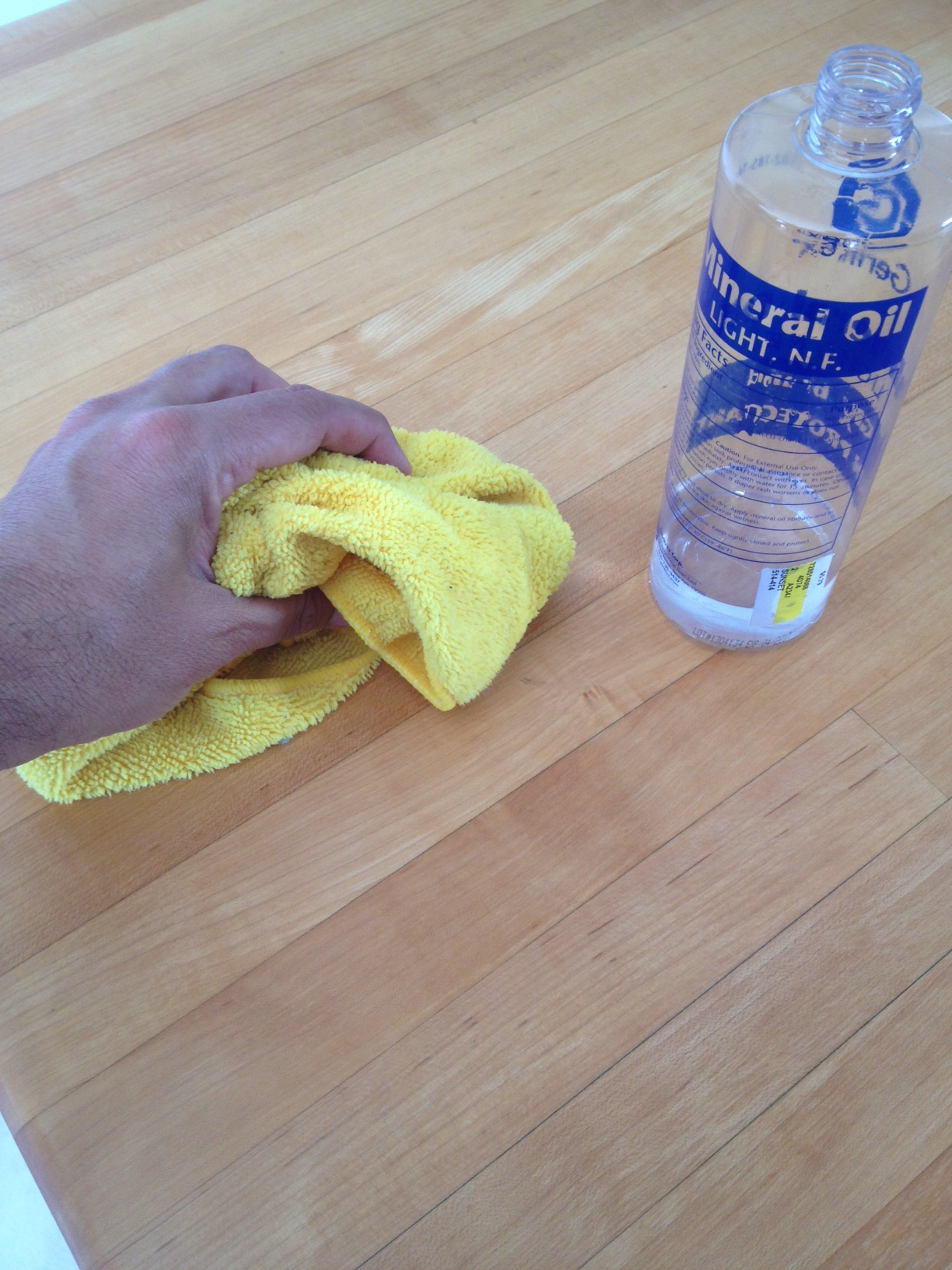 Photo: Wikimedia Commons (CC BY-SA)
Steps:
- Wipe with warm soapy water; dry immediately — never soak or put wood in a dishwasher.
- Sanitize lightly with white vinegar wiped on and off.
- Once a month, flood the surface with food-grade mineral oil, let it soak in 20+ minutes, and wipe off the excess.
Why it works: Wood counters fail from drying and cracking, not from cleaning. Food-grade mineral oil repenetrates the fibers and keeps the surface water- and stain-repellent — Hardwood Reflections and The Kitchn both recommend plain food-grade mineral oil as the standard upkeep Hardwood Reflections, The Kitchn.
Watch out: Never use vegetable or olive oil — they turn rancid and sticky. And never leave a wet sponge on wood overnight.
9. Trivets Under Every Hot Pan — Even on “Heat-Resistant” Stone
 Photo: Wikimedia Commons (CC BY-SA)
Steps:
- Keep trivets and hot pads within arm’s reach of the stove.
- Set hot pots, baking sheets, and air-fryer baskets on them — always.
- Also use trivets under countertop appliances that run hot (air fryers, slow cookers).
Why it works: Quartz is heat-resistant but not heatproof — the polymer resin begins to degrade around 300°F (150°C), which oven-fresh pans easily exceed, causing scorch marks MSI Surfaces warns cannot be cleaned out MSI Surfaces. Thermal shock can also crack natural stone.
Watch out: A scorch on quartz is permanent — prevention is the only repair. Laminate and thermofoil fare even worse.
10. Always Use a Cutting Board — Never Cut on the Counter
 Photo: Wikimedia Commons (CC BY-SA)
Steps:
- Keep a cutting board on the counter or in a slot where it’s easier to grab than to skip.
- Use boards for all knife work — vegetables included.
- Replace boards with deep knife scars; they harbor bacteria and slide.
Why it works: Knives scratch polished stone (dulling its finish), gouge wood, and chip laminate edges — and stone surfaces quickly ruin good knives in return. The board is the sacrificial layer protecting a $4,000 counter.
Watch out: Glass and ceramic boards protect the counter but destroy knife edges; wood is the compromise professionals use.
11. Lift Stubborn Stains With a Baking Soda Paste
 Photo: Wikimedia Commons (CC BY-SA)
Steps:
- Mix baking soda with a little water into a paste.
- Spread it on the stain (laminate, solid surface, glazed tile) and let it sit 15–30 minutes.
- Wipe gently with a damp soft cloth — no scrubbing pressure needed.
Why it works: Baking soda is a mild alkali that breaks down acidic stains (coffee, tea, juice) and its fine particles give just enough abrasion for bonded residue — without the scratching power of powdered abrasive cleansers.
Watch out: On polished stone, use this sparingly and wipe with the grain of the finish; repeated rubbing can haze the polish. Long dwell times on marble are best left to poultice methods (next tip).
12. Pull Oil Stains Out of Stone With a Poultice
 Photo: Wikimedia Commons (CC BY-SA)
Steps:
- Mix an absorbent powder (baking soda or talc) with hydrogen peroxide into a peanut-butter paste for light stone (acetone-based for oil stains on dark stone).
- Spread 1/4-inch thick over the stain, cover with plastic wrap, tape the edges.
- Wait 24 hours, remove, and let it dry — the poultice pulls the stain out as it dries.
Why it works: Oil and organic stains sit inside porous stone, beyond the reach of surface wipes. A poultice dissolves the stain and the drying powder re-absorbs it as the paste cures — the method the Natural Stone Institute publishes for stone stain removal Natural Stone Institute.
Watch out: Match the chemistry to the stain — peroxide for organic stains, acetone/mineral spirits for oils — and test in a hidden spot first. Etching (dull marks) is not staining; poultices don’t fix etching.
13. Sanitize After Raw Meat — and Retire Old Sponges
 Photo: Wikimedia Commons (CC BY-SA)
Steps:
- After prepping raw meat, wash the counter with hot soapy water first.
- Then sanitize: diluted bleach solution per label directions on laminate/quartz, or a food-safe sanitizer on stone.
- Replace sponges weekly; run dishes cloths through the laundry hot.
Why it works: Cleaning removes grime; sanitizing kills the pathogens cleaning leaves behind. And the tool matters — the petri-dish culture above shows what a kitchen sponge breeds, which is why food-safety guidance treats sponges as consumables, not fixtures MSU Extension.
Watch out: ⚠️ Never mix bleach with vinegar or ammonia — the gases are toxic. One product at a time, rinse between products. Also: no bleach wipes on marble or natural stone — use a stone-safe sanitizer.
14. Test Your Stone’s Seal Every Few Months
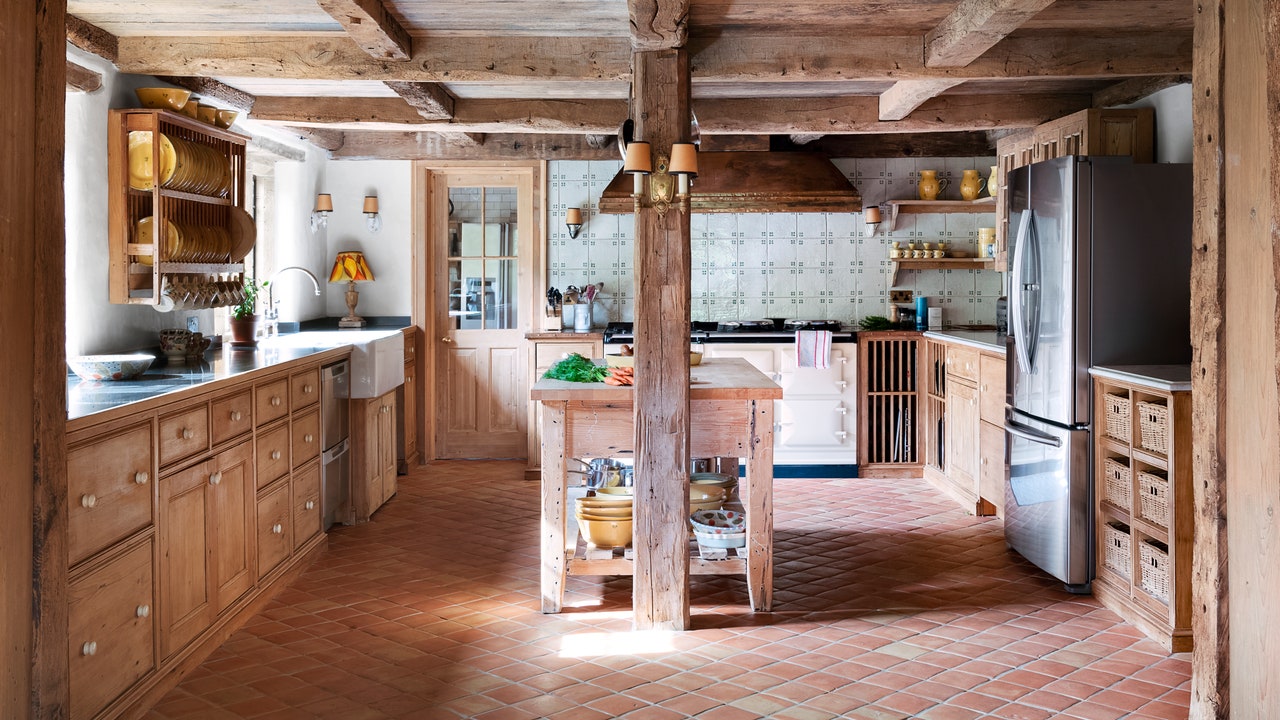 Photo: Architectural Digest — “Butcher Block Countertops” (architecturaldigest.com)
Steps:
- Splash a teaspoon of water on the counter and wait 10–15 minutes.
- If it darkens the stone or absorbs, the seal is failing — reseal now.
- Reseal most granite every 1–3 years with an impregnating sealer per the product label.
Why it works: The sealer is what buys you time to blot spills before they stain the stone itself. Industry guidance puts resealing at every one to three years depending on stone grade, usage, and the cleaners you use — lighter stone and heavy use shorten that interval Hilltop Surfaces, CEC Tops.
Watch out: Sealing is not cleaning — an acidic cleaner strips sealer faster than any spill. Keeping to pH-neutral daily cleaning is what makes a seal last. (Quartz and laminate never need sealing.)
15. Set a Weekly and Monthly Rhythm — and Finish With a Full Dry Polish
 Photo: Wikimedia Commons (CC BY-SA)
Steps:
- Daily: dish-soap wipe and dry after dinner prep.
- Weekly: full declutter-wipe-under-everything, edge and seam detail, backsplash splash zone.
- Monthly: water-drop seal test (stone), mineral oil (wood), and a full dry buff with a clean microfiber for the showroom shine.
Why it works: Counter damage is cumulative — small habits beat heroic rescues. A monthly rhythm catches the two expensive failures early: sealer breakdown and moisture in seams, before they become fabricator bills.
Watch out: Dry-polishing with a clean microfiber is the step everyone skips — and it’s what removes the film that wipes leave behind.
⚠️ The One Rule That Overshadows All 15
Never mix cleaning chemicals — especially bleach with vinegar or bleach with ammonia, which produce toxic gases. One product at a time, rinse between products, ventilate the room.
Frequently Asked Questions
Can I use vinegar to clean kitchen countertops? Only on laminate, glass, and some tile. Vinegar etches marble, limestone, and travertine on contact and is on every quartz maker’s do-not-use list MarbleLife, Caesarstone. Dish soap and water is the universal safe choice.
What is the best daily cleaner for granite? Dish soap and warm water, wiped with microfiber and dried. Granite’s vulnerability is its sealer, not the stone — pH-neutral cleaning preserves it, and resealing every 1–3 years restores it CEC Tops.
How do I remove dull etch marks on marble? Etching is physical damage to the polish, not a stain — light etching can be improved with a marble polishing powder; deep etching needs professional re-honing. Prevention (no acid, ever) is the real answer MarbleLife.
Can I put a hot pan on my quartz countertop? No. The resin begins to degrade around 300°F and scorch marks are permanent — always use a trivet MSI Surfaces.
How often should I oil a butcher block counter? About monthly with food-grade mineral oil, or whenever water stops beading on the surface Hardwood Reflections, The Kitchn.
Internal Links Worth Adding
- “seal is failing” → your granite buying guide
- “baking soda paste” → your kitchen cleaning hacks post
- “sanitizer” → your kitchen food-safety post
- “butcher block” → your cutting board care guide
The Takeaway
Spotless countertops come down to three habits: the right cleaner for your specific surface, a soft cloth and a dry finish, and protecting the surface from the two things cleaners can’t fix — heat and acid. Learn what your counter is made of, follow its one rule, and adopt the daily 60-second wipe. Everything else in this list is just maintenance chemistry.