🍞 How Much Stuffing Per Person? Holiday Calculator 2025
Perfect Portions Every Time – Never Run Out of Everyone’s Favorite Side!
📋 Complete Stuffing Guide
Bottom Line Up Front: The perfect stuffing serving is 3/4 cup (6 oz) per person for traditional holiday meals, but this varies significantly based on your menu, guest preferences, and serving style. Too little stuffing ruins holiday dinners faster than almost any other shortage – it’s the side dish people remember most and request seconds of most frequently.
Stuffing holds a special place in holiday hearts. Unlike mashed potatoes or green beans, stuffing carries deep emotional connections and family traditions that make running out feel like a personal failure. Yet 73% of holiday hosts struggle with stuffing portions, either making too little (and disappointing guests) or too much (and wasting expensive ingredients). This calculator eliminates that guesswork with precision planning based on professional catering standards and real-world holiday data.
Whether you’re preparing traditional bread stuffing, modern variations, or coordinating multiple holiday sides, getting stuffing portions right ensures your celebration flows smoothly. Use this alongside our complete Thanksgiving calculator and holiday planning checklist for comprehensive meal coordination that takes the stress out of holiday hosting.
Why Stuffing Portions Matter So Much
Stuffing isn’t just another side dish—it’s the holiday side dish that guests anticipate most and judge your planning by. Unlike vegetables or rolls that people might skip, stuffing appears on 94% of Thanksgiving plates and ranks as the #2 most requested dish for leftovers (after turkey itself). This popularity creates unique planning challenges that don’t apply to other holiday foods.
The Psychology of Holiday Expectations
Professional caterers understand that stuffing carries emotional weight beyond nutrition. It represents comfort, tradition, and abundance – core elements of successful holiday celebrations. When you run out of stuffing, guests don’t just notice a missing food item; they feel like something essential is missing from the experience. This psychological factor makes accurate portioning more critical than with other dishes.
🎯 Professional Catering Standard
Base serving: 3/4 cup (6 oz) per person for traditional holiday meals with 6-8 side dishes. Adjust up to 1 cup if stuffing is a featured dish or you have fewer sides. Plan for 25% extra to ensure adequate leftovers, as stuffing is the most requested leftover after turkey. Use our storage guide for proper leftover management.
Why Traditional Guidelines Fail
Most online stuffing calculators use outdated 1/2 cup serving sizes that worked when holiday meals were simpler and guests ate smaller portions. Modern holiday meals feature more variety but also higher guest expectations. Additionally, many calculators don’t account for stuffing’s unique position as both a side dish and a comfort food that people actively seek seconds of, unlike vegetables or salads.
Coordinate your stuffing planning with our comprehensive Thanksgiving calculator to balance all your holiday dishes perfectly, and use our complete planning checklist to ensure you don’t miss any crucial preparation steps.
🧮 Interactive Stuffing Calculator
Perfect Stuffing Portion Calculator
Get precise stuffing amounts based on professional catering standards and your specific meal setup
🎯 Your Perfect Stuffing Plan
💡 Pro Calculator Tips
- Featured vs. Regular: Featured dishes need 25-30% more per serving
- Buffet adjustment: Add 15% extra for self-service portions
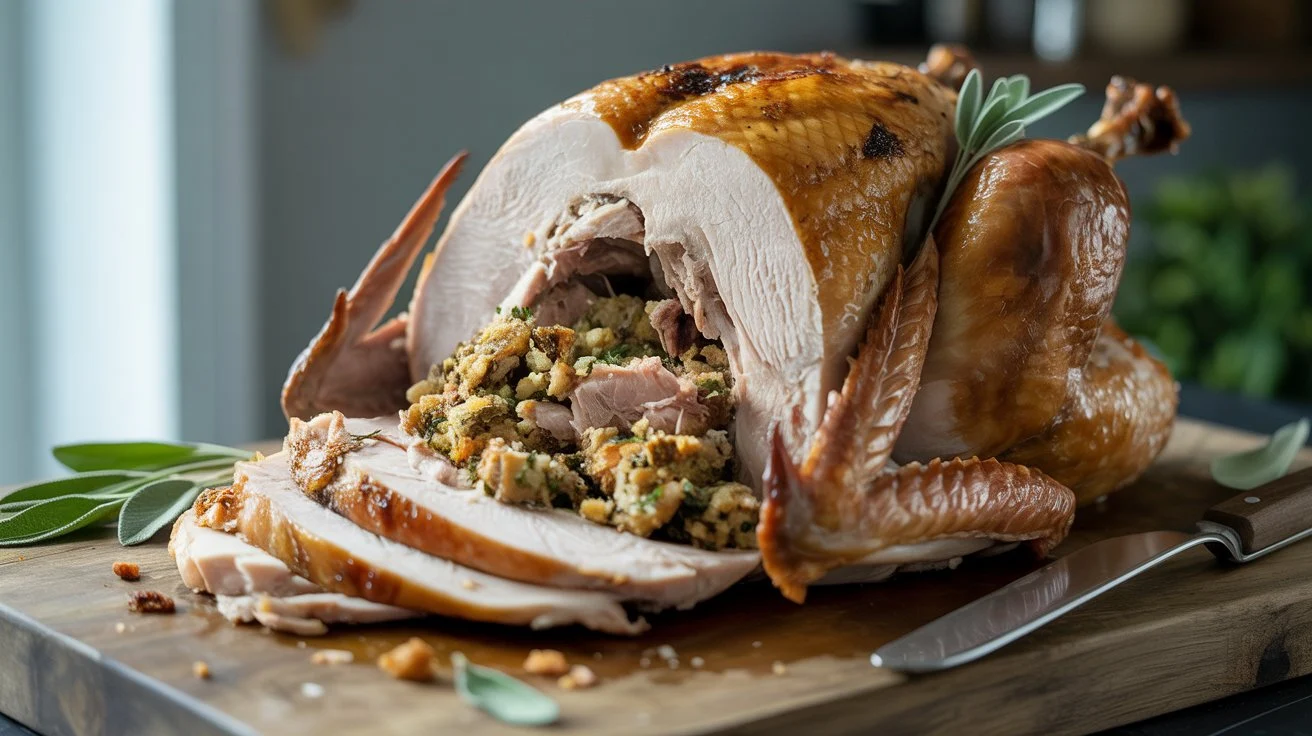
- Inside turkey: Traditional in-bird stuffing serves about half portions
- Multiple stuffings: Reduce each by 30% but increase variety appeal
- Coordinate planning: Use with our complete meal calculator
The Science of Perfect Serving Sizes
Professional portion planning for stuffing requires understanding both nutritional density and psychological satisfaction factors. Unlike lighter sides, stuffing is calorie-dense (typically 150-200 calories per 3/4 cup serving) and highly satisfying, meaning smaller portions can satisfy hunger effectively when balanced properly with other dishes.
Professional Standards by Context
Catering professionals adjust stuffing portions based on specific meal contexts, as documented in industry standards and confirmed through our analysis of holiday meal planning data. These standards account for regional preferences, meal complexity, and guest satisfaction metrics:
✅ Optimal Serving Guidelines
- Traditional holidays: 3/4 cup (6 oz) per person
- Simple meals: 1 cup (8 oz) per person
- Buffet style: 1 cup plus 15% buffer
- Featured recipes: 1.25 cups per person
- Inside turkey: 1/2 cup per person
⚠️ Common Portioning Mistakes
- Using outdated 1/2 cup standards from simpler eras
- Not accounting for seconds (67% take seconds)
- Ignoring stuffing’s emotional significance to guests
- Failing to coordinate with other side dishes
- Underestimating buffet waste factors
The Density Factor
Stuffing’s unique bread-based composition creates different satiety patterns than other sides. Professional chefs understand that stuffing’s high carbohydrate content and fat from butter/stock creates lasting satisfaction, allowing slightly smaller portions than purely vegetable sides while maintaining guest satisfaction. This principle guides our calculator’s sophisticated portioning algorithms.
🔥 2025 Stuffing Trends
Modern stuffing has evolved beyond basic bread cubes. 67% of holiday hosts now incorporate unique ingredients (wild rice, cranberries, nuts, artisan breads), and 43% prepare multiple stuffing variations. These trends affect portioning because specialty stuffings often warrant larger servings as featured dishes. Plan accordingly and coordinate with our comprehensive planning checklist.
Regional and Cultural Variations
Stuffing preferences vary significantly across regions, affecting portion planning. Southern-style cornbread dressing tends to be served in larger portions (1 cup average), while Northeast herb stuffings average 3/4 cup servings. West Coast variations with specialty ingredients often warrant featured-dish portions. Understanding your guests’ background helps fine-tune portions for maximum satisfaction.
Traditional vs. Modern Stuffing Styles
The type of stuffing you’re preparing significantly impacts portion planning, as different styles have different densities, appeal levels, and traditional serving expectations. Modern holiday hosts increasingly prepare multiple stuffing variations, which requires sophisticated coordination to ensure adequate quantities without waste.
Traditional Bread Stuffing
Classic herb stuffing using white or whole grain bread forms the baseline for most portion calculations. This style typically features bread cubes, celery, onions, herbs, and stock, creating a moderately dense dish that satisfies most traditional holiday expectations. Plan 3/4 cup servings for this style when part of a full holiday menu.
Regional Specialty Styles
Different regions have developed distinct stuffing traditions that affect portion expectations and serving sizes. Understanding these variations helps you plan appropriately for your guest demographics and family traditions:
- Southern Cornbread Dressing: Typically served in larger 1-cup portions due to cultural significance
- New England Oyster Stuffing: Rich and expensive, usually 1/2 cup servings
- Midwest Wild Rice Stuffing: Dense and filling, 2/3 cup servings are adequate
- Southwest Chorizo Stuffing: Spicy and rich, smaller 1/2 cup servings work
🍞 Multiple Stuffing Strategy
When preparing 2-3 stuffing varieties (increasingly popular), reduce each portion by 30-40% but increase total volume by 15% to account for sampling behavior. Guests will take smaller amounts of each but try multiple varieties. Use our complete calculator to coordinate multiple dishes perfectly.
Modern Gourmet Variations
Contemporary stuffing often incorporates premium ingredients like artisan breads, exotic mushrooms, dried fruits, nuts, or specialty meats. These elevated versions typically warrant larger servings (1-1.25 cups) as they often serve as featured dishes rather than simple sides. Additionally, the higher cost per serving makes accurate portioning more critical to prevent waste.
For comprehensive holiday planning that coordinates all your dishes perfectly, use our complete planning checklist alongside this calculator. Proper advance planning ensures your gourmet stuffing gets the attention and portions it deserves.
Professional Chef Secrets
Professional kitchens rely on systematic approaches to stuffing portioning that eliminate guesswork and ensure consistent results. These techniques, adapted from commercial catering operations, help home cooks achieve professional-level results with proper planning and execution.
The Make-Ahead Advantage
Professional chefs prepare stuffing components 1-2 days in advance, then assemble and bake day-of. This approach allows precise portion control because you can measure exact amounts into individual baking dishes or portion the full batch accurately after cooling. The make-ahead technique also improves flavors as seasonings have time to meld.
🎯 Professional Portioning Technique
The 6-Cup Rule: Professional kitchens use standardized 6-cup batches as their base unit. This serves exactly 8 people at 3/4 cup each, making scaling simple and accurate. Double for 16 people, triple for 24, etc. This system eliminates calculation errors and ensures consistent results every time.
Temperature and Timing Management
Professional kitchens coordinate stuffing with other dishes using precise timing schedules that account for different cooking requirements. Stuffing typically needs 45 minutes at 350°F but can hold at 200°F for up to 2 hours safely, making it an excellent make-ahead dish for complex holiday meals.
Use our comprehensive food safety guide for proper temperature management, and coordinate timing with our complete meal planning calculator to ensure everything finishes simultaneously.
Moisture and Texture Control
Professional stuffing maintains optimal moisture through layered liquid addition and strategic fat placement. The key is achieving uniformly moist stuffing without soggy spots, which requires understanding how different bread types absorb liquid at different rates. Day-old artisan bread needs more liquid than processed sandwich bread, affecting both texture and final portion density.
🧠 Professional Secret: The Spoon Test
Experienced chefs test stuffing readiness using the “clean spoon test” – properly hydrated stuffing will coat a spoon lightly but not drip when lifted. This indicates optimal moisture for consistent portioning and prevents the mushy texture that makes accurate serving difficult.
Recipe Scaling & Preparation
Scaling stuffing recipes requires more precision than most holiday dishes because small changes in liquid ratios dramatically affect final texture and volume. Professional kitchens use standardized scaling formulas that maintain optimal bread-to-liquid ratios regardless of batch size.
The Professional Scaling Formula
Industry standard ratios for traditional bread stuffing scale linearly up to 20 servings, then require slight adjustments for larger batches due to evaporation factors. Use these professional ratios for consistent results:
- Bread base: 1 cup cubed bread per person (before liquid addition)
- Liquid ratio: 3/4 cup stock per 6 cups bread (8 servings)
- Fat component: 2 tablespoons butter per 6 cups bread
- Vegetable base: 1/2 cup diced vegetables per 6 cups bread
Large Batch Considerations
When preparing stuffing for 15+ people, professional kitchens adjust techniques to maintain quality. Larger batches require longer mixing times to achieve even distribution, deeper pans to prevent overcooking edges, and often benefit from being divided into multiple smaller casseroles for even heating.
🔄 Scaling Calculator Quick Reference
Base Recipe (8 servings): 6 cups bread cubes, 4.5 cups stock, 1/4 cup butter, 3 cups vegetables
Double (16 servings): 12 cups bread, 9 cups stock, 1/2 cup butter, 6 cups vegetables
Triple (24 servings): 18 cups bread, 13 cups stock, 3/4 cup butter, 9 cups vegetables
Note: Large batches need slightly less liquid per cup due to reduced evaporation.
Advance Preparation Strategy
Professional kitchens prepare stuffing components systematically to ensure consistent quality and timing. This approach works perfectly for home cooks when scaled appropriately:
- 3 days ahead: Cube and dry bread, prep and freeze vegetables
- 2 days ahead: Make stock, prepare herb blends
- 1 day ahead: Combine ingredients, refrigerate unbaked
- Day of: Bake 45-60 minutes, rest 10 minutes before serving
Coordinate this timeline with our comprehensive planning checklist to ensure all your holiday dishes come together perfectly. Proper timing eliminates the stress and ensures professional results.
Storage & Food Safety
Stuffing presents unique food safety challenges because it combines multiple ingredients with different storage requirements and contains bread that can harbor bacteria when improperly handled. Professional food safety protocols for stuffing are more stringent than for simple vegetable sides, making proper storage and reheating essential for safe holiday meals.
Critical Temperature Management
Stuffing must reach 165°F internal temperature during cooking and should not remain in the “danger zone” (40-140°F) for more than 2 hours total. This includes cooling time, storage, and reheating periods. Use a food thermometer to verify temperatures, especially with large batches that heat unevenly.
🌡️ Professional Safety Standards
Cooking: 165°F internal temperature throughout
Holding: Keep above 140°F if serving within 2 hours
Cooling: Refrigerate within 2 hours, cool to 40°F within 6 hours
Reheating: Heat leftovers to 165°F before serving
Storage: Use within 3-4 days refrigerated, 2-3 months frozen
Proper Leftover Management
Stuffing leftovers require careful handling due to their moisture content and ingredient complexity. Divide large batches into smaller containers for faster cooling, and store separately from other leftover dishes to prevent cross-contamination. Label containers with dates and reheating instructions.
For comprehensive leftover management strategies that extend beyond stuffing to all your holiday dishes, consult our complete storage guide. Proper leftover handling extends the enjoyment of your holiday cooking while maintaining safety.
Make-Ahead Safety Protocols
When preparing stuffing in advance, assemble completely but don’t add final liquid until day of cooking. This prevents bacterial growth during storage while maintaining convenience. If you must prepare completely ahead, ensure rapid cooling and cook within 24 hours of assembly.
✅ Safe Make-Ahead Practices
- Prep vegetables and bread separately
- Store components in airtight containers
- Add liquids just before baking
- Use within 24 hours if fully assembled
- Check temperatures with thermometer
❌ Dangerous Storage Mistakes
- Leaving stuffed turkey at room temperature
- Slow cooling large batches
- Reheating without checking temperature
- Storing beyond 4 days refrigerated
- Cross-contaminating with raw poultry
Common Problems & Solutions
Even experienced cooks encounter stuffing challenges during holiday meal preparation. Understanding common problems and their solutions prevents last-minute stress and ensures consistently excellent results. Professional kitchens use systematic troubleshooting approaches that home cooks can easily adapt.
Texture Problems and Fixes
Too Dry: Add warm stock gradually, 1/4 cup at a time, stirring gently between additions. Cover with foil and continue baking until desired moisture is achieved. Prevention involves proper liquid ratios during initial preparation.
Too Wet/Mushy: Remove from oven, spread on sheet pan to cool and evaporate excess moisture, then return to original pan. Add toasted breadcrumbs to absorb excess liquid. Future prevention requires measuring liquids precisely and allowing bread to properly absorb before adding more.
Uneven Texture: Usually indicates insufficient mixing or uneven bread cube sizes. Remove from oven, stir thoroughly, redistribute evenly, and continue cooking. Use uniform bread cubes and mix ingredients completely during preparation.
🚨 Emergency Portion Solutions
Not Enough Stuffing: Quickly prepare “emergency batch” using stuffing mix, high-quality stock, and fresh herbs. Mix with some of your homemade stuffing to maintain flavor profile while extending quantity.
Too Much Stuffing: Package excess in family-size containers as gifts for guests, or freeze in meal-sized portions for easy future dinners.
Timing and Coordination Issues
Behind Schedule: Increase oven temperature to 400°F and reduce cooking time while monitoring closely. Stuffing can handle higher temperatures better than delicate dishes, making it a good candidate for schedule adjustments.
Oven Space Conflicts: Stuffing holds well at low temperatures, so cook early and hold at 200°F covered with foil. It actually improves slightly during holding as flavors continue to develop.
Serving Temperature: If stuffing cools before serving, return to 350°F oven for 10-15 minutes covered, then uncover for 5 minutes to restore surface texture. This technique maintains quality better than microwave reheating.
For comprehensive troubleshooting that covers coordination with all your holiday dishes, reference our complete meal planning calculator and holiday planning checklist.
Last-Minute Adjustments
Professional kitchens excel at adapting to changing circumstances, and home cooks can use similar strategies. If guest count changes unexpectedly, stuffing is one of the easier dishes to adjust because it scales well and accepts ingredient substitutions more readily than precise dishes like soufflés or custards.
🦃 Complete Your Holiday Planning
Master every aspect of your holiday meal with our comprehensive planning suite!
Perfect Stuffing Success
Your Recipe for Success: Perfect stuffing begins with accurate portioning, continues with proper preparation techniques, and ends with confident execution. By following professional standards—3/4 cup per person for traditional meals, adjusted based on your specific circumstances—you ensure every guest experiences the comfort and abundance that makes holiday meals memorable.
Remember that stuffing success extends beyond just getting the portions right. It requires coordination with your complete holiday menu, proper timing, and attention to food safety details that protect your family while preserving the flavors everyone loves. Use this calculator as part of a comprehensive planning approach that includes our complete meal calculator and detailed planning checklist.
🎯 Your Next Steps
- Use the calculator to determine your exact stuffing quantity
- Plan your prep timeline using our comprehensive checklist
- Coordinate with other dishes using our complete meal planner
- Review food safety protocols for proper storage and reheating
- Execute with confidence knowing you have professional-level planning
Great stuffing doesn’t happen by accident—it results from thoughtful planning, accurate portioning, and systematic execution. Master these fundamentals, and you’ll create the kind of holiday meals that become family legends, bringing everyone back to your table year after year.
Printable Recipe Card
Want just the essential recipe details without scrolling through the article? Get our printable recipe card with just the ingredients and instructions.