
🍗 Gravy Calculator
Perfect portions for holidays, Sunday roasts, and special dinners
👥 Guest Information
Kids eat 1-2 tbsp
Teens eat adult portions+
Standard portions
🍽️ Event Details
More sides = slightly less gravy per person
📊 Required Amounts
🛒 Ingredient Shopping List
For homemade gravy from drippings
🍫 The Ultimate No-Bake Dessert Ebook 🍓
30 mouthwatering no-bake recipes you can whip up in minutes — creamy cheesecakes, fruity parfaits, chocolatey bars, and more!
- ⚡Quick & easy — no oven required
- 📖30 recipes + bonus treat
- 🍓Chocolate, fruit, nutty & refreshing flavors
- ✨Beautifully designed, instant download
💡 Making Your Gravy
📋 Quick Navigation
Why You Need a Gravy Calculator for Your Next Holiday Dinner
Picture this: It’s Thanksgiving Day. The turkey is perfectly golden, the mashed potatoes are fluffy, and your guests are gathering around the table. Then disaster strikes – you run out of gravy when only half your guests have been served.
This nightmare scenario happens more often than you’d think. Gravy is the unsung hero of holiday meals, and running out is a host’s worst fear. That’s exactly why we created this free gravy calculator.
Our comprehensive calculator eliminates the guesswork from gravy planning. Whether you’re hosting 8 people for Sunday roast or 50 for Thanksgiving, you’ll know exactly how much gravy to make.
How Much Gravy Per Person? The Quick Answer
The standard serving size is 3-4 ounces (about 1/2 cup) of gravy per adult. However, this baseline changes dramatically based on several factors:
- Children (under 12): 1-2 ounces (2-4 tablespoons)
- Teenagers: 4-5 ounces (1/2 cup+)
- Adults: 3-4 ounces (1/2 cup)
- Gravy lovers: 5-6 ounces (3/4 cup)
But here’s the truth: these numbers are just starting points. The actual amount you need depends on your specific situation.
Factors That Affect How Much Gravy You Need
1. Type of Event
Thanksgiving Dinner: Plan for 4-5 oz per person. Americans traditionally serve more gravy during Thanksgiving, and guests expect generous portions.
Christmas Dinner: Similar to Thanksgiving, plan for 4-5 oz per person. Holiday meals call for extra gravy.
Sunday Roast (British Style): Plan for 5-6 oz per person. The British take their gravy seriously, and a proper Sunday roast swimming in gravy is tradition.
Formal Plated Dinner: 2-3 oz per person. Formal service typically includes smaller, more refined portions.
Casual Family Meal: 3-4 oz per person. Standard everyday portions.
Buffet/Potluck Style: 2-3 oz per person. With many dishes available, people take less of each item.
2. Main Protein
The type of meat you’re serving significantly impacts gravy consumption:
Turkey or Chicken: Needs MORE gravy (add 0.5-1 oz per person). Poultry pairs exceptionally well with gravy and can be dry without it.
Beef Roast: Needs MORE gravy (add 0.75-1 oz per person). Whether you’re making traditional brown gravy or au jus, beef demands generous saucing.
Pork Roast: Standard amounts work well.
Ham: Needs LESS gravy (subtract 0.5 oz per person). Ham is self-basting and moist, so less gravy is needed.
3. Side Dishes Being Served
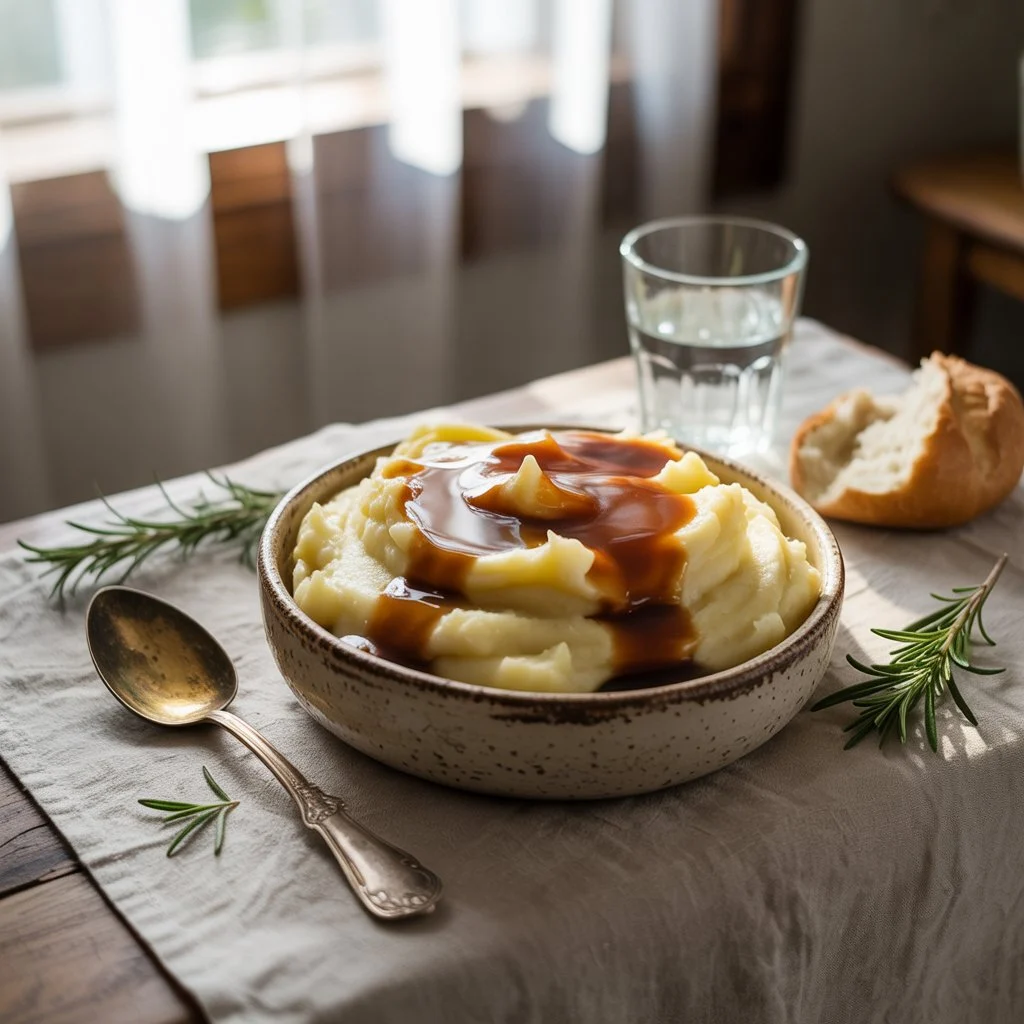
Mashed Potatoes Present: Add 1-2 oz per person. This is huge! Mashed potatoes are gravy sponges. If you’re serving mashed potatoes, plan on making significantly more gravy.
Stuffing/Dressing: Add 0.5 oz per person. Stuffing soaks up gravy like a sponge.
Yorkshire Puddings (UK): Add 1 oz per person. These are designed to hold gravy.
Biscuits: Add 0.5 oz per person. Biscuits and gravy are a classic combination.
6+ Different Sides: Subtract 0.25 oz per person. When there are many options, people naturally take smaller portions of each.
4. Guest Demographics
Children (under 12): They eat significantly less gravy, typically just enough to make their potatoes “shiny.” Calculate 1-2 oz per child.
Teenagers: Don’t underestimate teen appetites! They often eat MORE than adults, especially at casual events. Plan for adult portions plus 20%.
Seniors: May eat slightly less than standard adult portions, but not dramatically so.
Regional Preferences: Southern US diners tend to prefer more gravy, while West Coast diners may use less.
Standard Gravy Portions by Serving Size
Small Gathering (8 people)
- Base amount: 3 cups (24 oz)
- With mashed potatoes: 4 cups (32 oz)
- With 15% buffer: 4.5 cups (36 oz)
Medium Gathering (15 people)
- Base amount: 6 cups (48 oz)
- With mashed potatoes: 8 cups (64 oz)
- With 15% buffer: 9 cups (72 oz)
Large Gathering (25 people)
- Base amount: 9 cups (72 oz)
- With mashed potatoes: 12 cups (96 oz)
- With 15% buffer: 13.5 cups (108 oz)
Very Large Event (50 people)
- Base amount: 18 cups (144 oz / 4.5 quarts)
- With mashed potatoes: 24 cups (192 oz / 6 quarts)
- With 15% buffer: 27 cups (216 oz / 6.75 quarts)
How to Use the Gravy Calculator
Our calculator makes planning foolproof. Here’s how to get the most accurate results:
Step 1: Input Your Guest Count
Start with your total number of guests, then break it down by age group:
- Children eat dramatically less (1-2 oz)
- Teenagers eat more than adults (4-5 oz)
- Adults follow standard portions (3-4 oz)
Pro tip: If you don’t know the exact breakdown, a safe assumption is 15% children, 15% teens, and 70% adults.
Step 2: Select Your Event Type
Choose the option that best matches your meal:
- Thanksgiving/Christmas: These holidays call for extra gravy
- Sunday Roast: British tradition means more gravy
- Formal Dinner: Smaller refined portions
- Casual Family: Standard everyday amounts
- Buffet/Potluck: Reduced portions when many dishes are available
Step 3: Choose Your Main Protein
Select what you’re serving:
- Turkey and chicken need MORE gravy (they pair perfectly)
- Beef roast needs MORE gravy (essential for au jus)
- Ham needs LESS gravy (it’s already moist)
- Multiple meats? Choose “Multiple Meats”
Step 4: Indicate Side Dishes
This is crucial! Check all that apply:
- ☑️ Mashed potatoes (biggest factor – adds 1-2 oz per person)
- ☑️ Stuffing/dressing (adds 0.5 oz per person)
- Select how many total sides you’re serving
Step 5: Adjust for Special Circumstances
- ☑️ Extra for gravy lovers: Check this if you know your crowd loves gravy (adds 25%)
- Safety buffer: We recommend 15% extra to avoid running out
Step 6: Review Your Results
The calculator will tell you:
- Total cups of gravy needed
- Amount in quarts (helpful for large batches)
- Ounces per person average
- Ingredient shopping list for homemade gravy
- Cooking recommendations
Making Gravy: From Scratch vs. Store-Bought
Homemade Gravy
Pros:
- Superior flavor from pan drippings
- Control over thickness and seasoning
- More authentic taste
- Can adjust for dietary needs
Cons:
- Requires timing coordination
- Can be tricky for beginners
- Last-minute preparation stress
- Needs pan drippings from roast
Basic Ratio for Homemade Gravy:
- For every 1 cup of gravy you need:
- 2 tablespoons fat (drippings, butter, or oil)
- 2 tablespoons flour
- 1 cup liquid (stock, broth, or pan juices)
- Salt and pepper to taste
Example: To make 8 cups of gravy:
- 1 cup fat
- 1 cup flour
- 8 cups liquid
Store-Bought Options
Jarred Gravy:
- Quick and foolproof
- Consistent results
- No cooking skills required
- Standard jar = 12 oz (1.5 cups)
- For 10 people: Need 3-4 jars
Gravy Mix/Powder:
- Budget-friendly option
- Long shelf life
- Can enhance with pan drippings
- Standard packet makes 1 cup
- For 10 people: Need 4-5 packets
Gravy Granules (UK):
- Popular in Britain
- Just add boiling water
- Makes rich, brown gravy
- Very cost-effective
Making Ahead: Can You Prepare Gravy in Advance?
Yes! Gravy can be made 2-3 days ahead. Here’s how:
To Make Ahead:
- Prepare gravy completely
- Cool quickly in shallow containers
- Refrigerate in airtight container
- Reheat gently on stovetop, whisking constantly
- Add liquid (broth or water) to thin if needed
To Freeze:
- Freeze in portions for up to 3 months
- Thaw overnight in refrigerator
- Reheat slowly, whisking frequently
- May need to re-blend if separated
Pro tip: Make turkey or chicken stock ahead from necks and giblets. Freeze in portions. On cooking day, use this stock as your liquid base for richer gravy.
Common Gravy Mistakes to Avoid
1. Making It Too Thick
Problem: Gravy sets as it cools, so what seems perfect in the pan becomes paste on the plate.
Solution: Make it slightly thinner than you want. You can always simmer to reduce, but thinning thick gravy is harder.
Fix: Thin with additional broth, stock, or even water. Add gradually while whisking.
2. Lumpy Gravy
Problem: Flour clumps when added to hot liquid.
Solution:
- Make a proper roux (cook fat and flour together first)
- Add liquid gradually while whisking constantly
- Use a whisk, not a spoon
Fix: Pour through a fine-mesh strainer, or use an immersion blender to smooth out lumps.
3. Not Making Enough
Problem: This is why you’re here! Running out of gravy is a hosting disaster.
Solution: Use our calculator and add a 15-20% buffer. It’s better to have too much than too little.
4. Bland Flavor
Problem: Gravy tastes like brown water.
Solution:
- Use homemade stock or quality store-bought stock (not water)
- Incorporate pan drippings with fond (browned bits)
- Season aggressively with salt and pepper
- Add depth with soy sauce, Worcestershire, or red wine
- Include aromatics: onion, garlic, fresh herbs
5. Greasy Gravy
Problem: Layer of fat floating on top.
Solution:
- Skim excess fat from pan drippings before making gravy
- Use a fat separator
- Refrigerate and remove solidified fat layer
- Dab surface with paper towels
6. Wrong Timing
Problem: Gravy is ready too early (forms skin) or not ready when serving starts.
Solution:
- Make gravy last, after meat has rested
- Keep warm in thermos or slow cooker on low
- Have backup (gravy granules) just in case
Professional Chef Tips for Perfect Gravy

1. Build Layers of Flavor
Don’t just mix flour and broth. Create complexity:
- Sauté vegetables: Add chopped onions, celery, and carrots to pan drippings before making roux
- Deglaze properly: Use wine, sherry, or brandy to lift fond before adding stock
- Add umami: A splash of soy sauce or Worcestershire adds depth
- Fresh herbs: Thyme, sage, and rosemary elevate flavor
2. The Perfect Roux
A good roux is the foundation:
- Ratio: Equal parts fat and flour by volume (2 tbsp each per cup of gravy)
- Cook time: Cook roux for 2-3 minutes to eliminate raw flour taste
- Color: For brown gravy, cook roux until golden (not too dark or it will taste burnt)
- Temperature: Keep heat medium-low to prevent burning
3. Liquid Addition Technique
This prevents lumps:
- Remove pan from heat when adding first liquid
- Add liquid in three stages, whisking vigorously after each
- First addition: 1/3 of liquid, whisk until smooth
- Second addition: Another 1/3, whisk until incorporated
- Final addition: Remaining liquid
- Return to heat and simmer until thickened
4. Consistency Control
Get the texture just right:
- Too thin: Simmer uncovered to reduce, or add beurre manié (butter-flour paste)
- Too thick: Whisk in additional stock or water gradually
- Test: Gravy should coat the back of a spoon but still be pourable
- Remember: It will thicken as it cools
5. Keeping Gravy Warm
For large gatherings:
- Gravy boat over tea light: Classic presentation
- Slow cooker on warm: Perfect for buffets
- Thermos: Keeps gravy hot for hours
- Double boiler: Gentle heat prevents scorching
- Add cover: Prevents skin formation
Gravy Variations and Alternatives
Traditional Brown Gravy
Made from meat drippings, beef or chicken stock, and a flour-based roux. The classic for turkey, roast beef, and mashed potatoes.
Best for: Thanksgiving turkey, Sunday roast, meatloaf
Cream Gravy (White Gravy)
Made with milk or cream instead of stock. Popular in Southern cooking.
Best for: Chicken fried steak, biscuits and gravy, pork chops
Giblet Gravy
Traditional turkey gravy enriched with chopped cooked giblets (heart, gizzard, liver).
Best for: Thanksgiving purists, traditional holiday meals
Red-Eye Gravy
Southern specialty made from ham drippings and coffee.
Best for: Country ham, biscuits, breakfast
Onion Gravy
Rich gravy with caramelized onions, popular in British cooking.
Best for: Bangers and mash, liver and onions, beef
Mushroom Gravy
Vegetarian-friendly option with sautéed mushrooms.
Best for: Vegetarian roasts, beef, pork
Au Jus
Thin, intensely flavored sauce made from meat juices (not thickened with flour).
Best for: Prime rib, French dip sandwiches
Pan Sauce
Quick sauce made directly in the roasting pan with fond, wine, and butter.
Best for: Smaller roasts, weeknight dinners
Dietary Modifications
Gluten-Free Gravy
Thickener options:
- Cornstarch: Use half the amount of flour (1 tbsp cornstarch per cup vs 2 tbsp flour per cup)
- Arrowroot powder: Same ratio as cornstarch
- Potato starch: Works well, same ratio as cornstarch
- Rice flour: Can replace flour 1:1 but texture is slightly different
Method: Mix thickener with cold liquid first (slurry method), then whisk into hot gravy. Simmer for 2 minutes to thicken.
Dairy-Free Gravy
Good news: Traditional brown gravy is naturally dairy-free when made with:
- Pan drippings or oil (instead of butter)
- Stock or broth (not cream or milk)
- Standard seasonings
Low-Sodium Gravy
- Use low-sodium or no-salt stock
- Skip added salt during cooking
- Season at the table instead
- Boost flavor with herbs, pepper, garlic
Vegetarian/Vegan Gravy
Base options:
- Vegetable stock (preferably homemade and rich)
- Mushroom stock for umami
- Miso paste for depth
Fat sources:
- Olive oil
- Vegan butter
- Coconut oil (for non-traditional flavors)
Umami boosters:
- Soy sauce or tamari
- Nutritional yeast
- Tomato paste
- Dried mushrooms
Troubleshooting Guide
“My gravy is too salty”
Fixes:
- Add more unsalted liquid (stock or water)
- Add a peeled, quartered potato and simmer (it absorbs salt), then remove
- Balance with acid (lemon juice or vinegar)
- Dilute and re-thicken if needed
“My gravy broke/separated”
Cause: Too much heat or wrong emulsion
Fixes:
- Remove from heat immediately
- Whisk in 1-2 tablespoons cold water
- Use immersion blender to re-emulsify
- Strain and start over if severe
“My gravy is bitter”
Cause: Burnt roux or fond
Fix: Unfortunately, you may need to start over. Bitter flavors are hard to mask. Next time, watch your roux carefully and don’t let fond get too dark.
“My gravy has no color”
Fixes:
- Add a splash of soy sauce (adds color and flavor)
- Kitchen Bouquet browning sauce
- Caramel coloring
- Cook roux longer next time for darker base
“My gravy has a weird film/skin on top”
Cause: Cooling and exposure to air
Prevention:
- Keep gravy warm and covered until serving
- Place plastic wrap directly on surface if storing
- Stir occasionally while keeping warm
Fix: Simply stir skin back in, or skim it off.
Storing and Reheating Leftover Gravy
Refrigerator Storage
- How long: 3-4 days in airtight container
- Cool quickly: Transfer to shallow container for fast cooling
- Label: Date your container
Freezer Storage
- How long: Up to 3 months
- Portions: Freeze in ice cube trays or small containers for single servings
- Headspace: Leave room for expansion
- Label: Include date and contents
Reheating Methods
Stovetop (best method):
- Transfer to saucepan
- Heat over medium-low, whisking frequently
- Add liquid if too thick (broth or water)
- Heat until steaming (165°F)
Microwave:
- Use microwave-safe container
- Heat in 30-second intervals
- Whisk between each interval
- Add liquid if needed
Slow Cooker:
- Perfect for keeping warm during meal
- Set to low or warm
- Whisk occasionally
- Add liquid if it thickens too much
🎯 Pro Tips for Perfect Gravy Every Time
- Always make 15-20% more than calculated – Better to have leftovers than run out mid-meal
- Mashed potatoes = double the gravy – This is the #1 factor people forget
- Make gravy LAST – After meat has rested, you’ll have the best drippings
- Keep it warm properly – Use slow cooker on low or gravy boat with tea light warmer
- Have a backup plan – Keep gravy granules or a jar on hand just in case
- Taste and season gradually – It’s easier to add salt than remove it
Frequently Asked Questions
How much gravy do I need for 20 people?
For 20 adults with standard sides, plan for 10-12 cups (2.5-3 quarts) of gravy. If serving mashed potatoes, increase to 14-16 cups (3.5-4 quarts). Add 15% buffer for safety.
Can I make gravy without drippings?
Yes! Use store-bought stock and add flavor with:
- Butter or oil for fat
- Soy sauce or Worcestershire for depth
- Herbs and aromatics
- A splash of wine for complexity
Quality stock is key – use homemade or high-quality low-sodium stock.
How do I thicken gravy without flour?
Use these alternatives:
- Cornstarch slurry: 1 tbsp cornstarch + 2 tbsp cold water per cup of liquid
- Arrowroot powder: Same as cornstarch
- Reduction: Simmer uncovered to evaporate liquid
- Beurre manié: Equal parts softened butter and flour, whisked in
- Instant mashed potato flakes: Surprisingly effective!
Why is my gravy lumpy?
Common causes:
- Added flour directly to hot liquid (always make a roux first or use slurry method)
- Didn’t whisk constantly
- Added liquid too quickly
Prevention: Always create a roux first, add liquid gradually, and whisk constantly.
Can I make gravy ahead of time?
Yes! Make 2-3 days ahead:
- Prepare completely
- Cool quickly
- Refrigerate in airtight container
- Reheat gently, whisking constantly
- Thin with additional liquid if needed
Freezes well for up to 3 months.
How long can gravy sit out?
Maximum 2 hours at room temperature (1 hour if temperature is above 90°F). Bacteria grow rapidly in the “danger zone” (40-140°F). Keep gravy hot (above 140°F) in slow cooker or over tea light if serving buffet-style.
What’s the ratio of flour to liquid for gravy?
Standard ratio: 2 tablespoons flour + 2 tablespoons fat per 1 cup liquid
- Thin gravy: 1 tbsp flour per cup
- Medium gravy: 2 tbsp flour per cup
- Thick gravy: 3 tbsp flour per cup
Is it better to use water or stock for gravy?
Stock is always better. Stock adds flavor, body, and richness that water simply can’t provide. If you must use water, enhance flavor with:
- Bouillon cubes or paste
- Soy sauce
- Worcestershire sauce
- Wine
- Herbs and aromatics
Can vegetarians eat traditional gravy?
Traditional gravy made from meat drippings is not vegetarian. However, vegetarian gravy is easy to make using:
- Vegetable stock
- Mushroom stock for umami
- Oil or vegan butter
- Same thickening method
- Soy sauce and herbs for depth
How do I make gravy less greasy?
Before cooking:
- Use a fat separator for pan drippings
- Refrigerate drippings and remove solid fat layer
- Skim excess fat with ladle or spoon
After cooking:
- Blot surface with paper towels
- Use a fat separator pitcher
- Refrigerate and remove solid fat, then reheat
Quick Reference: Gravy Amounts by Guest Count
| Guests | Base Amount | With Mashed Potatoes | With 15% Buffer |
|---|---|---|---|
| 4 | 1.5 cups | 2 cups | 2.5 cups |
| 6 | 2 cups | 3 cups | 3.5 cups |
| 8 | 3 cups | 4 cups | 4.5 cups |
| 10 | 4 cups | 5 cups | 6 cups |
| 12 | 5 cups | 6 cups | 7 cups |
| 15 | 6 cups | 8 cups | 9 cups |
| 20 | 9 cups | 12 cups | 13.5 cups |
| 25 | 11 cups | 15 cups | 17 cups |
| 30 | 13 cups | 18 cups | 20.5 cups |
| 40 | 18 cups | 24 cups | 27.5 cups |
| 50 | 22 cups | 30 cups | 34.5 cups |
Final Tips for Gravy Success
- Use our calculator – It accounts for all variables automatically
- Make extra – Better to have leftovers than run out mid-meal
- Taste as you go – Season gradually and adjust
- Keep it warm – Use slow cooker, thermos, or gravy boat with warmer
- Have backup – Keep gravy granules or jar on hand just in case
- Practice – Make gravy for regular dinners to perfect technique before big events
- Don’t panic – Even experienced cooks occasionally have gravy mishaps
Remember: Even imperfect gravy is better than no gravy at all. Your guests will appreciate the effort regardless of minor texture issues.
Conclusion
Making the right amount of gravy doesn’t have to be stressful. With our free gravy calculator and the comprehensive guide above, you’re equipped to handle any holiday meal or roast dinner with confidence.
The key takeaways:
- Base portions: 3-4 oz per adult, but adjust for your specific situation
- Mashed potatoes: Biggest factor – add 1-2 oz per person
- Event type matters: Thanksgiving and Sunday roasts need more
- Always add buffer: 15-20% extra for peace of mind
- Make ahead: Gravy can be prepared 2-3 days in advance
Use our calculator at the top of this page to get precise measurements for your next gathering. Input your guest count, select your menu details, and let the calculator do the math. No more guessing, no more running out, no more stress.
Happy hosting, and may your gravy boat always be full!
Related Calculators
Looking for more event planning calculators? Check out these helpful tools:
- Turkey Calculator: How Much Turkey Per Person
- Mashed Potato Calculator
- Stuffing Calculator
- Ham Calculator
- Green Bean Calculator
- Thanksgiving Dinner Calculator
Last Updated: November 2025
Disclaimer: Portion estimates are based on industry standards and typical serving sizes. Adjust based on your specific guests’ appetites and preferences. Food safety guidelines recommend keeping hot foods above 140°F and refrigerating leftovers within 2 hours.
Printable Recipe Card
Want just the essential recipe details without scrolling through the article? Get our printable recipe card with just the ingredients and instructions.