
Water spots on stainless steel are usually caused by minerals left behind when water evaporates. The good news: most marks come off with a microfiber cloth, vinegar, gentle dish soap, and proper drying. Wiping with the grain and drying right away are two of the biggest streak-prevention tips recommended across cleaning guides. Better Homes & Gardens Dawn Plesser’s Appliances
Image source: Plesser’s Appliances
Why stainless steel gets water spots
Hard water contains minerals that stay behind after the water dries. That residue creates cloudy dots, streaks, or chalky patches. Immediate towel-drying helps prevent etching, staining, and fresh water marks from forming. Dawn
What you need
- 2 soft microfiber cloths
- White vinegar
- Warm water
- Mild dish soap
- Baking soda
- Optional: a tiny amount of olive oil or lemon oil for shine
Microfiber cloths and gentle cleaners are commonly recommended because abrasive pads, steel wool, and chlorine-based products can scratch or dull stainless steel. Better Homes & Gardens Plesser’s Appliances
9 stainless steel water spot hacks
1) Start with the fastest fix: damp microfiber + dry microfiber
For light spotting, wipe the surface with a slightly damp microfiber cloth, then immediately dry and polish with a second clean microfiber cloth. This works well for fresh water spots before they harden into mineral buildup. Better Homes & Gardens
2) Use a 1:1 vinegar and water spray
Mix equal parts white vinegar and water in a spray bottle, lightly mist the affected area, then wipe clean with a microfiber cloth. Vinegar helps dissolve mineral deposits and is one of the most cited home fixes for water spots on stainless steel. Plesser’s Appliances
🍫 The Ultimate No-Bake Dessert Ebook 🍓
30 mouthwatering no-bake recipes you can whip up in minutes — creamy cheesecakes, fruity parfaits, chocolatey bars, and more!
- ⚡Quick & easy — no oven required
- 📖30 recipes + bonus treat
- 🍓Chocolate, fruit, nutty & refreshing flavors
- ✨Beautifully designed, instant download
3) Always wipe with the grain
Look closely at the stainless steel finish and follow the faint lines of the grain when wiping. Cleaning against the grain can leave streaks and may make the finish look uneven. Dawn Better Homes & Gardens
4) Dry immediately after cleaning
One of the easiest hacks is also the most overlooked: never let water air-dry on stainless steel. Drying immediately prevents new mineral spots from forming. Dawn
5) Add a drop of dish soap for greasy water marks
If the “water spots” are mixed with cooking residue or fingerprints, add a little mild dish soap to your cloth or cleaning mix. Clean gently, rinse away residue, and dry completely. Better Homes & Gardens Dawn
6) Make a baking soda paste for stubborn spots
For tougher mineral buildup, mix baking soda with a little water to make a paste. Apply it gently, let it sit briefly, then wipe in the direction of the grain and rinse clean. Baking soda is often recommended as a mild abrasive for stubborn stains. Plesser’s Appliances Better Homes & Gardens
7) Try warm distilled vinegar on set-in marks
For more stubborn staining, one guide recommends using a towel dampened with warmed distilled vinegar and letting it sit on the stain before wiping it away. This can help soften built-up deposits without harsh scrubbing. Better Homes & Gardens
8) Finish with a tiny bit of oil for shine
After the surface is clean and dry, buff on a very small amount of olive oil or lemon oil with a soft cloth for extra shine. Skip this on ovens or heat-conducting surfaces, since oil-based products are not ideal there. Plesser’s Appliances Better Homes & Gardens
9) Switch to filtered or distilled water if spots keep coming back
If your area has hard tap water, using filtered or distilled water for final wipe-downs can reduce recurring spots and streaks. Dawn
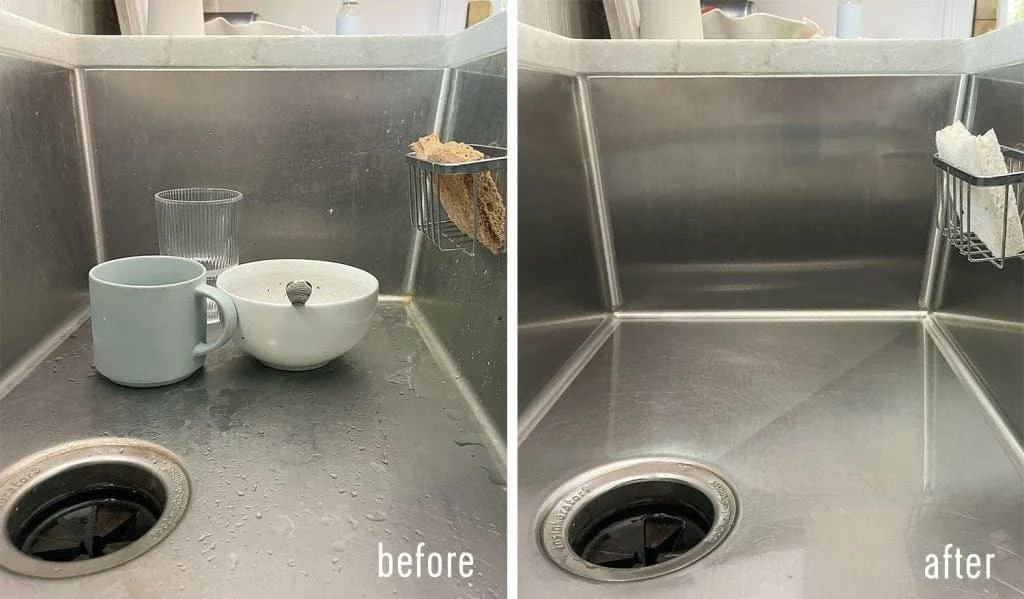
Image source: Young House Love
Step-by-step method for badly spotted stainless steel
If you want one simple process that works for most sinks, fridges, dishwashers, and stove fronts, do this:
- Wipe away loose dust with a dry microfiber cloth.
- Spray a vinegar-and-water mix onto the water spots.
- Let it sit for 1–2 minutes.
- Wipe with the grain.
- If marks remain, use a baking soda paste very gently.
- Wipe clean with a damp cloth.
- Dry immediately with a fresh microfiber cloth.
- Buff for shine.
This method combines the most repeated best practices from the cleaning references above. Better Homes & Gardens Dawn Plesser’s Appliances
What not to use on stainless steel
Avoid:
- Steel wool
- Abrasive scrubbers
- Chlorine bleach
- Harsh multi-surface cleaners
- Letting cleaner or rinse water air-dry
These can scratch the finish, leave residue, or make spotting worse. Better Homes & Gardens Dawn
Quick supplies table
| Supply | Best for | Safe on stainless steel |
|---|---|---|
| Microfiber cloth | Daily wiping and drying | Yes |
| White vinegar | Mineral spots and streaks | Yes |
| Mild dish soap | Grease + water marks | Yes |
| Baking soda paste | Stubborn buildup | Yes, gently |
| Steel wool | Heavy scrubbing | No |
Helpful external links
- How to clean stainless steel appliances – Dawn
- How to clean stainless steel – Better Homes & Gardens
- Best ways to clean stainless steel appliances – Plesser’s Appliances
FAQ
Can vinegar damage stainless steel?
White vinegar is commonly recommended for removing mineral deposits and water spots, especially when diluted and wiped off promptly. As with any cleaner, test a small area first and avoid leaving products sitting too long. Plesser’s Appliances
Why do water spots keep coming back?
Usually because the surface is being left to air-dry or because hard water minerals are repeatedly being deposited. Drying immediately and using filtered or distilled water can help. Dawn
Is baking soda safe for stainless steel?
Yes, it is widely suggested as a gentle option for stubborn marks, but it should be used softly and followed by a clean rinse and dry. Better Homes & Gardens
Conclusion
If you want the shortest answer: use microfiber, vinegar, and proper drying. Most stainless steel water spots come off without expensive products. Clean with the grain, dry right away, and only step up to baking soda when needed. That simple routine is the easiest way to keep stainless steel looking bright and streak-free. Better Homes & Gardens Dawn Plesser’s Appliances