If you’ve ever wanted bakery-quality bread without the stress, garlic herb focaccia is your new best friend. It’s forgiving, wildly flavorful, and requires no fancy shaping or special tools. The dough is soft and sticky by design, which means less kneading and more hands-off time.
You get a golden, crispy crust, a pillowy interior, and pockets of garlicky olive oil in every bite. Make it once, and you’ll start bringing it to every dinner party.
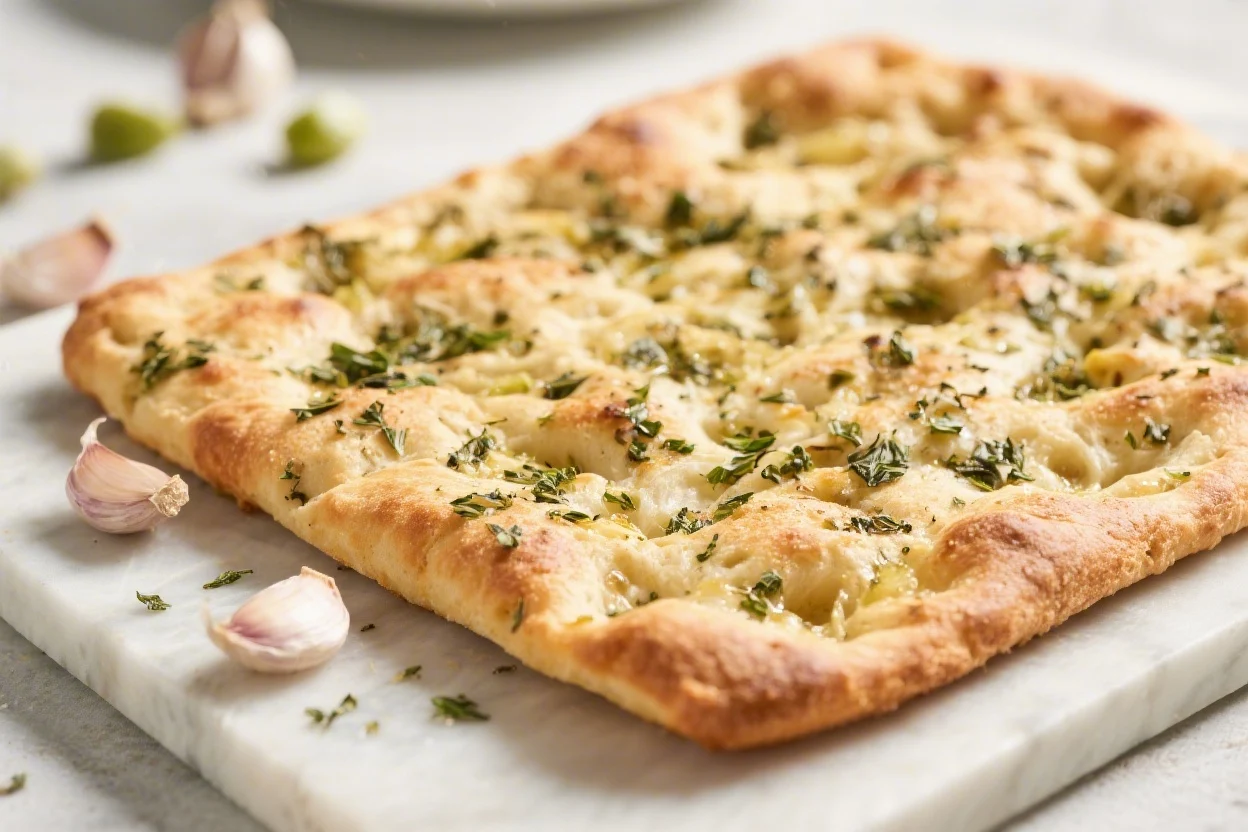
Garlic Herb Focaccia the Foolproof Bread That Makes You Look Like a Pro – Crispy, Puffy, and Packed With Flavor
Ingredients
Method
- Bloom the yeast (if using active dry): In a large bowl, mix warm water and sugar or honey. Sprinkle in the yeast, stir, and let sit for 5–10 minutes until foamy. If using instant yeast, skip the bloom and add it straight to the flour.
- Make the dough: Add flour and fine sea salt to the bowl. Stir with a spatula until a shaggy, sticky dough forms. Drizzle in 2 tablespoons olive oil and mix until mostly smooth. The dough should be quite sticky—that’s good.
- First rise: Lightly oil the bowl, cover tightly, and let the dough rise in a warm spot until doubled, about 1–1.5 hours. For more flavor and flexibility, refrigerate up to 24 hours after the first 30 minutes at room temperature.
- Prep the pan: Generously oil a 9×13-inch pan or a large sheet pan with 2–3 tablespoons olive oil. You want visible oil—this creates that crisp, golden crust.
- Pan the dough: Gently transfer the dough to the pan. With oiled fingers, stretch it toward the edges. If it springs back, rest for 10 minutes and try again. Don’t force it.
- Second rise: Cover loosely and let it puff up for 30–45 minutes at room temperature. The dough should look airy and relaxed.
- Make garlic-herb oil: In a small bowl, combine 1/4 cup olive oil, minced garlic, and chopped herbs. Let sit 10 minutes to infuse. If you prefer a gentler garlic flavor, warm the oil on low heat for 2–3 minutes, then cool.
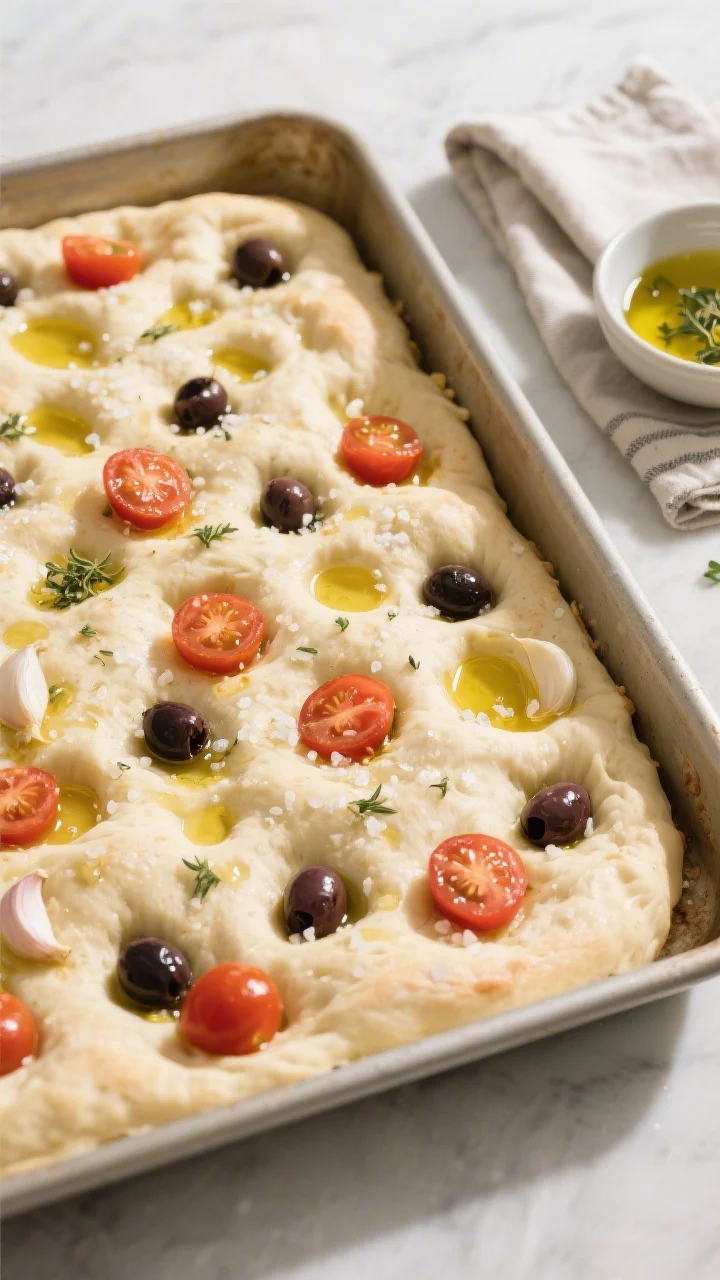
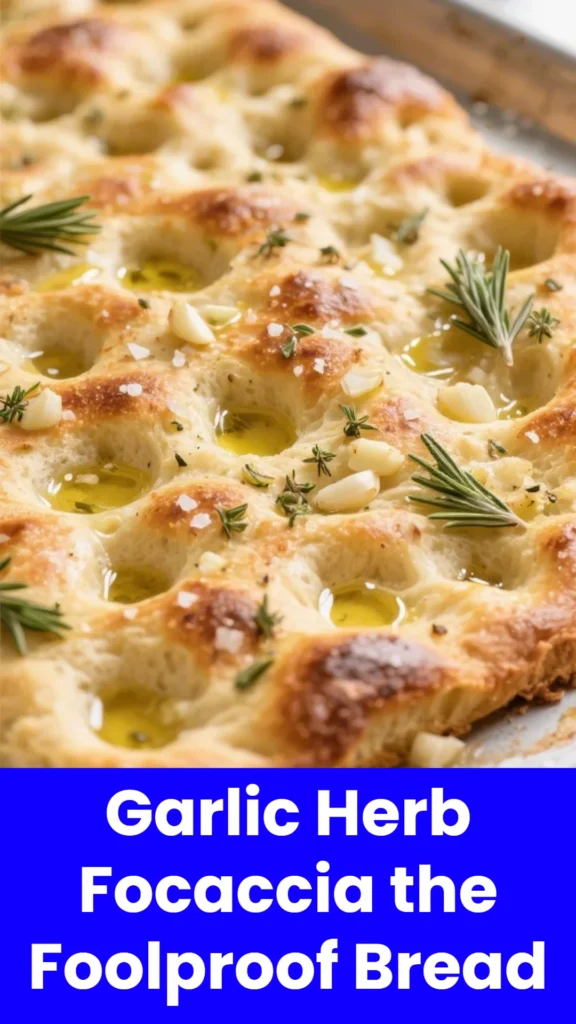
- Dimple and top: Preheat oven to 450°F (230°C). With oiled fingers, press straight down into the dough to create deep dimples all over. Spoon the garlic-herb oil evenly on top so it pools in the dimples. Add flaky sea salt and any optional toppings.
- Bake: Bake 18–24 minutes until the top is golden and the edges are deeply browned and crisp. Rotate the pan once for even color if needed.
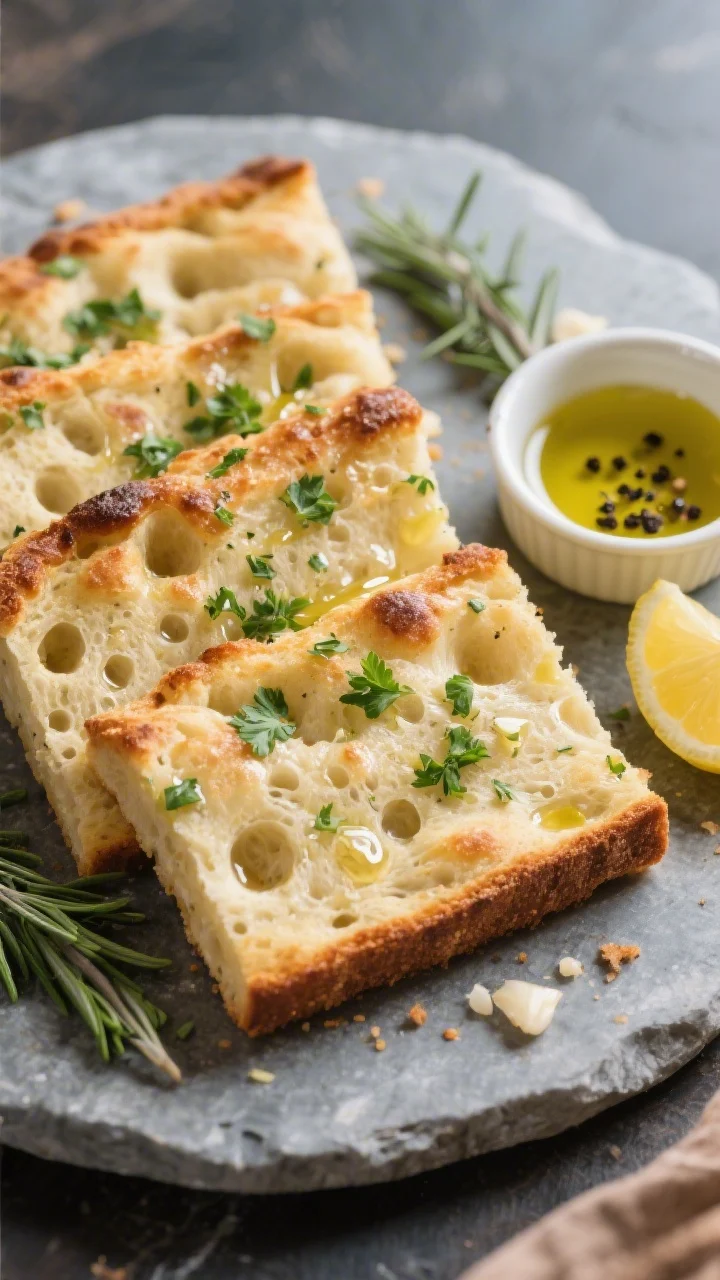
- Finish and rest: While hot, brush with a little more olive oil for shine and flavor. Cool in the pan for 10 minutes, then transfer to a rack. Slice and serve warm.
What Makes This Recipe So Good
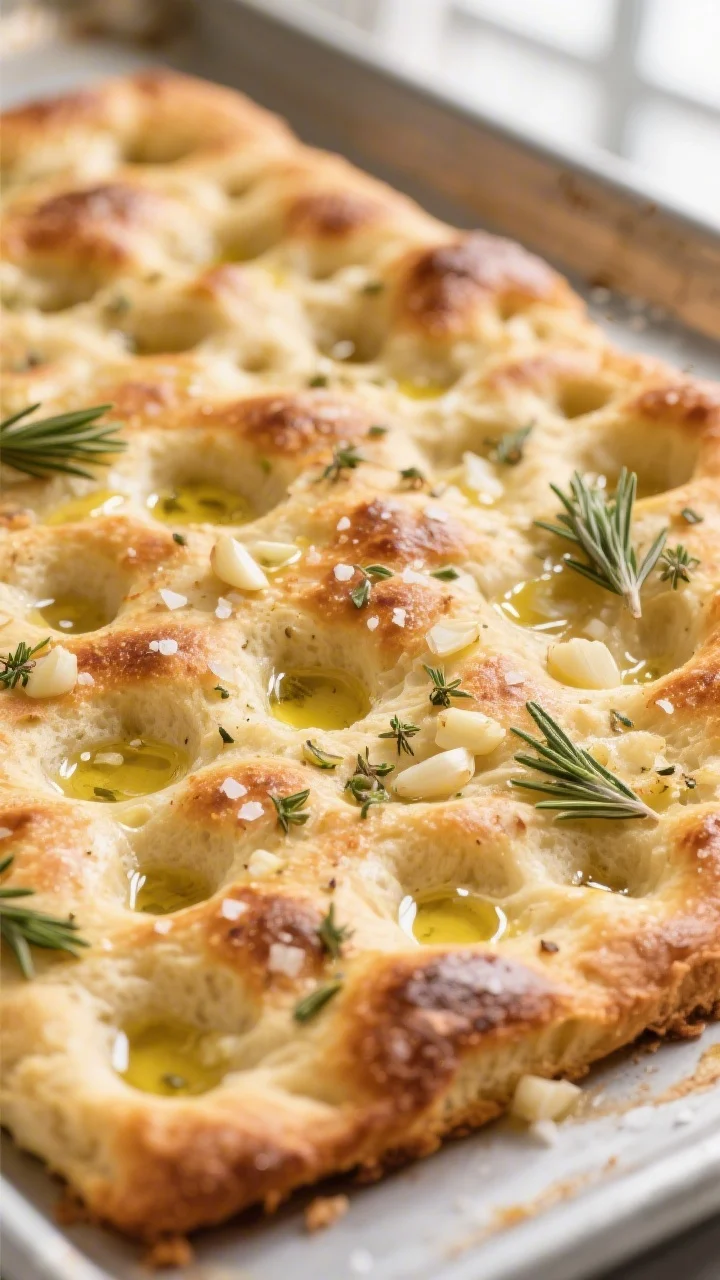
- Low effort, big payoff: No kneading marathons or complicated shaping—just mix, rise, and dimple.
- Incredible texture: Crisp edges, airy crumb, and that signature olive oil richness.
- Bold flavor: Fresh garlic, herbs, and flaky salt turn simple dough into something special.
- Flexible timing: The dough can chill in the fridge for up to 24 hours, so it fits your schedule.
- Endlessly customizable: Add tomatoes, olives, cheese, or change up the herbs.
What You’ll Need
- Bread flour (4 cups / 500 g) – For a chewier texture. All-purpose works in a pinch.
- Warm water (1 3/4 cups / 415 ml) – Around 105–110°F (40–43°C) to wake up the yeast.
- Instant or active dry yeast (2 1/4 tsp / 7 g) – One standard packet.
- Fine sea salt (2 tsp) – For the dough.
- Sugar or honey (1 tsp) – Helps activate and lightly feed the yeast.
- Extra-virgin olive oil (1/2 cup + more for the pan) – The star of the show.
Use good-quality oil.
- Fresh garlic (3–4 cloves, finely minced) – For the topping and oil infusion.
- Fresh herbs (2–3 tbsp chopped) – Rosemary and thyme are classics; parsley or chives also work.
- Flaky sea salt – For finishing.
- Optional add-ins: Sliced cherry tomatoes, olives, thinly sliced red onion, or grated Parmesan.
Instructions
- Bloom the yeast (if using active dry): In a large bowl, mix warm water and sugar or honey. Sprinkle in the yeast, stir, and let sit for 5–10 minutes until foamy. If using instant yeast, skip the bloom and add it straight to the flour.
- Make the dough: Add flour and fine sea salt to the bowl.
Stir with a spatula until a shaggy, sticky dough forms. Drizzle in 2 tablespoons olive oil and mix until mostly smooth. The dough should be quite sticky—that’s good.
- First rise: Lightly oil the bowl, cover tightly, and let the dough rise in a warm spot until doubled, about 1–1.5 hours.
For more flavor and flexibility, refrigerate up to 24 hours after the first 30 minutes at room temperature.
- Prep the pan: Generously oil a 9×13-inch pan or a large sheet pan with 2–3 tablespoons olive oil. You want visible oil—this creates that crisp, golden crust.
- Pan the dough: Gently transfer the dough to the pan. With oiled fingers, stretch it toward the edges.
If it springs back, rest for 10 minutes and try again. Don’t force it.
Reader Favorite🍫 The Ultimate No-Bake Dessert Ebook 🍓
30 mouthwatering no-bake recipes you can whip up in minutes — creamy cheesecakes, fruity parfaits, chocolatey bars, and more!
- ⚡Quick & easy — no oven required
- 📖30 recipes + bonus treat
- 🍓Chocolate, fruit, nutty & refreshing flavors
- ✨Beautifully designed, instant download
Instant digital download • Secure checkout on Gumroad - Second rise: Cover loosely and let it puff up for 30–45 minutes at room temperature. The dough should look airy and relaxed.
- Make garlic-herb oil: In a small bowl, combine 1/4 cup olive oil, minced garlic, and chopped herbs.
Let sit 10 minutes to infuse. If you prefer a gentler garlic flavor, warm the oil on low heat for 2–3 minutes, then cool.
- Dimple and top: Preheat oven to 450°F (230°C). With oiled fingers, press straight down into the dough to create deep dimples all over.
Spoon the garlic-herb oil evenly on top so it pools in the dimples. Add flaky sea salt and any optional toppings.
- Bake: Bake 18–24 minutes until the top is golden and the edges are deeply browned and crisp. Rotate the pan once for even color if needed.
- Finish and rest: While hot, brush with a little more olive oil for shine and flavor.
Cool in the pan for 10 minutes, then transfer to a rack. Slice and serve warm.
Storage Instructions
- Room temperature: Keep leftovers in an airtight container or wrapped in foil for up to 2 days. Re-crisp in a 375°F (190°C) oven for 8–10 minutes.
- Freezer: Wrap tightly and freeze up to 2 months.
Reheat from frozen at 375°F (190°C) for 12–15 minutes.
- Make-ahead dough: After the first 30 minutes of rising, refrigerate the dough up to 24 hours. Let it warm for 30–45 minutes before stretching in the pan.
Benefits of This Recipe
- Beginner-friendly: Sticky dough and dimpling hide any imperfections.
- Feeds a crowd: A 9×13 pan makes generous portions for sharing.
- Budget-friendly: Pantry staples turn into something restaurant-worthy.
- Versatile: Works as an appetizer, side, sandwich bread, or brunch base.
- Scalable: Double it for a sheet pan or halve it for a smaller batch.
Pitfalls to Watch Out For
- Water too hot: If it’s hotter than 115°F (46°C), you can kill the yeast. Aim for warm, not hot.
- Too little oil: Skimping on oil means less flavor and a softer, less crispy crust.
Be generous in the pan and on top.
- Rushing the rise: Underproofed dough won’t get airy. Wait for visible puffiness.
- Overbaking: Dark golden is perfect; blackened edges are not. Keep an eye on it in the last few minutes.
- Dense dough from extra flour: Resist adding lots of flour to tame the stickiness.
Oil your hands instead.
Recipe Variations
- Tomato Basil: Press halved cherry tomatoes into the dough and top with torn basil after baking.
- Olive and Rosemary: Scatter pitted Kalamata or Castelvetrano olives and extra rosemary before baking.
- Carmelized Onion and Thyme: Add a layer of sweet caramelized onions and fresh thyme.
- Cheesy Focaccia: Sprinkle grated Parmesan or Pecorino in the last 5 minutes of baking.
- Everything Bagel: Swap herbs for everything bagel seasoning and finish with a drizzle of olive oil.
- Spicy Garlic: Add crushed red pepper flakes to the garlic oil for a gentle kick.
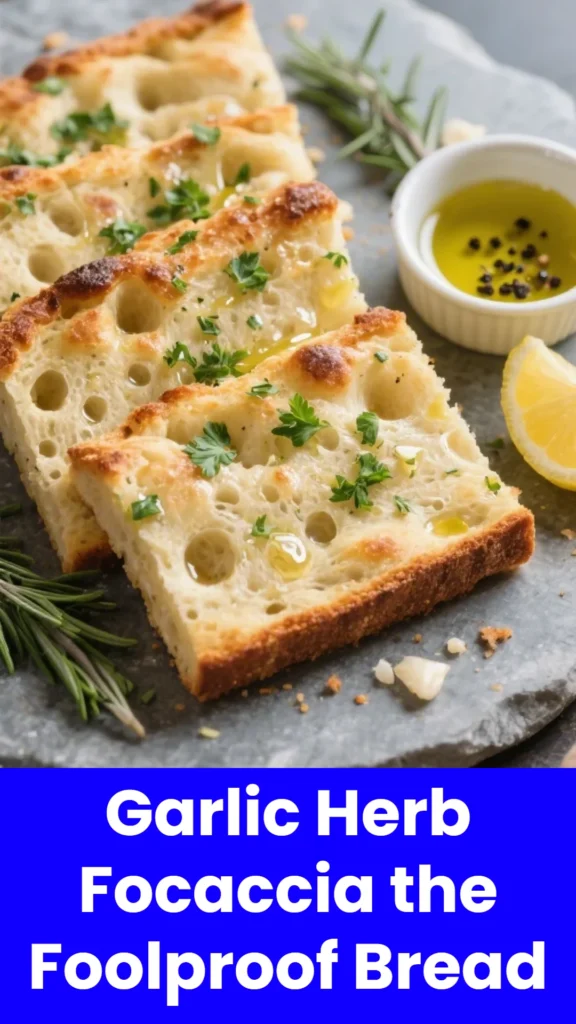
- Lemon Herb: Zest a lemon into the oil and finish with a squeeze of lemon juice after baking.
FAQ
Can I use all-purpose flour instead of bread flour?
Yes. All-purpose flour works well and makes a slightly softer crumb. Bread flour gives a chewier texture, but both are great for focaccia.
Do I have to use fresh herbs?
No.
Dried herbs work, especially dried rosemary and thyme. Use about one-third the amount of dried herbs because they’re more potent.
How do I get bigger air bubbles?
Use a well-hydrated dough, avoid adding extra flour, and give the dough time to rise fully. The cold ferment in the fridge also encourages better flavor and an open crumb.
Why is my focaccia pale?
Your oven may run cool or the pan wasn’t well-oiled.
Bake a few minutes longer and make sure you’re using enough oil for color and crisp edges.
Can I make this gluten-free?
Use a high-quality gluten-free bread flour blend designed for yeast breads and follow the same method. Expect a slightly denser texture, but the flavor will still shine.
What size pan should I use?
A 9×13-inch pan yields a thicker, puffier focaccia. A large sheet pan will give you a thinner, crisper version.
Adjust bake time slightly—thinner bakes faster.
Can I add cheese before baking?
Yes, but add most of it in the last 5 minutes to prevent burning. Hard cheeses like Parmesan can handle more heat than softer cheeses.
How do I know it’s done?
Look for a deep golden top and well-browned edges. The bread should feel light when lifted with a spatula and sound slightly hollow when tapped.
What’s the best way to reheat?
Use a hot oven or toaster oven at 375°F (190°C) for 8–10 minutes.
Avoid microwaving—it makes the crumb rubbery and the crust soft.
Wrapping Up
Garlic herb focaccia is the kind of bread that makes you look skilled with very little fuss. The dough is simple, the flavors are bold, and the results are consistently impressive. Once you master the rhythm—mix, rise, dimple, bake—you’ll have a go-to recipe for weeknights, gatherings, and everything in between.
Keep good olive oil on hand, trust the rise, and enjoy that golden, irresistible crust every time.
Printable Recipe Card
Want just the essential recipe details without scrolling through the article? Get our printable recipe card with just the ingredients and instructions.