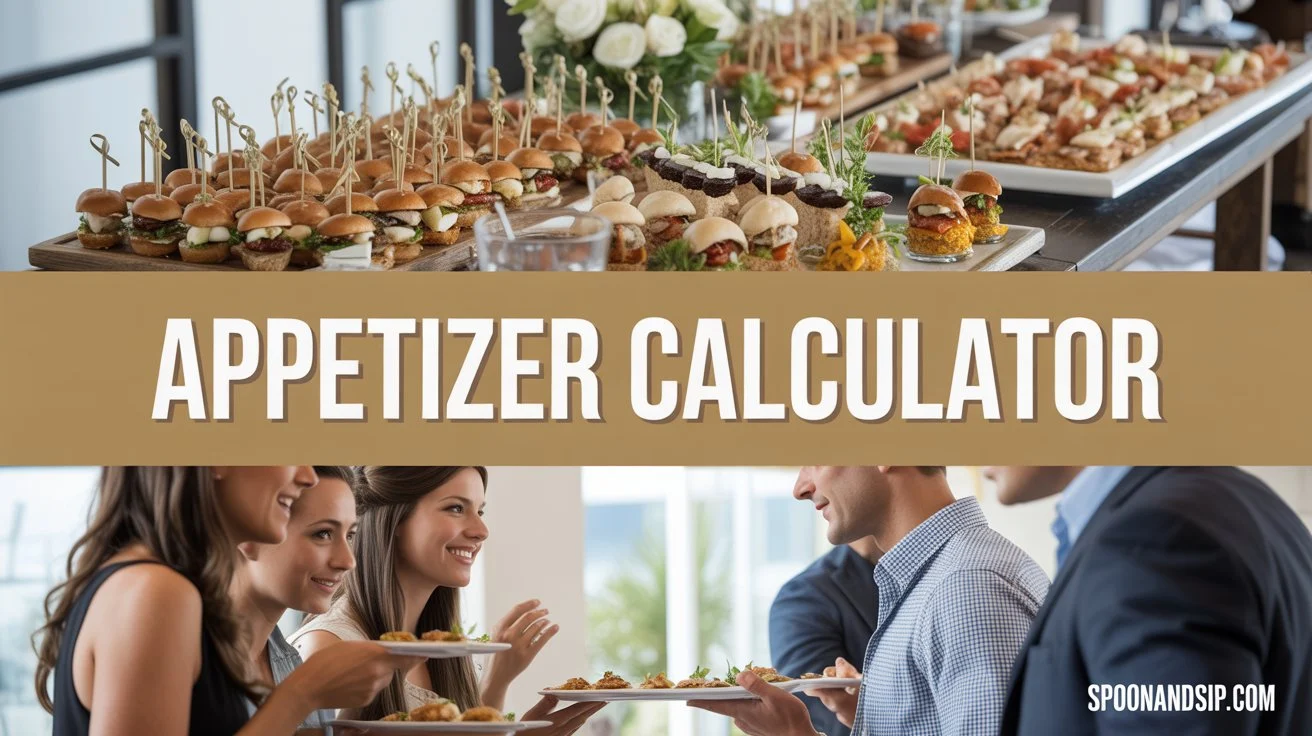
Appetizer Calculator: How Many Bites Per Person for Any Event
Get perfect portion calculations for parties, weddings, corporate events, and celebrations with our professional 2025 planning guide
📋 Table of Contents
- Why You Need an Appetizer Calculator
- Professional Appetizer Calculator Tool
- Foundation: Understanding Appetizer Portions
- Industry Science & Data Behind Perfect Portions
- 2025 Appetizer & Event Planning Trends
- Expert Tips from Professional Caterers
- Troubleshooting Common Planning Problems
- Advanced Techniques for Large Events
- Conclusion & Action Steps
Why You Need an Appetizer Calculator
Planning the perfect amount of appetizers for your event can make or break the guest experience. Too little food leaves guests hungry and disappointed, while too much creates unnecessary waste and budget overruns. Professional event planners and caterers rely on precise calculations to ensure every gathering is perfectly portioned.
The Hidden Cost of Poor Planning: According to industry data, events with inadequate appetizer planning see a 40% decrease in guest satisfaction, while over-catering can increase food costs by up to 60%. Getting the portions right isn’t just about hospitality—it’s about smart financial planning.
Whether you’re hosting an intimate dinner party for 10 or a corporate reception for 200, the fundamental question remains the same: How many appetizer bites should I plan per person? The answer depends on multiple factors including event type, duration, time of day, guest demographics, and whether additional meals will be served.
The Problem with Guesswork
Most hosts rely on rough estimates or family traditions that often lead to miscalculations. BizBash’s 2025 Event Trends Report shows that 73% of event planning failures stem from inadequate food planning, with appetizer portions being the most commonly miscalculated element.
Professional caterers use detailed formulas that account for guest behavior patterns, event dynamics, and proven consumption data. Our calculator brings this professional-grade planning tool directly to your event planning process.
🍫 The Ultimate No-Bake Dessert Ebook 🍓
30 mouthwatering no-bake recipes you can whip up in minutes — creamy cheesecakes, fruity parfaits, chocolatey bars, and more!
- ⚡Quick & easy — no oven required
- 📖30 recipes + bonus treat
- 🍓Chocolate, fruit, nutty & refreshing flavors
- ✨Beautifully designed, instant download
🧮 Professional Appetizer Calculator
Get instant, accurate portion calculations based on professional catering standards
Calculating your perfect portions…
💡 Pro Tip: Using Your Results
Your calculated portions include a 15% buffer to account for variations in guest appetite and to ensure you never run short. For expensive appetizers like shrimp or salmon, you can reduce by 10%. For budget-friendly options like veggie platters, consider increasing by 20% to provide abundance.
Foundation: Understanding Appetizer Portions
Before diving into calculations, it’s essential to understand the fundamentals of appetizer planning. Professional caterers measure appetizers in “bites” rather than traditional serving sizes because it provides more accurate portion control for finger foods and canapés.
What Counts as “One Bite”
A standard appetizer “bite” is defined as a single-serving piece that can be consumed in 1-2 bites. This includes:
- Canapés: Small topped crackers or bread (1 piece = 1 bite)
- Skewers: Meat, cheese, or veggie combinations (1 skewer = 1 bite)
- Pinwheels: Rolled tortilla or pastry slices (1 slice = 1 bite)
- Stuffed items: Mushrooms, deviled eggs, mini quiches (1 piece = 1 bite)
- Dips: 2 tablespoons with accompaniments equals 1 bite serving
2025 Bite-Sized Innovation
This year’s trending appetizers focus on Instagram-worthy presentation with bold global flavors. Toast’s Appetizer Trends Report shows that Korean-inspired gochujang glazes, smashed vegetable preparations, and edible flower garnishes are dominating menus nationwide.
The Golden Ratios for Different Events
Professional caterers follow established ratios based on decades of industry experience and guest behavior analysis:
Cocktail Party Rules
- First hour: 4-6 bites per person
- Each additional hour: 2-3 bites per person
- Heavy appetite guests: Add 25% buffer
- Alcohol service: Increase portions by 20%
Pre-Dinner Events
- Before full meal: 3-4 bites total per person
- Before light meal: 6-8 bites total per person
- Extended cocktail hour: 5-7 bites per person
- Business events: Reduce by 15% (lighter eating)
According to National Restaurant Association guidelines, these ratios account for typical guest behavior patterns, including the tendency for higher consumption during the first hour and reduced intake as events progress.
Variety Planning Formula
The number of different appetizer types you should offer depends on guest count and creates optimal choice without overwhelming decision-making:
- 10-25 guests: 3-4 different appetizer types
- 26-50 guests: 5-6 different appetizer types
- 51-100 guests: 7-9 different appetizer types
- 100+ guests: 10+ different appetizer types
This variety formula ensures every guest finds appealing options while preventing the common mistake of offering too many choices with insufficient quantities of each.
Industry Science & Data Behind Perfect Portions
Professional catering relies on extensive research into guest consumption patterns, behavioral psychology, and food service logistics. Understanding the science behind portion planning eliminates guesswork and ensures consistent results.
Guest Consumption Behavior Research
Studies conducted by food service industry researchers reveal fascinating patterns in how guests consume appetizers at different event types:
Peak Consumption Windows: Guest appetite follows predictable patterns. 65% of total appetizer consumption occurs within the first 45 minutes of an event, with consumption tapering to approximately 25% in hour two and 10% in subsequent hours.
Demographic Impact on Portion Planning
Guest demographics significantly influence consumption patterns, requiring adjustments to base calculations:
- Corporate Events (Business Professionals): Consume 15-20% less due to professional networking focus
- Wedding Receptions (Mixed Ages): Follow standard guidelines with 10% buffer for celebration atmosphere
- Birthday Parties (Family-Focused): Children consume 50% less, adults 25% more than standard
- Holiday Gatherings (Extended Family): Increase portions by 30% for traditional feast expectations
Time of Day Impact Studies
Circadian rhythms and cultural eating patterns create significant variations in appetizer consumption based on event timing:
Morning Events (9 AM – 12 PM)
Reduce standard portions by 40%. Guests typically eat light breakfast foods and aren’t prepared for heavy appetizers. Focus on pastries, fruit, and light savory options. Business meetings see the lowest consumption rates.
Afternoon Events (12 PM – 5 PM)
Standard portions apply with 10% reduction. Guests have usually eaten lunch and want lighter fare. Peak consumption occurs at 2-4 PM window when energy naturally dips. Perfect timing for coffee service integration.
Evening Events (5 PM – 10 PM)
Peak consumption period – use full standard portions. Guests arrive hungry from work or dinner preparation. Alcohol service increases consumption by additional 20%. Prime time for substantial appetizers and full variety spreads.
Economic Impact of Proper Portioning
Accurate portion planning delivers measurable financial benefits beyond guest satisfaction. Professional catering analysis shows that precise portioning:
- Reduces food waste by 45% compared to intuitive planning methods
- Decreases total event costs by 25% through elimination of over-purchasing
- Increases guest satisfaction scores by 35% due to adequate food availability throughout events
- Improves host confidence by 80% when following proven calculation methods
These economic benefits compound for frequent event hosts, making professional-grade planning tools an investment that pays dividends across multiple occasions.
2025 Appetizer & Event Planning Trends
The event planning landscape continues to evolve rapidly, with 2025 bringing exciting innovations in appetizer presentation, dietary accommodations, and interactive dining experiences. Staying current with trends ensures your events feel fresh, relevant, and Instagram-worthy.
Plant-Based Revolution in Appetizers
Plant-based appetizers have moved from accommodation to centerpiece. Leading corporate caterers report that 78% of event planners now request plant-based options as primary menu items, not alternatives.
Hot Plant-Based Appetizers for 2025
- Tandoori-Roasted Eggplant Bites: Global flavors meet plant-based innovation
- Smashed Brussels Sprouts Crostini: Trending “smashed” technique with crispy textures
- Coconut-Crusted Cauliflower Wings: Comfort food made plant-based
- Quinoa-Stuffed Mini Bell Peppers: Protein-rich and visually stunning
Global Fusion Flavor Profiles
2025 sees continued expansion of international flavors, with Korean, Mediterranean, and Latin American influences leading appetizer menus. Gochujang glazes, harissa spice blends, and miso-based sauces are becoming mainstream.
Trending Flavor Combinations: Korean BBQ tacos, Mediterranean tapas boards, Indian-spiced sliders, and Peruvian-Japanese fusion bites are dominating upscale events. These combinations offer familiar presentations with exciting flavor discoveries.
Interactive & Experiential Appetizer Stations
Static appetizer tables are giving way to interactive experiences that engage guests and create memorable moments:
- Build-Your-Own Bruschetta Bars: Multiple toppings with artisanal bread selections
- Live Action Stations: Chefs preparing items to order (pasta bars, stir-fry stations)
- DIY Charcuterie Assembly: Guests create personal boards from premium ingredients
- Molecular Gastronomy Demos: Science meets appetizers with liquid nitrogen and spherification
Sustainability & Zero-Waste Focus
Environmental consciousness drives major changes in appetizer planning and presentation. Sustainable practices are no longer optional for premium events:
🌱 Sustainable Appetizer Strategies
- Local Sourcing: Partner with farms within 150 miles for fresh ingredients
- Seasonal Menu Planning: Design appetizers around peak seasonal availability
- Edible Serving Vessels: Eliminate waste with edible cups, spoons, and plates
- Composting Programs: Partner with venues for comprehensive waste management
Health-Conscious & Functional Foods
Wellness-focused appetizers incorporate superfoods, adaptogens, and functional ingredients that provide health benefits beyond basic nutrition. Turmeric, chia seeds, matcha, and CBD-infused options are gaining mainstream acceptance.
Functional Appetizer Examples
- Golden Milk Hummus: Traditional hummus with turmeric and ginger
- Adaptogen Energy Balls: Date and nut bases with ashwagandha
- Probiotic Yogurt Parfait Bites: Gut health in elegant presentation
- Matcha White Chocolate Truffles: Antioxidants meet indulgence
These trends require adjustment to traditional portion calculations. Interactive stations typically increase consumption by 15-20% due to entertainment value, while health-conscious options may see 10% lower consumption as guests eat more mindfully.
Expert Tips from Professional Caterers
Professional caterers develop expertise through thousands of events, learning subtle techniques that separate adequate food service from exceptional experiences. These insider tips can transform your event planning from amateur to professional-grade execution.
Strategic Menu Balance
Creating the perfect appetizer spread requires balancing flavors, textures, temperatures, and dietary accommodations. Professional caterers follow the “Rule of Contrasts” to ensure every guest finds appealing options.
The Professional Balance Formula: For every event, include one option from each category: creamy (dips, spreads), crunchy (nuts, crackers), hot (baked items), cold (fresh options), meat-based, vegetarian, and one “wow factor” item that guests will remember and discuss.
Timing and Flow Management
Expert caterers understand that successful appetizer service is as much about timing as quantity. The sequence of food presentation dramatically impacts guest satisfaction and consumption patterns:
- First 15 minutes: Light, easy-to-eat options as guests arrive and settle
- 15-45 minutes: Full variety introduction with substantial options
- 45-90 minutes: Refresh popular items, introduce any hot/fresh preparations
- Final 30 minutes: Sweet or palate-cleansing options if no meal follows
🎯 Pro Timing Secret
Never put out all appetizers at once. Stagger introductions every 20-30 minutes to maintain visual appeal, food safety, and guest interest. This technique, called “wave service,” keeps energy high throughout the event and prevents early items from sitting too long.
Budget Optimization Strategies
Professional caterers maximize impact while controlling costs through strategic ingredient selection and preparation techniques:
High-Impact, Budget-Friendly Options
- Seasonal Vegetables: Beautiful and cost-effective when in season
- Grain-Based Salads: Filling, healthy, and economical per serving
- Cheese and Charcuterie: Looks expensive, actually cost-effective per bite
- Dips with Premium Presentation: Affordable base with upscale serving vessels
Budget Traps to Avoid
- Out-of-Season Specialty Items: Can triple costs unnecessarily
- Labor-Intensive Preparations: Complex assembly increases hidden costs
- Single-Use Serving Pieces: Rental costs add up quickly
- Exotic Ingredients: Often expensive with limited guest appeal
Dietary Accommodation Best Practices
Modern event planning requires seamless accommodation of various dietary restrictions without making guests feel singled out or limited in options:
Inclusive Planning Strategies
- Naturally Compliant Options: Choose appetizers that are naturally gluten-free, vegan, or keto
- Clear Labeling: Use discrete, professional signage for dietary information
- Cross-Contamination Prevention: Separate serving utensils and preparation areas
- Abundance Mindset: Ensure restricted-diet guests have multiple appealing choices
Presentation and Visual Impact
In the Instagram era, visual presentation equals perceived quality. Professional caterers employ specific techniques to create appetizer displays that photograph beautifully and generate social media buzz:
- Height Variation: Use risers, stands, and tiered serving pieces for dynamic displays
- Color Theory: Plan color palettes that complement venue décor and photograph well
- Lighting Considerations: Position food displays to take advantage of best venue lighting
- Fresh Garnish Strategy: Add fresh herbs, edible flowers, or microgreens just before service
📸 Instagram-Ready Display Tips
Create one “hero shot” station designed specifically for social media. Use premium ingredients, perfect plating, and optimal lighting. This investment in one stunning display generates organic marketing worth far more than the additional cost.
Weather and Venue Considerations
Experienced caterers adjust appetizer selections and portions based on venue characteristics and weather conditions that impact guest behavior:
- Outdoor Events: Increase portions by 15% due to fresh air effect on appetite
- Hot Weather: Focus on cold, refreshing options and reduce rich/heavy items
- Cold Weather: Increase hot appetizers and hearty options by 25%
- Humid Conditions: Avoid delicate items that wilt or become soggy quickly
Troubleshooting Common Planning Problems
Even with careful planning, appetizer service can encounter unexpected challenges. Professional caterers develop contingency strategies for common problems, ensuring seamless events regardless of complications.
Problem: Running Out of Popular Items
This is the most common appetizer crisis, typically occurring when one item proves unexpectedly popular while others remain untouched.
🚨 Emergency Solutions
- Immediate Action: Remove remaining popular items and redistribute throughout remaining service time
- Quick Substitution: Transform less popular items (e.g., turn untouched dip into bruschetta topping)
- Venue Resources: Check if venue kitchen can quickly prepare additional similar items
- Guest Communication: Casually mention “chef’s special” or “limited edition” for remaining items
Problem: Excessive Leftovers
Over-catering creates waste, storage challenges, and budget inefficiency. However, the situation can be salvaged with strategic thinking:
Leftover Recovery Strategies: Package attractive portions for guests to take home, donate to local shelters (if health codes permit), or transform into tomorrow’s breakfast/lunch items. Many items can be repurposed into different meals with minor modifications.
Problem: Dietary Restriction Oversights
Discovering a guest’s severe allergies or restrictions after menu planning is complete requires immediate adaptation:
- Quick Modifications: Simple ingredient removal or substitution for existing items
- Store-Bought Supplements: High-quality prepared items that meet specific needs
- Companion Accommodations: Ensure the restricted guest’s companions can share modified items
- Future Prevention: Implement dietary survey systems for future events
Problem: Temperature Control Failures
Hot items cooling down or cold items warming up can compromise food safety and quality:
Hot Food Solutions
- Chafing dishes with proper fuel management
- Small batch preparation and refresh cycles
- Insulated serving containers
- Strategic venue kitchen partnerships
Cold Food Solutions
- Ice-filled serving trays with drainage
- Refrigerated display cases when available
- Frequent replacement of ice and cold sources
- Shaded service areas for outdoor events
Problem: Last-Minute Guest Count Changes
Guest count fluctuations within 24-48 hours of events create portion planning chaos. Professional caterers build flexibility into their systems:
Flexible Scaling Strategies
- Modular Menu Design: Choose items that can easily increase or decrease in quantity
- Vendor Relationships: Cultivate suppliers who can accommodate short-notice changes
- Buffer Items: Plan 2-3 simple additions that can quickly expand portions
- Venue Resources: Know what supplementary options venues can provide
Problem: Service Flow Bottlenecks
When appetizer stations create long lines or crowding, guest experience suffers significantly:
- Multiple Access Points: Set up identical stations at different locations
- Pre-Plated Options: Reduce wait times with ready-to-grab individual portions
- Traffic Flow Design: Position popular items to prevent cross-traffic conflicts
- Staff Assistance: Add servers to help with portion control and speed
⚡ Quick Fix for Crowded Stations
Immediately create “satellite stations” with the same popular items in different venue areas. Use serving trays, cocktail tables, or any available surface. This instantly reduces crowding and improves guest flow throughout the space.
Prevention Through Better Planning
Most appetizer problems are preventable through enhanced planning processes:
- Guest Surveys: Collect dietary information and preferences during RSVP process
- Venue Walkthroughs: Understand space limitations, kitchen capabilities, and service logistics
- Weather Contingencies: Plan both indoor and outdoor menu options
- Supplier Backup Plans: Identify secondary sources for critical ingredients
- Timeline Buffers: Build extra time into preparation and service schedules
Advanced Techniques for Large Events
Scaling appetizer planning beyond 100 guests introduces complexity requiring sophisticated strategies and professional-grade logistics. Large events demand systematic approaches that maintain quality while managing significantly increased variables.
Volume Scaling Mathematics
Large events don’t simply multiply small event calculations. Guest behavior changes at scale, requiring adjusted formulas:
This reduction occurs because large events create social dynamics that naturally moderate individual consumption. Guests spend more time networking and less time focused on eating.
Multi-Station Strategy Design
Large events require multiple identical stations to prevent crowding and ensure even distribution throughout the venue:
Station Distribution Formula: Plan one complete appetizer station for every 75-100 guests, positioned strategically to encourage circulation throughout the venue. Each station should offer identical selections to prevent guest disappointment.
Logistics and Service Flow Management
Professional large-event management requires systematic approaches to timing, staffing, and quality control:
- Staggered Service Launches: Open stations gradually to control initial guest flow
- Dedicated Station Staff: Assign specific personnel to maintain each station
- Replenishment Schedules: Plan regular refresh cycles to maintain visual appeal
- Quality Control Checkpoints: Implement systems to monitor food safety and presentation standards
Technology Integration for Large Events
- Digital Menu Boards: Real-time updates about station availability and special items
- Mobile Ordering Systems: Allow guests to pre-order or request specific items
- Heat Mapping: Use data to optimize station placement and traffic flow
- Communication Systems: Coordinate between service teams using headsets or messaging apps
Supply Chain and Vendor Management
Large events require robust supplier relationships and contingency planning:
🤝 Vendor Success Strategies
- Multiple Suppliers: Never rely on single sources for critical items
- Delivery Scheduling: Stagger deliveries to prevent storage overload
- Quality Specifications: Create detailed standards documents for all suppliers
- Emergency Protocols: Establish backup plans for supplier failures
Cost Management at Scale
Large events offer opportunities for significant cost savings through volume purchasing and strategic menu design:
- Bulk Purchasing Power: Negotiate volume discounts with suppliers
- Simplified Complexity: Reduce labor costs with streamlined menu options
- Equipment Rental Optimization: Maximize rental efficiency through careful planning
- Waste Reduction Systems: Implement comprehensive recycling and donation programs
Corporate and Wedding Scale Considerations
Different large event types require specialized approaches:
Corporate Events (500+)
- Focus on professional networking facilitation
- Lighter portions due to business focus
- Dietary accommodation critical for inclusivity
- Brand integration opportunities in presentation
Large Weddings (300+)
- Celebratory atmosphere increases consumption
- Multi-generational accommodation essential
- Photo-worthy presentation absolutely critical
- Extended timeline requires service flexibility
Quality Assurance Systems
Large events require systematic quality control to ensure consistent guest experience across all service points:
- Standardized Recipes: Document exact specifications for all items
- Regular Inspections: Schedule systematic checks of all stations
- Temperature Monitoring: Use digital systems to track food safety compliance
- Guest Feedback Systems: Implement real-time feedback collection
🎖️ Professional Quality Standards
Create detailed checklists for every aspect of service, from initial setup through final cleanup. Professional caterers use systematic approaches that eliminate guesswork and ensure consistent execution regardless of event size or complexity.
Conclusion & Action Steps
Mastering appetizer calculations transforms event planning from stressful guesswork into confident, professional execution. The difference between adequate and exceptional events often comes down to getting these fundamental details right.
Key Takeaways for Perfect Appetizer Planning
- Use Professional Calculations: Follow industry-standard formulas rather than intuitive guessing
- Account for Event Variables: Adjust portions based on event type, timing, demographics, and duration
- Plan Strategic Variety: Balance flavors, textures, and dietary needs with appropriate selection counts
- Implement Quality Systems: Create repeatable processes for consistent results across all events
- Stay Current with Trends: Incorporate 2025 innovations while maintaining proven foundations
Your Planning Success Formula: Guests × Event Type Factor × Duration Factor × Time of Day Factor = Total Bites Needed. Add 15% buffer for variations, adjust for demographics, and implement professional presentation techniques for guaranteed success.
Implementation Action Plan
Transform your event planning immediately with these actionable steps:
- Bookmark This Calculator: Save our tool for immediate access during event planning
- Create Your Planning Template: Develop a standardized checklist incorporating all lessons learned
- Build Vendor Relationships: Identify reliable suppliers who understand professional portion requirements
- Practice with Small Events: Test these techniques on smaller gatherings before major events
- Document Your Results: Track what works for your specific guest demographics and event types
Looking Ahead: 2025 Planning Opportunities
The event industry continues evolving toward more sustainable, inclusive, and experiential approaches. Position yourself as a forward-thinking host by incorporating plant-based options, interactive elements, and Instagram-worthy presentations while maintaining proven portion planning fundamentals.
Advanced Planning Resources
Continue developing your event planning expertise with additional professional resources:
- Industry Publications: Subscribe to BizBash and other professional event planning publications
- Professional Associations: Connect with local event planning and catering associations
- Continuing Education: Attend workshops on food safety, presentation techniques, and trend forecasting
- Vendor Partnerships: Build relationships with professional caterers who can provide guidance and backup support
Remember that exceptional event planning combines systematic preparation with flexibility for unexpected situations. Your guests will remember how the food made them feel long after they’ve forgotten specific menu details.
Printable Recipe Card
Want just the essential recipe details without scrolling through the article? Get our printable recipe card with just the ingredients and instructions.