
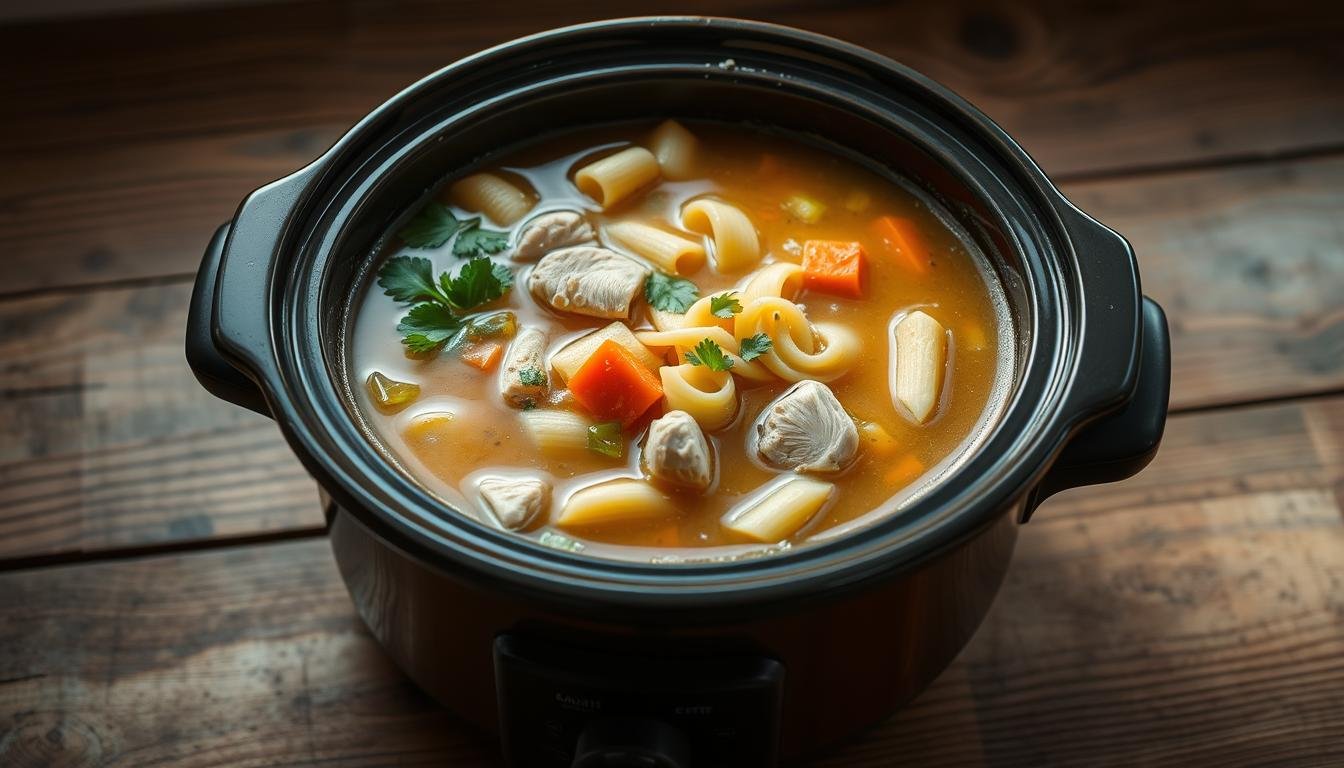
There’s something incredibly comforting about a warm bowl of homemade goodness. For me, making this classic dish in a slow cooker is the ultimate way to create a meal that’s both easy and delicious. It’s a recipe that brings back childhood memories and fills the house with an irresistible aroma.
Using a slow cooker ensures the flavors meld perfectly, and the ingredients become tender and rich. Unlike canned versions, homemade meals offer a depth of taste that’s hard to beat. Plus, it’s incredibly versatile—perfect for cozy dinners or when you’re feeling under the weather.
What I love most is how simple it is to prepare. With minimal effort, you can have a hearty, wholesome dish ready to enjoy. It’s the kind of meal that feels like a hug in a bowl, and it’s always a hit with my family.
Key Takeaways
- Homemade versions offer richer, more complex flavors than canned soups.
- Using a slow cooker enhances tenderness and preserves flavors.
- This dish is perfect for both comfort and quick dinner solutions.
- It’s easy to prepare with minimal prep time.
- It’s a versatile meal for sick days or family dinners.
Getting Started: Understanding the Recipe and Tools
The key to a delicious dish lies in understanding your recipe and equipment. For this recipe, a 6-quart slow cooker is essential. It’s the perfect size to hold all your ingredients while allowing flavors to meld beautifully.
Quality tools make a big difference. A sharp knife, sturdy cutting board, and reliable measuring cups ensure your prep work is efficient. These basics set the stage for a smooth cooking process.
When it comes to noodles, egg noodles are a great choice. They hold up well in the slow cooker and add a comforting texture to the dish. Pair them with fresh vegetables and tender chicken for a balanced meal.
🍫 The Ultimate No-Bake Dessert Ebook 🍓
30 mouthwatering no-bake recipes you can whip up in minutes — creamy cheesecakes, fruity parfaits, chocolatey bars, and more!
- ⚡Quick & easy — no oven required
- 📖30 recipes + bonus treat
- 🍓Chocolate, fruit, nutty & refreshing flavors
- ✨Beautifully designed, instant download
One of the best things about this recipe is its simplicity. It’s a “dump-and-go” style meal, meaning you can add all your ingredients at once and let the cooker do the work. This approach saves time and effort, making it perfect for busy days.
Understanding your tools and ingredients ensures a stress-free cooking experience. With the right setup, you’ll be ready to create a dish that’s both hearty and satisfying.
Benefits of Using a Slow Cooker for Chicken Soup
Slow cookers are a game-changer for creating flavorful meals with minimal effort. The gentle heat allows ingredients to meld together, resulting in a rich and comforting dish. It’s a method that’s perfect for busy evenings or when you want a hands-off approach to cooking.
“The slow cooker is my go-to for meals that taste like they’ve been simmering all day, even when I’ve only spent a few minutes prepping.”
One of the biggest advantages is how it enhances the flavor of your recipe. Over time, the broth becomes infused with the essence of fresh vegetables and tender chicken breast. This creates a depth of taste that’s hard to achieve with traditional methods.
- Deep, harmonious flavors develop over long cooking times.
- The “set it and forget it” method saves time and effort.
- Even with minimal prep, the slow cooker does the heavy lifting.
- Gentle heat preserves the tenderness of chicken breast.
- It’s a perfect balance of health and comfort.
| Method | Flavor Development | Prep Time | Tenderness |
|---|---|---|---|
| Slow Cooker | Rich and layered | Few minutes | Perfectly tender |
| Stovetop | Good, but less depth | Constant attention | Can overcook |
In my experience, slow cooking is unmatched for creating meals that are both hearty and satisfying. It’s a technique that delivers incredible results with minimal effort, making it a staple in my kitchen.
Preparing Your Ingredients for a Hearty Soup
Prepping fresh ingredients is the foundation of a hearty and flavorful meal. Start by gathering your vegetables—carrots, celery, and onions. These form the classic mirepoix, the flavor base for many soups.
Trim and dice your carrots into uniform pieces. This ensures they cook evenly and add a sweet, earthy flavor to the broth. Similarly, slice the celery thinly for a subtle crunch and aromatic depth. Don’t forget the onions; dice them finely to blend seamlessly into the dish.
Adding a bay leaf to your crockpot is a small step with a big impact. This humble herb infuses the broth with a warm, slightly floral note. Pair it with dried thyme or rosemary for an extra layer of flavor.
High-quality chicken broth is essential. It forms the backbone of your soup, so opt for a low-sodium version to control the seasoning. If you’re feeling adventurous, you can substitute or add seasonal vegetables like parsnips or leeks for variety.
Meticulous preparation ensures every bite is balanced and satisfying. Take your time to trim, dice, and slice each ingredient carefully. This attention to detail will pay off in the final dish.
- Dice carrots, celery, and onions uniformly for even cooking.
- Add a bay leaf and dried herbs for enhanced flavor.
- Use high-quality chicken broth as the base.
- Consider adding or substituting vegetables based on preference.
- Prepare ingredients meticulously for a hearty result.
With your ingredients prepped and ready, you’re one step closer to a comforting, flavorful meal. The crockpot will do the rest, slowly melding the flavors into a dish that’s both wholesome and delicious.
How to Make a Perfect chicken noodle soup crock pot
Creating a comforting meal doesn’t have to be complicated. With a few simple steps, you can craft a dish that’s both hearty and delicious. Start by layering your ingredients in the pot to ensure even cooking and flavor development.
First, add diced carrots, celery, and onions to the bottom. These vegetables form the base of your dish. Next, place chicken breast on top of the vegetables. This allows the meat to absorb the flavors as it cooks.
Pour in your chicken broth, ensuring it covers the ingredients. Add seasonings like bay leaves, thyme, and a pinch of salt. Cover the pot and set it to cook on low for 6-8 hours or high for 3-4 hours. This slow process ensures tender chicken and a rich broth.
About 30 minutes before serving, remove the chicken breast. Shred it into bite-sized pieces and return it to the pot. This step ensures the meat stays moist and flavorful. Finally, add egg noodles and cook until they’re tender but not mushy.
| Setting | Time | Result |
|---|---|---|
| Low | 6-8 hours | Tender chicken, rich broth |
| High | 3-4 hours | Faster cooking, still flavorful |
Monitoring the dish is key. Check the chicken’s internal temperature to ensure it reaches 165°F. Taste the broth and adjust seasonings if needed. With these steps, you’ll have a meal that’s both comforting and satisfying.
Flavor Enhancements and Ingredient Variations
Personalizing your meal with unique twists can elevate its flavor and make it truly your own. Start by experimenting with herbs and spices. Dried rosemary, thyme, or fresh parsley can add depth and aroma to your dish. These small changes can transform a classic recipe into something extraordinary.
When it comes to seasoning, salt is your best friend. Adjust it gradually to avoid over-salting. A pinch of black pepper or a dash of garlic powder can also enhance the taste. Remember, even minor adjustments can make a big difference in your final dish.
Don’t be afraid to swap out or add ingredients. For example, fennel or leeks can replace onions for a unique twist. Adding seasonal vegetables like parsnips or kale can bring freshness and variety. These substitutions keep the dish exciting while maintaining its comforting essence.
Balancing classic ingredients with creative experimentation is key. Use high-quality broth as your base, and let it simmer with your chosen herbs and spices. This ensures a rich, layered flavor that’s both familiar and new.
- Enhance the broth with seasonings like salt, pepper, and extra herbs.
- Try ingredient variations such as fennel or seasonal vegetables.
- Balance classic elements with creative twists to suit your palate.
- Adjust salt and spices gradually for a perfect flavor profile.
- Use fresh herbs like parsley to finish the dish with brightness.
In my experience, these small tweaks can make a world of difference. They allow you to tailor the recipe to your taste while keeping it hearty and satisfying. So, don’t hesitate to get creative and make it your own!
Cooking Tips for a Rich and Hearty Broth
Crafting a rich and hearty broth is an art that relies on timing and quality ingredients. To achieve the best results, I focus on when and how I add each component. For example, I start by layering fresh vegetables like carrots, celery, and onions at the bottom of the slow cooker. This allows their flavors to infuse the broth as it simmers.
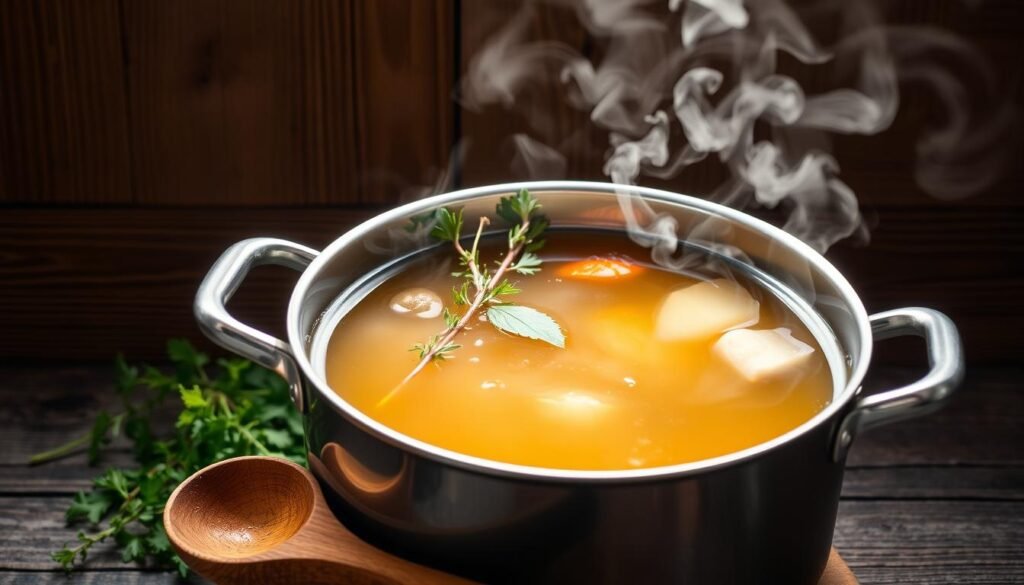
Using high-quality skinless chicken is another key step. It ensures the broth stays light yet flavorful. I add the chicken after the vegetables, letting it cook slowly to retain its tenderness. For an extra boost of flavor, I include herbs like thyme and bay leaves early in the process.
Stirring gently is essential. It helps blend the flavors without breaking down the vegetables. I also keep an eye on the liquid levels, adding a cup of broth or water if needed. This ensures the consistency stays just right.
- Add vegetables first to build a strong flavor base.
- Use skinless chicken for a lighter, more savory broth.
- Stir gently to preserve the texture of the ingredients.
- Adjust liquid levels with a cup of broth or water as needed.
- Season thoughtfully to enhance the broth’s depth.
By following these tips, I create a broth that’s rich, comforting, and full of flavor. It’s a simple process, but the results are always worth it.
Monitoring Doneness and Adjusting Seasonings
Ensuring your dish is perfectly cooked and seasoned is the final step to culinary success. Throughout the day, the flavors deepen beautifully, but it’s the final touches that make all the difference. Start by checking the tenderness of your vegetables. They should be soft but not mushy, offering a satisfying bite.
Next, remove the bay leaf and thyme sprigs before serving. These whole herbs infuse the broth with flavor but can overpower the dish if left in. The bay leaf adds a subtle, aromatic note, while fresh thyme enhances the broth’s complexity. Removing them ensures a balanced taste.
Now, it’s time to adjust the seasonings. Taste the broth and add salt or pepper as needed. Even a small tweak can balance the flavors perfectly. If the broth feels too thin, let it simmer uncovered for a few minutes to reduce. For a richer taste, stir in a splash of high-quality chicken broth.
- Check vegetables for tenderness—soft but not mushy.
- Remove bay leaf and thyme sprigs before serving.
- Adjust salt, pepper, and other seasonings to taste.
- Simmer uncovered to thicken the broth if needed.
- Add a splash of broth for extra richness.
I always taste repeatedly during the final minutes. This routine ensures every spoonful is flavorful and satisfying. With these steps, you’ll create a dish that’s both comforting and perfectly seasoned.
Serving Suggestions and Garnishing Ideas
A beautifully presented dish can turn a simple meal into a memorable experience. When it comes to homemade comfort food, the way you serve and garnish it can elevate its appeal and flavor. Here are some ideas to make your dish shine.
Start with a finishing touch of chopped fresh parsley. This vibrant herb adds color and a fresh aroma to your bowl. It’s a simple yet effective way to enhance the visual and sensory experience of your meal.

Pairing your dish with versatile sides can make it a full meal. Crusty bread is a classic choice, perfect for dipping into the flavorful broth. For a lighter option, serve it with a crisp green salad. These combinations balance the richness of the main dish.
Garnishing isn’t just about looks—it’s about enhancing the overall experience. A sprinkle of fresh herbs or a drizzle of olive oil can add layers of flavor. These small details make a big difference in every bite.
- Use fresh parsley or other herbs for a vibrant finish.
- Pair with crusty bread or a light salad for a complete meal.
- Garnish thoughtfully to boost both flavor and visual appeal.
- Serve in warm bowls to maintain the dish’s temperature.
- Add personal touches like a sprinkle of Parmesan or a dash of chili flakes.
In my experience, these serving suggestions turn a simple bowl into a full comfort food experience. Whether it’s a cozy dinner or a meal for someone feeling under the weather, these ideas ensure every bite is satisfying and memorable.
Storage, Reheating, and Make-Ahead Tips
Proper storage and reheating can keep your meal fresh and flavorful for days. Whether you’re planning for leftovers or making it ahead, these tips ensure your dish stays delicious.
Start by cooling the dish completely before storing. Transfer it to airtight containers and refrigerate for up to 3-4 days. This keeps the broth intact and prevents spoilage. For longer storage, freezing is a great option.
When reheating, the stovetop is my go-to method. It allows the broth to warm evenly without overcooking the ingredients. If you’re short on time, the microwave works too. Just stir occasionally to maintain consistency.
Freezing is perfect for busy days. Portion the meal into freezer-safe containers, leaving some space for expansion. To defrost, move it to the fridge overnight or use the microwave’s defrost setting. Add a pinch of pepper or herbs when reheating to refresh the flavors.
To avoid mushy noodles, store them separately. Cook them fresh when reheating the broth. This ensures they stay firm and add the perfect texture to your dish.
- Cool completely before storing in airtight containers.
- Reheat on the stovetop or microwave for best results.
- Freeze in portions for easy defrosting and reheating.
- Store noodles separately to maintain their texture.
- Add a pinch of pepper or herbs to refresh the flavors.
Making this dish ahead is a lifesaver. Prepare the broth and ingredients, then assemble and cook when needed. It’s a great way to enjoy a comforting meal without the hassle.
Final Thoughts and Enjoying Your Cozy Meal
There’s nothing quite like the warmth of a homemade meal made with love and care. Using a slow cooker simplifies the process, letting the flavors meld beautifully while you focus on other things. It’s a dish that’s as comforting to make as it is to enjoy.
Don’t be afraid to experiment with variations. Add your favorite herbs, swap vegetables, or try different grains. Making it your own is part of the fun. Every spoonful is a reminder of the joy that comes from preparing something special.
So, take a moment to savor each bite. Share it with loved ones and create new memories. Whether it’s a quiet night in or a gathering with friends, this dish is sure to bring warmth and happiness to your table.
FAQ
What ingredients do I need for a slow cooker version of this dish?
You’ll need skinless chicken breast, egg noodles, carrots, celery, onion, chicken broth, and seasonings like thyme, bay leaf, salt, and pepper. It’s simple and full of flavor!
How long does it take to cook in a slow cooker?
It usually takes about 6-8 hours on low or 3-4 hours on high. This method lets the flavors meld beautifully for a comforting meal.
Can I use frozen chicken breast for this recipe?
Yes, you can! Just add a little extra cooking time to ensure it’s fully cooked and tender. It’s a great time-saver.
What’s the best way to store leftovers?
Store them in an airtight container in the fridge for up to 3 days. You can also freeze it for up to 3 months for a quick meal later.
Can I add other vegetables to the dish?
Absolutely! Feel free to toss in veggies like peas, green beans, or even zucchini for extra nutrition and variety.
How do I prevent the noodles from getting mushy?
Add the egg noodles during the last 20-30 minutes of cooking. This keeps them tender but not overcooked.
Can I make this recipe ahead of time?
Yes, you can prep the ingredients the night before and store them in the fridge. Just add everything to the slow cooker in the morning.
What’s the best way to reheat this dish?
Reheat it on the stovetop over medium heat or in the microwave. Add a splash of broth if it’s too thick.
Can I use bone-in chicken instead of skinless breast?
Yes, bone-in chicken works well and adds extra flavor. Just remove the bones before serving for easier eating.
How can I make the broth richer?
Simmer the broth with a bay leaf and a sprig of thyme for deeper flavor. You can also add a splash of white wine for a gourmet touch.