
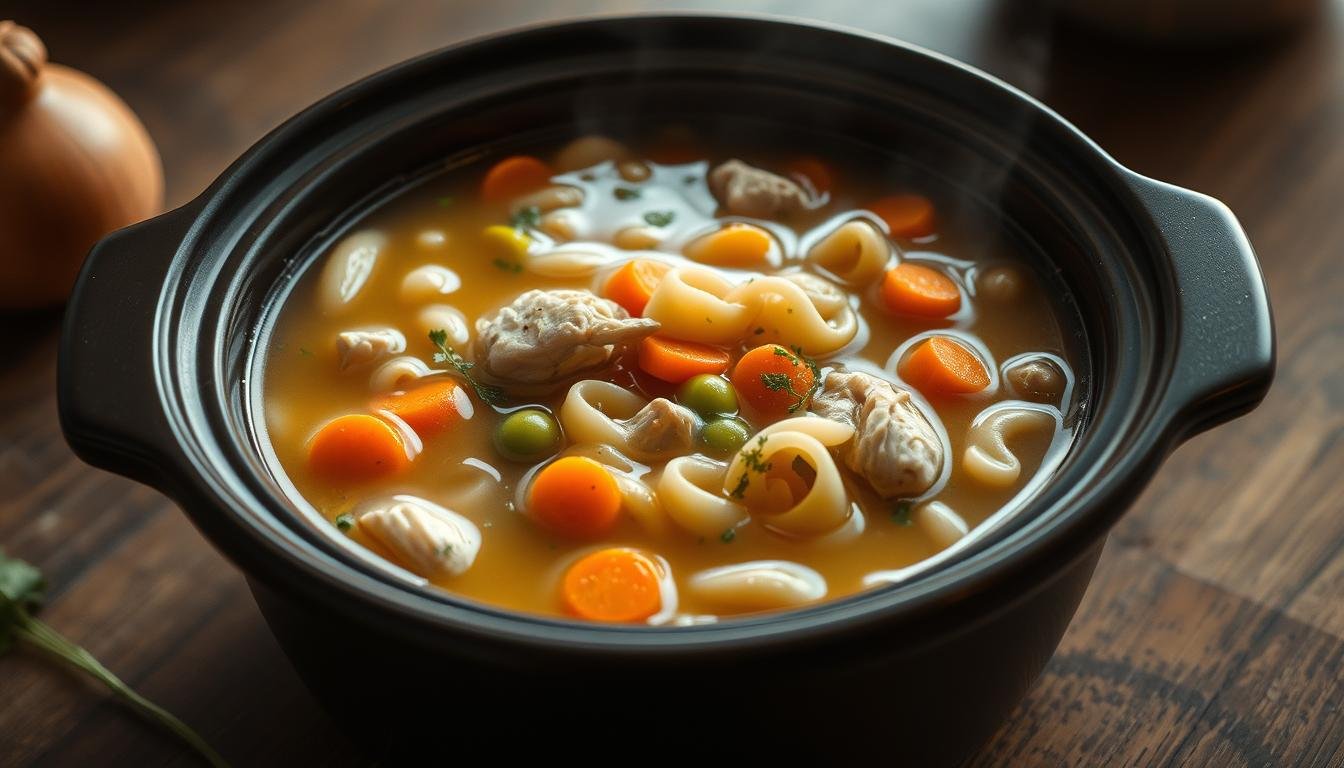
There’s something truly special about a warm, hearty meal that brings comfort to any day. My go-to dish is a homemade version of a classic, made effortlessly in a slow cooker. It’s perfect for cozy nights or when you’re feeling under the weather.
Using a slow cooker simplifies the process, allowing the flavors to meld beautifully over time. I always opt for homemade broth and fresh ingredients to create a rich, soul-warming dish. It’s a recipe that’s as easy to make as it is delicious to eat.
This dish is more than just food—it’s a reminder of home and warmth. Whether you’re cooking for yourself or sharing with loved ones, it’s sure to bring smiles to the table.
Key Takeaways
- This recipe is made in a slow cooker for easy preparation.
- Homemade broth and fresh ingredients enhance the flavor.
- Perfect for cozy nights or when you’re feeling unwell.
- Simple steps lead to a rich, comforting dish.
- Ideal for sharing with family and friends.
My Connection to Comfort Food: My Journey with Homemade Soup
Comfort food has always been my anchor during life’s ups and downs. Nothing brings me more peace than a steaming bowl of homemade soup. It’s more than just a meal—it’s a reminder of warmth, care, and cherished memories.
Growing up, my family always relied on fresh ingredients to make our meals special. Using chicken breast and egg noodles was a tradition that elevated every dish. The tender chicken and perfectly cooked noodles created a texture that felt like home.
Soup has been my go-to during challenging times. Whether it’s a cold winter day or a moment of self-care, this dish never fails to comfort me. The slow cooker method has become a cherished tradition, delivering heartwarming results every time.
🍫 The Ultimate No-Bake Dessert Ebook 🍓
30 mouthwatering no-bake recipes you can whip up in minutes — creamy cheesecakes, fruity parfaits, chocolatey bars, and more!
- ⚡Quick & easy — no oven required
- 📖30 recipes + bonus treat
- 🍓Chocolate, fruit, nutty & refreshing flavors
- ✨Beautifully designed, instant download
There’s something deeply satisfying about creating a meal that nourishes both body and soul. For me, homemade soup is more than food—it’s a symbol of love and resilience. It’s a dish I’m proud to share with others, knowing it brings the same comfort to them.
Essential Ingredients for a Flavor-Packed Soup
The secret to a rich, flavorful dish lies in the quality of its ingredients. When I prepare my favorite meal, I always start with fresh, wholesome components. Each element plays a crucial role in creating a balanced and satisfying dish.
One of the key ingredients is a good chicken broth. It forms the base of the recipe, adding depth and richness. I prefer using reduced-sodium versions to control the saltiness while keeping the flavor intact.
Another must-have is a bay leaf. This simple herb infuses the dish with a subtle, aromatic essence. Combined with other seasonings, it elevates the overall taste profile.
Fresh vegetables are equally important. A classic mirepoix of carrots, celery, and onions provides a sweet, savory foundation. These ingredients work together to create a harmonious blend of flavors.
Following a trusted recipe ensures consistent results every time. It’s the best way to guarantee that each ingredient contributes to the final dish. With the right components, you can create a meal that’s both comforting and delicious.
Step-by-Step Process to Create a Hearty Meal
Creating a hearty meal is all about timing and layering flavors. I start by preparing fresh ingredients like diced carrot, celery, and onions. These vegetables form the base of the dish, adding a sweet and savory foundation.
Next, I carefully layer the ingredients into the slow cooker. Every minute counts here, as the order ensures the flavors meld beautifully. I add the diced carrot first, followed by the other vegetables, to build depth in flavor.
Timing is crucial when it comes to adding the egg noodles. I wait until the last 30 minutes of cooking to prevent them from becoming mushy. This ensures they retain their perfect texture and enhance the overall dish.
For the protein, I prepare and shred the chicken separately. This step guarantees tender, bite-sized pieces throughout the meal. I add the shredded chicken toward the end, allowing it to soak up the rich flavors without overcooking.
Here’s a quick breakdown of the process:
- Start with diced carrot, celery, and onions as the base.
- Layer ingredients carefully to build depth in flavor.
- Add egg noodles in the last 30 minutes to avoid mushiness.
- Prepare and shred the chicken for tender bites.
- Combine all ingredients for a rich, comforting dish.
By following these steps, you’ll create a meal that’s both flavorful and satisfying. It’s a simple process that yields incredible results every time.
Mastering the Slow Cooker Technique for Best Results
The slow cooker is a game-changer for creating meals that are both tender and full of flavor. To get the most out of this method, it’s essential to follow a few key steps. These tips ensure every ingredient shines and the dish reaches its full potential.
First, chopping celery and onion uniformly is crucial. Even-sized pieces cook at the same rate, preventing some from becoming too soft while others remain undercooked. This balance is key to achieving a consistent texture throughout the dish.
Next, the slow simmer process is where the magic happens. Over time, the flavors meld together, creating a rich and harmonious taste. This method also ensures the protein remains tender without overcooking, resulting in a perfect bite every time.
Timing is another critical factor. For vegetables and meat to reach their ideal texture, it’s important to follow the recommended cooking times. Typically, 6-8 hours on low heat works best, allowing everything to cook evenly and thoroughly.
Here’s a quick guide to mastering the slow cooker technique:
- Chop celery and onion uniformly for even cooking.
- Let the ingredients simmer slowly to meld flavors.
- Follow recommended cooking times for perfect texture.
- Use low heat for 6-8 hours for optimal results.
- Enjoy a dish that’s rich, tender, and full of depth.
By mastering these techniques, you’ll elevate your cooking and create a dish that’s both comforting and delicious. The slow cooker truly makes it easy to achieve restaurant-quality results at home.
Quick Tips for Perfect Egg Noodles Every Time
Getting the perfect texture for egg noodles can make or break your dish. Whether you’re cooking them in the pot or separately, timing and technique are crucial. Here are my go-to tips for ensuring they turn out just right.
One of my favorite methods is cooking the noodles directly in the pot. This allows them to absorb the flavors of the broth while maintaining their shape. However, I always check them about an hour into cooking to prevent them from becoming too soft.
If you prefer a firmer texture, cooking the noodles separately is a great option. Boil them in salted water until they’re just tender, then add them to the dish. This method ensures they don’t absorb too much broth and stay perfectly balanced.
Timing is everything when it comes to egg noodles. Overcooking can lead to mushiness, so I always keep a close eye on them. Adding them toward the end of the cooking process helps maintain their ideal texture.
Finally, don’t forget to adjust the salt and seasoning after adding the noodles. They can absorb a lot of the broth’s flavor, so a quick taste test ensures the dish is perfectly seasoned. With these tips, you’ll achieve tender, flavorful noodles every time.
Delicious Variations to Elevate Your Chicken Noodle Soup
Experimenting with different ingredients can transform a classic dish into something extraordinary. One of my favorite ways to add variety is by using rotisserie chicken. It’s a time-saver and adds a rich, smoky flavor that’s hard to beat.
If you prefer a heartier meal, try adding extra chicken breast. This not only boosts the protein content but also creates a more satisfying texture. You can cook the breast separately or shred it directly into the pot for even distribution.
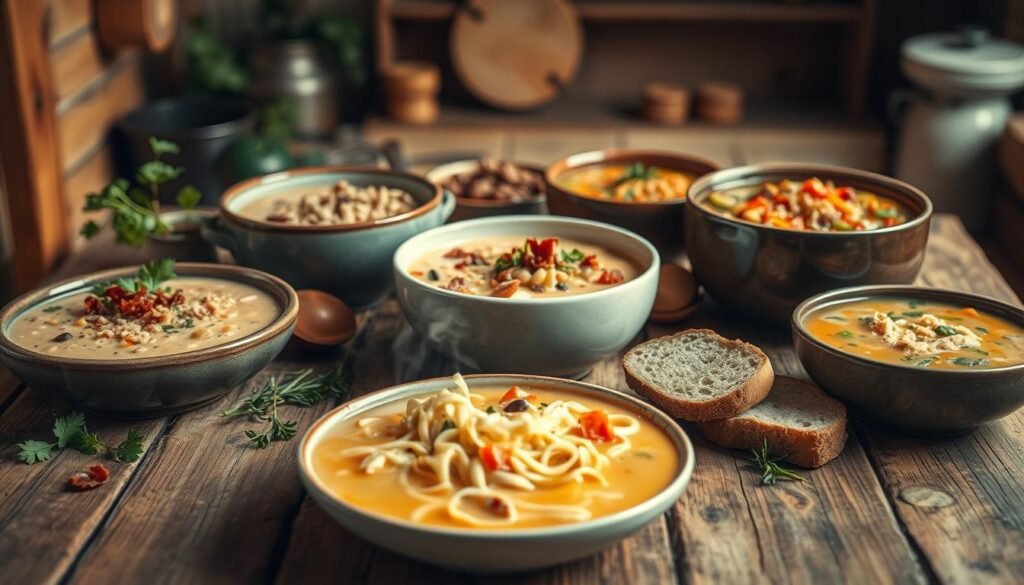
For a more comforting texture, consider increasing the amount of broth. This creates a soupier consistency that’s perfect for soaking up with crusty bread. You can also experiment with different types of broth, like vegetable or bone, to add depth to the flavor.
Adding extra vegetables is another great way to personalize your dish. Think beyond the classic carrots and celery—try zucchini, spinach, or even kale. These additions not only enhance the nutritional value but also introduce new flavors and colors.
Spices are another area where you can get creative. A pinch of cayenne pepper or a dash of smoked paprika can add a subtle kick. Don’t be afraid to add your favorite herbs and spices to make the dish uniquely yours.
Here’s a quick guide to some of my favorite variations:
| Variation | Key Ingredient | Flavor Profile |
|---|---|---|
| Rotisserie Twist | Rotisserie Chicken | Smoky, Rich |
| Extra Hearty | Additional Chicken Breast | Protein-Packed |
| Broth Boost | Extra Broth | Soupier, Comforting |
| Veggie Delight | Zucchini, Spinach, Kale | Fresh, Nutritious |
| Spiced Up | Cayenne, Smoked Paprika | Bold, Zesty |
These variations allow you to keep the essence of the classic recipe while adding your own twist. Whether you’re cooking for yourself or sharing with others, these ideas can make your dish even more special.
Health Benefits and Nutritional Insights of Home-Cooked Soup
Homemade meals are a powerhouse of nutrition, especially when made with care and fresh ingredients. Each cup of this dish offers a blend of protein, vitamins, and hydration that processed alternatives simply can’t match. It’s a wholesome choice for anyone looking to fuel their body with goodness.
One of the standout features is the use of fresh herbs like parsley and bay leaf. A single leaf of parsley adds a burst of vitamins, while bay leaf infuses the dish with subtle, aromatic depth. These ingredients not only enhance flavor but also contribute essential nutrients.
Every serving combines a day’s worth of wholesome ingredients in one bowl. From crisp vegetables to tender protein, each component works together to create a balanced meal. This careful selection ensures the dish is both comforting and nutritious.
Here’s a quick breakdown of the key benefits:
- Each cup provides valuable protein and hydration.
- Fresh herbs like parsley and bay leaf add extra nutrients.
- Wholesome ingredients combine for a balanced meal.
- Perfect for a day of nourishment and comfort.
Choosing to cook at home allows you to control the quality of every ingredient. It’s a simple way to enjoy a meal that’s as good for your body as it is for your soul. Whether you’re cooking for yourself or sharing with others, this dish is a testament to the power of homemade nutrition.
How to Store, Freeze, and Reheat Your Homemade Soup
Proper storage and reheating can keep your homemade meal fresh and flavorful for days. Whether you’re saving leftovers or preparing for future meals, these tips ensure your dish stays delicious and safe to eat.
To store leftovers, let the meal cool completely before transferring it to an airtight container. Adding a sprig of thyme can enhance the flavor as it sits in the fridge. Keep it refrigerated for up to 3-4 days for the best taste and texture.
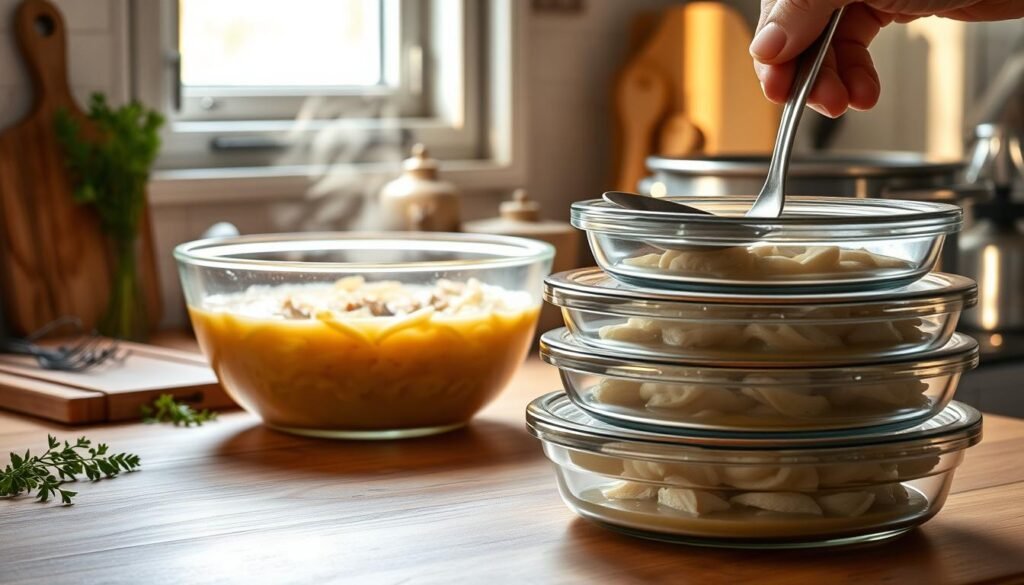
Freezing is a great option for longer storage. For the best results, omit the noodles before freezing, as they can become mushy when thawed. Instead, cook and add them fresh when reheating. Use freezer-safe containers or bags, leaving some space for expansion. Frozen, your meal can last up to 3 months.
When reheating, use a stovetop or microwave for even warmth. Stir occasionally to re-blend the ingredients and prevent the skinless chicken from drying out. If the dish seems too thick, add a splash of broth to restore its consistency.
Here’s a quick guide to storing, freezing, and reheating:
| Method | Tips | Timeframe |
|---|---|---|
| Refrigeration | Use airtight containers; add thyme for flavor. | 3-4 days |
| Freezing | Omit noodles; use freezer-safe containers. | Up to 3 months |
| Reheating | Stir often; add broth if needed. | Until evenly warm |
By following these steps, you can enjoy your meal just as much the second time around. It’s a simple way to make the most of your cooking and keep your food fresh and tasty.
Debunking Myths: Cooking Chicken Safely in a Slow Cooker
Many people worry about cooking raw meat in a slow cooker, but it’s safer than you might think. Slow cookers are designed to handle raw ingredients, and with the right techniques, you can create delicious, safe meals every time.
One common myth is that slow cookers don’t get hot enough to cook raw meat properly. In reality, they reach temperatures between 170°F and 280°F, which is more than enough to cook meat safely. The key is ensuring the internal temperature of the meat reaches 165°F, the safe threshold for poultry.
Seasoning your food with spices like pepper not only enhances flavor but also complements food safety. Pepper and other spices can help balance the dish while ensuring it remains enjoyable and safe to eat. It’s a simple way to elevate your homemade meals.
Here are a few tips to ensure your slow-cooked meals are safe and delicious:
- Always use a meat thermometer to check the internal temperature of the meat.
- Layer ingredients properly to ensure even cooking.
- Avoid opening the lid frequently, as it can lower the cooking temperature.
- Use fresh, high-quality ingredients for the best results.
Homemade comfort food like this is perfectly safe when handled with care. By following these guidelines, you can enjoy your meals without worry. Slow cooking is a convenient and effective way to create hearty, flavorful dishes that bring warmth to any table.
Expert Tips for the Perfect crockpot chicken noodle soup
Perfecting a classic dish requires attention to detail and a few expert tricks. Over the years, I’ve learned that small adjustments can elevate the flavor and comfort of this meal. Here are my top tips for creating a standout version every time.
First, using a trusted crock pot method ensures even cooking. This approach allows the ingredients to meld together perfectly, creating a rich and harmonious taste. I always recommend layering the vegetables first, followed by the protein, to build depth in flavor.
“The key to a great dish is balancing the spices and adjusting the broth to suit your palate. Don’t be afraid to experiment.”
Balancing spices is another crucial step. Start with a base of salt and pepper, then add herbs like thyme or bay leaf for extra aroma. If you prefer a bolder flavor, a pinch of smoked paprika or cayenne can add a subtle kick.
Adjusting the broth is equally important. If the dish feels too thick, add a splash of water or extra broth to achieve your desired consistency. This ensures every spoonful is just right.
Finally, don’t hesitate to personalize the recipe. Whether it’s adding extra vegetables or using rotisserie chicken for convenience, these tweaks can make the dish uniquely yours. Here’s a quick summary of my expert tips:
| Tip | Benefit |
|---|---|
| Use a trusted crock pot method | Ensures even cooking and rich flavor |
| Balance spices | Enhances aroma and taste |
| Adjust broth consistency | Creates the perfect texture |
| Personalize the recipe | Makes the dish uniquely yours |
By following these expert tips, you can create a meal that’s both comforting and delicious. It’s all about fine-tuning the details to make every bite unforgettable.
Wrapping Up with Final Servings of Homemade Comfort
There’s nothing quite like the warmth of a homemade meal made with love. This recipe, crafted in a slow cooker, is a testament to how simple ingredients can create something truly special. It’s a dish that brings comfort to any table, whether you’re cooking for yourself or sharing with loved ones.
Using a slow cooker simplifies the process, allowing flavors to meld beautifully while you focus on other things. It’s a method that ensures tender, flavorful results every time. This dish is more than just food—it’s a reminder of home-style cooking and the joy of creating something nourishing.
I encourage you to try this recipe and make it your own. Share it with family, friends, or enjoy it as a moment of self-care. Every container of this meal is a reminder of the warmth and care that goes into homemade cooking. Let it bring comfort to your day, one spoonful at a time.
FAQ
Can I use frozen chicken breast for this recipe?
Yes, you can use frozen chicken breast. Just add a bit more cooking time to ensure it’s fully cooked and tender.
How do I prevent the egg noodles from getting mushy?
Add the egg noodles during the last 15-20 minutes of cooking. This keeps them firm and avoids overcooking.
Can I substitute the chicken broth with vegetable broth?
Absolutely! Vegetable broth works well and adds a slightly different but equally delicious flavor.
What’s the best way to store leftovers?
Store leftovers in an airtight container in the fridge for up to 3 days. For longer storage, freeze it for up to 3 months.
Can I add other vegetables to the soup?
Yes, feel free to add veggies like peas, corn, or green beans. They bring extra flavor and nutrition.
How do I thicken the soup if it’s too watery?
Mix a tablespoon of cornstarch with cold water and stir it into the soup. Let it simmer for a few minutes to thicken.
Is it safe to cook chicken on low heat in a slow cooker?
Yes, cooking chicken on low heat in a slow cooker is safe as long as it reaches an internal temperature of 165°F.
Can I use dried herbs instead of fresh ones?
Yes, dried herbs work fine. Use half the amount of dried herbs since they’re more concentrated than fresh ones.
How can I make this soup gluten-free?
Swap the egg noodles for gluten-free pasta and ensure the broth is gluten-free. It’s an easy adjustment!
What’s the best way to reheat the soup?
Reheat it on the stovetop over medium heat or in the microwave. Add a splash of broth if it’s too thick.